
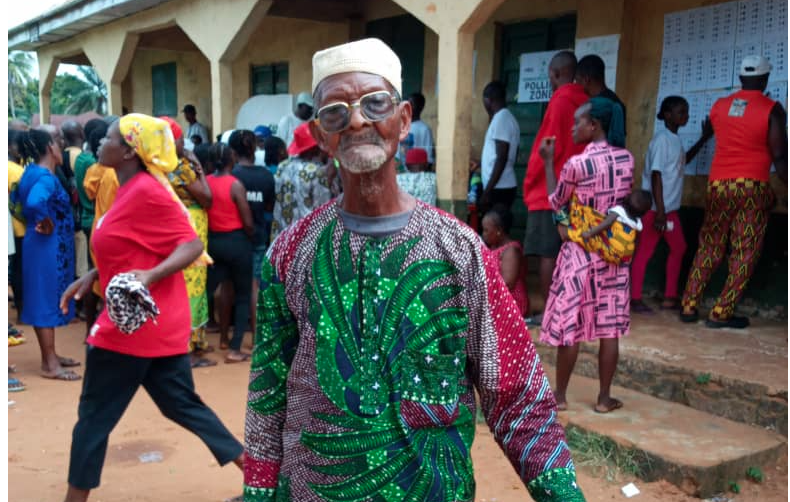
What does integrity look like in today’s Nigeria, especially at the polling booth? Picture this: as the sun rises over Umuleri in Anambra East, the streets are alive with talk and anticipation. Yet, one figure stands calmly, seemingly untouched by the frenetic energy and expectations of Election Day. His name is Pa Francis Emeka, and at 85 years old, his unwavering resolve to put principles over pay has become, quite frankly, the talk of his community.
In a country where electoral malpractice and vote-buying are all too familiar, hearing such a story sounds almost too good to be true. But according to Emeka, the shocking truth is — it’s his way of life, shaped by Nigeria’s own history and the icons that led the nation to independence. What would make a man, well into his eighth decade, still refuse what so many consider “small chop”?
Inside the Mindset: Why Pa Francis Emeka Won’t Collect Money to Vote
Voting with integrity might sound like a luxury to some in today’s challenging economic climate. But Pa Francis is quick to point out that his principles are rooted in something deeper than naira and kobo. According to his interview with Punch, his refusal to collect money for votes was moulded by a chance encounter with two of Nigeria’s most consequential leaders—Dr Nnamdi Azikiwe and Chief Obafemi Awolowo.
He recalls with vivid emotion: “During the time of Dr Nnamdi Azikiwe and Awolowo, they came to the Northern Region. I was in Niger at that time. Mopol was beating me when I climbed Nnamdi Azikiwe’s vehicle. Then he said they should leave me. Dr Nnamdi Azikiwe was a popular man in Nigeria. He told us then not to collect money to vote.” The words stuck, echoing stronger than ever as decades flew by. For Emeka, voting is not a commercial transaction; it’s a moral duty to be fulfilled with a clear conscience.
Nigeria’s Fight Against Vote-Buying: An Endless Struggle?
So, why does vote-buying remain such a persistent issue in Nigeria? The Independent National Electoral Commission (INEC) has raised alarm multiple times, warning that the threat corrodes trust in democracy and undermines genuine representation. According to data from INEC, documented incidents of vote-buying have appeared in polls nationwide, especially in recent electoral cycles.
Yet, for every individual resigned to “collect and vote,” there are outliers like Pa Francis—everyday Nigerians with backbones of steel. His actions bring the conversation home, prompting all of us to ponder: if an 85-year-old can withstand the temptation, what’s stopping the rest of us?
The Path of the Elder: How Role Models Shape Generations
For many, Dr Nnamdi Azikiwe is just a name in history books. But for Pa Francis, “Zik” is the reason behind a lifetime of steadfastness. Nigerian elders have long held the torch, passing down stories of discipline and character. In markets and beer palours across the country, debates rage on about the lost values of yesteryear. “Wetin elders see while sitting…,” as Nigerians love to say, “you, the young man, may not see even if you climb top of irokotree.”
Francis Emeka’s story is not just about refusing money. It’s about refusing to let go of the dream that Nigeria can still produce leaders—and voters—with integrity. Experts such as Dr. Chidi Nwosu, an Enugu-based political analyst, highlight how national icons inspire local choices: “Role models provide moral anchors. Stories like Pa Emeka’s remind us what is possible if people choose patriotism over instant gratification.”
What Drives Vote-Buying in Nigeria’s Elections?
Let’s face the facts: The pressures for “money for vote” in Nigeria are real and complicated. Poverty and economic hardship play a heavy role; according to the National Bureau of Statistics, a significant portion of Nigerians live below the poverty line, making a quick payout alluring during elections. Politicians with deep pockets often take advantage, distributing cash, foodstuffs, or “empowerment” materials to influence voting.
- Economic uncertainty: High unemployment drives desperation
- Lack of voter education: Many do not fully understand the power of their ballot
- Weakened institutions: Law enforcement challenges and slow justice encourage impunity
Still, across towns and villages, there are always a few who refuse to dance to that beat—quietly fighting to keep hope alive for a more accountable political culture.
Balancing Hope and Realities: Is There a Way Out?
No system is perfect. Even here in Nigeria, reports persist that even anti-vote-buying laws are tough to implement. United Nations Office on Drugs and Crime (UNODC) points to the roots of electoral corruption as deep and complex, often requiring more than just police arresting folks at the polling unit.
Yet, stories like that of Pa Francis Emeka remind us that change doesn’t always begin from the top. Sometimes, it starts with a single decision—a refusal that ripples across communities. As a local youth leader in Otuocha, Miriam Okezie, reportedly said: “Pa Francis teach us that it’s not all about money. The future of our children dey worth passing up on ‘stomach infrastructure’ for one day.”
Learning from the Past, Building for Tomorrow
If Nigeria’s earliest leaders—heroes like Azikiwe and Awolowo—left us a legacy, it’s the belief that character matters. Today, Pa Francis Emeka still arrives at polling stations with only his PVC in hand and conviction in his heart. By saying no to vote-buying, he has become an everyday hero, a local example, and a gentle rebuke to cynicism.
Nobody’s saying the fight will be easy, or that old habits will vanish overnight. But as Nigeria prepares for future elections, the real question remains: Can we all, young or old, follow Pa Francis’ lead and vote with conscience instead of cash?
What do you think: Could you resist taking money to vote, even if things are tough? How else can we build a Nigeria where the ballot is priceless and our leaders are truly accountable?
Share your thoughts and join the conversation below!
Have a compelling story like Pa Francis’ or a strong opinion about elections in Nigeria? Get it featured or discuss story sales by emailing us at story@nowahalazone.com. For general support, reach out via support@nowahalazone.com.
Stay connected for more inspiring local stories—follow us on Facebook, X (Twitter), and Instagram!