
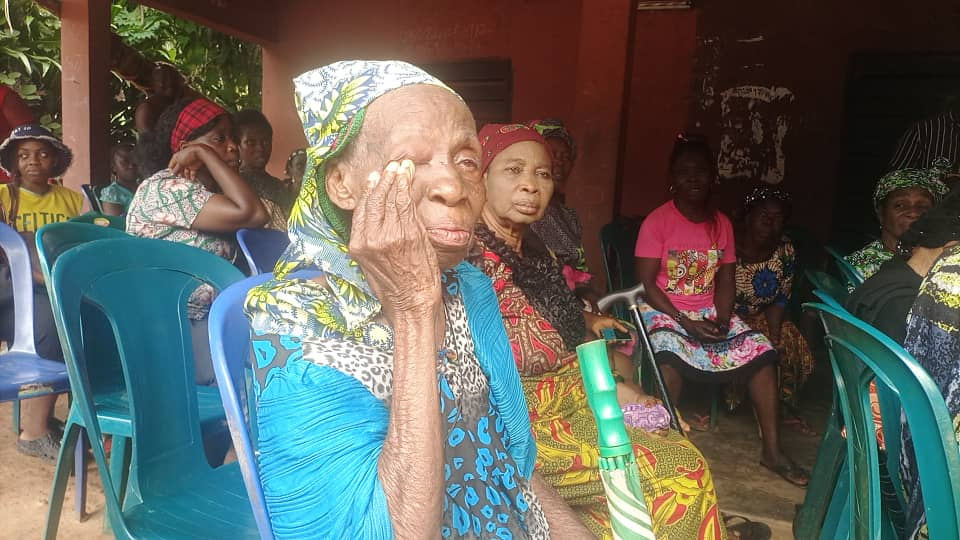
What does democracy mean through the eyes of a 96-year-old? Under the scorching sun of Umudim Akasi Polling Unit 019, memories of generations past met the hard rules of today’s elections, creating a scene that touched every heart in Agulu II, Ward 8. For Mrs. Elizabeth Onike, the hope to cast her ballot became a painful lesson in bureaucracy—and many Nigerians can relate to her story.
Shocking Truth at the Polling Unit: When Political Will Meets Heartbreak
It was barely mid-morning—10:29 a.m.—and the air buzzed with anticipation as voters queued, clutching their cards and prayers for a better Anambra State. Then, as if in slow motion, a hush fell. Mrs. Elizabeth Onike, a matriarch seasoned by many elections, gently approached the table. At her age—almost a century old—she’d seen it all: colonial rule fade, independence won, coups come and go, democracy fought for in sweat and blood. So surely, voting should be her birthright, abi?
But the atmosphere changed when INEC’s presiding officer quietly told her, “Mama, you cannot vote because you don’t have a valid voter’s card.” A simple statement, but its impact was heavy. According to several eyewitnesses (as reported by credible sources), the disappointment struck Mrs. Onike deeply. Her lips trembled, her eyes glistened, and tears ran down her lined cheeks. Onlookers felt a lump in their throats—election day had become a scene of heartbreak.
Voters’ Rights in Nigeria: When the Rules Become a Wall
“I have been voting at this polling unit. I voted in the last election, but this time the INEC officials said I have no valid voters’ card,” Mrs. Onike lamented, her pain audible in her mother-tongue Igbo. She explained that her children were all far away—none at home to support or advocate for her. “My children are outside, and none is at home with me. I am pained that I am not going to vote in this election to determine who will be my next governor,” she reportedly said, fighting back tears.
For many elderly Nigerians, such hurdles are a familiar reality. Procedures keep changing, PVCs get misplaced or expire, and too often there’s nobody at home to help navigate the fine print. “Na so e dey be for this country,” muttered one onlooker—a reminder that sometimes, even the best intentions get lost in the maze of regulations.
Inside the Polling Unit: Growing Tension and Community Reaction
Polling Unit 019 in Umudim Akasi is no small gathering—the books show about 830 registered voters, and that Saturday brought impressive turnout. From first-timers just turning 18 to elders like Mrs. Onike, the mood was energetic and hopeful. But after her ordeal, a ripple of concern moved through the crowd.
- Younger voters wondered, “If grandma like this can’t vote, will they turn us back next time?”
- Neighbours voiced sympathy, many expressing anger or deep concern over how elderly Nigerians face increasing disenfranchisement.
- INEC officials explained—firm but respectful—that rules on accreditation and documentation come from national standards, not local whims.
According to electoral experts, like Abuja-based analyst Mrs. Chinyere Eze, “INEC’s guidelines are there to safeguard the vote and reduce fraud, but unfortunately, they sometimes leave our most vulnerable citizens stranded. We need reforms that balance security with inclusiveness.”
Election Law and the Elderly: What Are the Options?
The Independent National Electoral Commission (INEC) maintains strict policies: no valid Permanent Voter Card (PVC), no accreditation—no vote. This approach ensures transparency, but critics argue it can be inflexible, especially for senior citizens who might have genuine documentation challenges.
According to official INEC guidelines, there are ongoing discussions about how to make elections more accessible for persons living with disabilities and the elderly, including home voting in special cases. However, such measures have yet to reach places like Anaocha LGA on a practical level.
The Stakes: A Hard-Fought Governorship Race
This was no ordinary election. With 16 political parties vying for the governorship and the incumbent Prof. Chukwuma Soludo (APGA) fighting to keep his seat, every vote mattered like never before. Competition was fierce. But as the drama at Polling Unit 019 unfolded, residents were reminded that the integrity of the electoral process goes beyond numbers—it’s about the dignity of every Nigerian voice, young or old.
As political scientist Dr. Samuel Adejoke noted, “When a nonagenarian is denied a vote, the system has to pause and ask—did we really build this process for all?
Comparing Experiences Across Nigeria and West Africa
Similar challenges for elderly voters have been reported across Nigeria, not just in Anambra. In past elections in Oyo, Ogun, and even parts of northern Nigeria, stories have emerged of older citizens left on the sidelines due to documentation or mobility barriers. According to research by The Electoral Institute (TEI), Nigeria ranks below some West African peers when it comes to voter accessibility for seniors, despite making strides in technology and security.
- Ghana has piloted mobile voting units for the elderly in certain regions.
- South Africa allows proxy voting and special home-based ballots in limited circumstances.
- Nigeria, however, relies mostly on physical presence and the now-famous PVC system.
Clearly, the broader West African debate remains: How do we preserve electoral integrity while making the process truly inclusive?
Can Technology Bridge the Gap?
Many have argued that with the right technology and outreach, situations like Mrs. Onike’s could be avoided. Biometric registration, better voter education targeting vulnerable groups, and mobile INEC clinics have been suggested in recent policy roundtables—but widespread implementation is still a work in progress.
For many in Agulu, though, it’s a matter of empathy and community spirit. “Today was not just about the votes. It was about the respect we owe our elders, after all their sacrifices,” remarked a youth leader on ground.
Voices from the Ground: What Next for Elderly Voters in Nigeria?
In the swirling dust and fading sunlight of Umudim Akasi that evening, Mrs. Onike’s quiet tears echoed a bigger question back to every voter: Will we design a democracy that hears even the faintest voice? Or will election day continue to leave some of our most deserving behind the gate?
INEC officials, while upholding their mandate, have called for patience and encouraged families to double-check voter cards for their elderly loved ones ahead of general elections. Civil society organizations are also advising for stronger advocacy and possibly legal reform to ease the path for Nigeria’s aged population.
Featured Video: The Scene at the Polling Unit
Watch the emotional moment from Umudim Akasi Polling Unit 019 below:
As Nigeria prepares for more elections in the coming years, stories like Mrs. Onike’s serve as a sharp reminder: Our democracy must be as much about inclusion as it is about participation. Change, after all, starts with the courage to ask tough questions and seek real solutions that carry everyone along.
What steps will you take to support fair access for all voters? Do you know someone who has faced similar challenges on election day? Share your story or opinion—and let’s inspire change, one voice at a time.
Your voice matters just as much as your vote! Have a story to share about Nigerian democracy, the electoral process, or your personal experience at the polls? We want to hear from you.
Get your story published or discuss story sales by emailing us at story@nowahalazone.com.
For general support or comments, contact support@nowahalazone.com.
Don’t forget to follow us for more updates, engaging stories, and real Nigerian conversations. Join us on Facebook, X (Twitter), and Instagram to stay connected. We dey for you!
Do you or someone you know have a story on voting rights, community challenges, or local heroes? Whether it’s news, opinion, or advocacy, let’s keep the conversation going.