
What happens when global superpowers set their gaze on Nigeria? It’s a story that’s been unfolding quietly for decades—sometimes with fanfare, other times behind closed doors. Picture this: In 2004, news broke out like wildfire that the US Navy was eyeing the Gulf of Guinea, right off Nigeria’s coast, for the deployment of an aircraft carrier. For many Nigerians, this “unusual exercise” seemed more like a scene from an American action flick than a real possibility so close to home.
But beneath the surface, the move had far-reaching strategic significance. According to officials cited by CC Nwoke, the initial reaction from Nigeria’s government was, well, somewhat lukewarm. The then Minister of Information, unfazed, reportedly quipped, “If they want to deploy a military vessel, it is their own business because the Gulf of Guinea is a very vast area.” For ordinary Nigerians going about their day—hustling in Lagos traffic or queuing at the filling station—the notion of foreign warships nearby felt distant, almost abstract. But was it really?
Digging deeper, it turns out these exercises took place just 20 to 30 nautical miles southwest of Lagos—the heartbeat of Nigeria. Technically outside our territorial waters, yes, but squarely within the Exclusive Economic Zone, where, according to international law, foreign vessels enjoy navigational freedoms but can still be monitored if there are security concerns.
The US presence in these waters evolved into full-blown multinational exercises under the banner of the US Africa Command (AFRICOM) by 2010, with Nigeria at centre stage.
US-Nigeria Relations: A Dance of Strategy, Suspicion, and Shifting Alliances
If you think this “partnership” is new, think again. The United States and Nigeria have been dancing a complicated tango for ages—sometimes side by side, other times with toes getting painfully stepped on. Professor Bolaji Akinyemi, a leading authority on international relations, once said, “what they [the US] will need in 15 years time, they will be looking for… now…” True to form, the US moved proactively, establishing AFRICOM in 2007, just as West African security concerns—especially terrorism—began taking centre stage.
Interestingly, Nigeria led the charge in pushing other African states to reject hosting AFRICOM’s headquarters, resulting in the unit being set up in Stuttgart, Germany. Yet as insecurity across the Sahel, Lake Chad, and the Gulf of Guinea worsened over the years, a striking irony emerged: By 2021, African leaders—including Nigeria’s own President Muhammadu Buhari—were urging the US to bring AFRICOM closer to ground zero, right here on African soil.
Why is Nigeria Always Under America’s Radar?
Long before today’s headlines, America saw Nigeria as a keystone for influence in Africa—politically, economically, and culturally. Back in the day, American corporations were eager participants in Nigeria’s oil boom. From Hollywood movies on NTA to the adoption of right-hand drive cars and American pop culture, “Americanism” seeped into our daily life. But as anyone who has tasted suya knows, there’s always a peppery sting underneath the meat. This relationship has never been simple.
At times, it’s felt like a classic Nollywood film—full of pride, misunderstandings, betrayals, and, sometimes, reconciliation. Take the 1970s, for instance. In a bold Pan-African move, Nigeria sided strongly with Angola’s MPLA during their fight for liberation. The United States, fearing Soviet footprints in Africa, sided with the opposition—UNITA and FNLA. Diplomatic sparring ensued, with America pushing Nigeria to pressure the MPLA to eject Soviet and Cuban fighters. General Murtala Mohammed’s response was a firm “No be today!” It set the tone for Nigeria’s longstanding anti-apartheid and independence agenda on the continent.
![Nigeria’s foreign minister, Yusuf Tuggar [PHOTO CREDIT: Yusuf Maitama Tuggar]](https://nowahalazone.com/wp-content/uploads/2025/11/474230151_17915241525051384_1634865378239235283_n-1.jpg)
Through eras of military rule, shifting alliances, and human rights debates, America’s stance swung from cooperation to criticism, notably under the Leahy Law. Enacted by the US Congress in 1996 and applied to Nigeria from Abacha’s days onward, this law restricts US military assistance where credible human rights violations are alleged. This policy has often frustrated Nigerian military leaders tasked with fighting Boko Haram, banditry, and armed groups across the nation. In 2014, the US blocked helicopter sales over such concerns—leaving Nigeria to search for alternatives while the security crisis deepened.
When American Politics Collides With Nigerian Realities
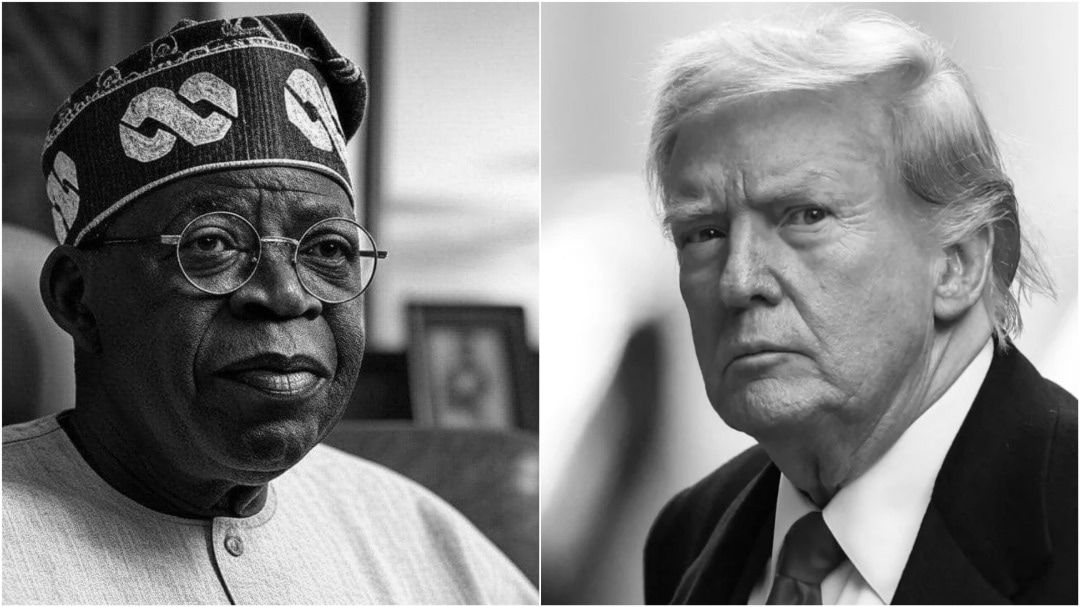
Anyone who followed global politics under President Trump knows how quickly things could escalate from a tweet to a threat. After consuming some unfavourable TV coverage, then-President Trump reportedly vowed to go into Nigeria “guns-a-blazing.” According to local sources, some American lawmakers allegedly lobbied for Nigeria’s designation as a “country of particular concern,” a move that appeared, in part, to cater to specific voter bases back in the US. But as Nigeria’s Foreign Affairs Minister, Yusuf Tuggar, put it, this approach risks “lighting a match” in a region already facing a complicated web of threats—from insurgents to criminal gangs and worsening environmental pressures.
As if the drama wasn’t enough, China, the EU, and ECOWAS have all weighed in. China, calling Nigeria a “comprehensive strategic partner,” made it clear that it opposes any foreign meddling disguised as concern over religion or human rights. In the words of spokesperson Mao Ning, China “opposes any country using religion and human rights as an excuse to interfere in other countries’ internal affairs, and threatening other countries with sanctions and force.”
Nigeria’s Doctrine of Strategic Autonomy: Embracing a New Path
So, where does Nigeria stand in 2024? According to Foreign Minister Yusuf Tuggar, Nigeria is anchoring foreign policy on a “Doctrine of Strategic Autonomy.” That’s government-speak for: “Nobody go use our head.” In plain terms, Nigeria wants to trade and partner widely, shaping alliances on the basis of national interest, not Cold War-era ideology.
But is America comfortable with Nigeria charting its own course? Some say the threats to label Nigeria a “country of concern” or stir up intervention talk are just negotiating tactics. After all, diplomatic engagement in the era of social media—and unpredictable leaders—demands new strategies. As one senior aide put it, “It’s a different ballgame. Engagement starts on X (Twitter) and ends behind closed doors in Abuja or Washington.”
Global Power Plays and Local Implications: What’s at Stake for Nigerians?
Beneath the headlines, everyday Nigerians want peace, security, and progress. The attention from powerful nations could offer a chance to demand real backing for our battles against terrorism, poverty, and displacement—but only on our terms, with respect for our sovereignty and values. As Abuja-based analyst Adetoun Ojo explained, “Nigerians are experts at managing wahala. The time has come to flip global attention into partnerships that secure our interests, not just satisfy foreign agendas.”
Still, challenges persist. From insurgency in the North-East to oil theft in the Delta, local communities are tired of promises and want practical actions. Dialogue and tact—through official and back channels—remain vital, not just to keep the peace, but to ensure Nigeria remains a power-broker on its own terms.
The bottom line? Whether America’s intentions are noble or strategic—or a subtle blend of both—one truth stands: America will only get the best out of Africa by working with true partners. As Peter Egom reminded us, “America needs to have willing partners, cooperative partners, to defend American interests in Africa.” The challenge—and opportunity—is for Nigeria to turn that sentiment into reality, holding the cards close while dealing the hand with wisdom.
What do you think? Can Nigeria truly balance strategic autonomy with the expectations of powerful global partners? How should regular Nigerians respond to these evolving power games shaking our region? Drop your thoughts below and let’s keep the conversation rolling.
- Share your story or sell your tip by reaching out to us at story@nowahalazone.com.
- Looking for general support? Contact us at support@nowahalazone.com.
Join our community of discerning readers—follow us on Facebook, X (Twitter), and Instagram for real-time updates, exclusive interviews, and more!