
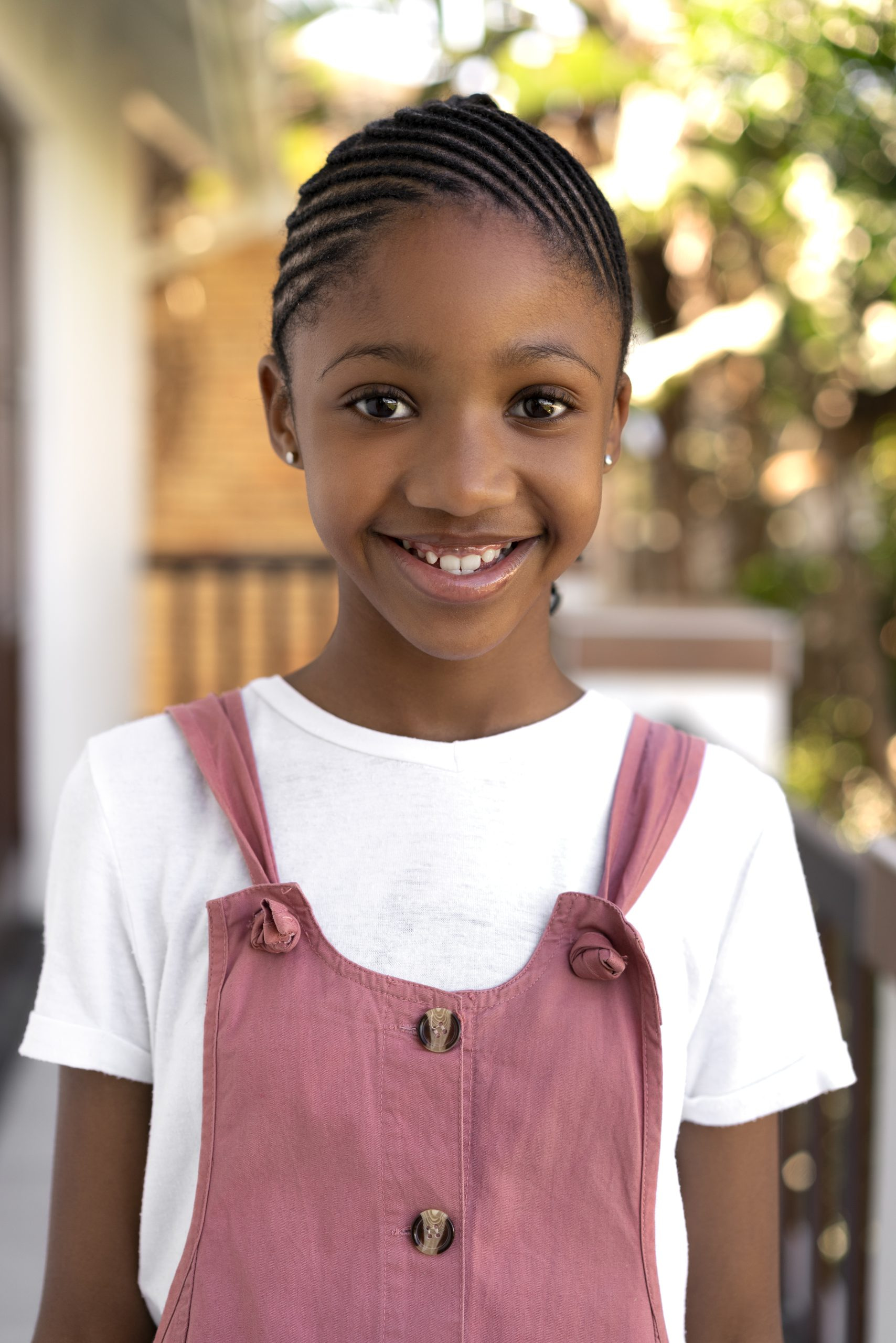
Did you know that those adorable tight braids and creative hairstyles we so dearly love can secretly set young girls up for hair loss down the road? Shocking, right? Many Nigerian mums, in their quest to make sure their daughters dazzle, don’t realise that some of our favourite “see as my pikin fine” hairstyles can quietly lead to a lifetime of thinning hair. But, my sister, there’s good news—traction alopecia can be prevented, and your precious girl can keep her full, healthy hairline!
Picture this: it’s Sunday evening, the aroma of stew fills the air, and you’re sitting on the balcony weaving your daughter’s hair as she hums her favourite tune. It’s a tradition for many families—a bonding ritual, a way to show care. But while your hands move swiftly, weaving tight cornrows so the style “will last,” what’s happening unseen at her scalp might not be so rosy.
The Hidden Threat of Traction Alopecia in Nigerian Girls
Traction alopecia is not just a foreign problem—it is fast becoming an unspoken struggle in Nigeria and across Africa. Reports and dermatologists are raising the alarm: those same braids, weaves, or sleek buns so cherished in our communities can slowly destroy the hair roots when styled with relentless tension (World Health Organization). What exactly is this condition? Simply put, it’s hair loss caused by constant pulling on the hair strands until the follicles are too weak to regrow. You won’t notice it at first; instead, it creeps in, leaving the edges looking scanty—the famous “receding hairline” many adult women now lament.
Ask around Lagos or Abuja, and you’ll hear stories—“My mama dey braid my hair since I small, now my front finish!” Sound familiar? This problem is so widespread that it’s even become a joke in some circles, but the pain is very real.
What Causes Traction Alopecia Among Young Nigerian Girls?
- Tightly woven braids, cornrows, or dreadlocks pulled with force
- Heavy extensions or attachments glued or sewn to delicate hair
- Constant use of weaves, wigs, ponytails, or up-dos with strong bands
- Over-reliance on relaxers and straightening, especially combined with tight styling
- Pressure to adhere to strict school or cultural hairstyle rules that require pulling hair tightly
While many causes exist, the biggest culprit in Nigeria remains the love for elaborate, intricate yet “tight” hairstyles on both children and adults. These styles may turn heads, but what’s the real price?
Expert Insights: What Nigerian Dermatologists Are Saying
Dr. Folakemi Cole-Adeife, a respected consultant dermatologist at Lagos State University Teaching Hospital (LASUTH), reveals, “One major reason for frontal hair loss in our women is that, from a very young age, mothers are always overstretching and over-braiding their babies’ hair. Truly, you should let their hair breathe, allow them to rock an afro sometimes.” (Lagos State Government)
She further advises: “If you must style your daughter’s hair, let the braids be loose, not painfully tight. Adding heavy extensions can pull on young, fragile follicles, increasing the risk of further damage. Please, let these girls’ natural hair rest!” According to Dr. Cole-Adeife, it’s better to prioritise scalp health over fleeting style trends.
Real Stories: How Mums Across Nigeria Are Reacting
Ngozi, a hairdresser in Port Harcourt, shares, “Plenty mothers dey rush my shop, wan make I do gist-worthy styles for their girls. But me, I go tell dem: ‘Aunty, make we do am light so the pikin no go cry or lose hair later.’ Some dey agree, some go vex!”
Yet, opinions are mixed. Some parents believe the pain of tight braids is “part of growing up,” while others are increasingly aware, opting for gentler looks. According to a 2023 survey by the Nigerian Society of Dermatologists, over 35% of adult women reported hair thinning that began before age 15—a pattern linked to childhood hair practices.
What do you think—is beauty worth the risk? Or is it time to protect our children’s crowning glory?
Solutions: Protective Hairstyles for Girls That Prevent Hair Loss
Your daughter can look beautiful—with her future edges intact! Here are top styles and tips to prevent traction alopecia, recommended by hair experts and Nigerian mums alike:
- Chunky Braids: Opt for broader braids with less tension on the scalp, using her own natural hair as much as possible.
- Twist-Outs: Easy, pretty, and pain-free. Just a little curling cream and big chunky twists do the trick.
- Loose Puffs and Afros: Embrace the beauty of natural hair! Stylish and proudly African—no stress, no drama.
- Simple Cornrows: Go for large, airy cornrows without pulling at the hairline. Let her scalp rest between styles.
- Headbands and Accessories: Instead of pulling hair up every week, add colourful bands, beads, or cloth wraps. She gets to “pepper them” at school—without hurting her roots.
Above all, keep wash days gentle, detangle slowly with wide-tooth combs, and avoid relaxing or straightening young girls’ hair. Let their scalp breathe and treat their hair with “soft hand”—the same way our grandmothers used to do in the good old days.
Why Traction Alopecia Is Everyone’s Concern—Not Just Mum’s Worry
In Nigeria and across Africa, hair is more than style—it’s identity, pride, even a statement of culture. But if care is not taken, our most precious heritage could fade away with every tight braid. Traction alopecia isn’t “just hair,” it’s self-confidence, self-expression, and even economic opportunity down the line. Imagine the financial cost of hair regrowth treatments, or emotional toll of feeling “bald” at a young age. This is why experts believe prevention is far better than chasing cures.
Globally, dermatologists and health agencies urge communities to start educating families early. For instance, the UNICEF early childhood campaign includes messages on hair and health—reminding us that simple daily choices today shape a healthy future tomorrow.
What If You’ve Already Noticed Hair Loss?
First, no shame at all—many families only discover the signs when it’s late. But traction alopecia, when caught early, can often be reversed. Loosen the hairstyles, reduce manipulation, and consult a qualified dermatologist if necessary. Some may recommend medicated creams or, in rare cases, specialist treatments—always under a doctor’s care.
Most importantly, resist the urge to blame yourself or your child. Instead, embrace fresh, healthy routines and show your girl that real beauty comes from both confidence and self-care. After all, a head full of hair today is better than tears tomorrow!
Conclusion: A Call for Proud, Healthy Hair in Nigeria
Our daughters deserve to shine without sacrificing their hairline or confidence. Every mum wants her child to “show for outside,” but the future is bright when we style with love, not force. When next you pick up a comb or visit your stylist, remember: loose is lovely, natural is powerful, and health comes first.
How do you style your children’s hair? Have you noticed signs of hair loss, or do you have family tips for healthy hair? What’s your own perspective—do you think gentle styles will ever catch on in Naija? Drop your comments below or send in your story. And don’t forget—share this with a friend or sister so we can all protect our children’s crowns together.
Do you have a story about Nigerian beauty, hair care, or raising strong daughters? Want to get your story featured, or even sell it anonymously? Reach out to us!
- Email: story@nowahalazone.com
- For feedback or support: support@nowahalazone.com
Follow us for empowering, locally relevant stories on:
Facebook,
X (Twitter), and
Instagram.
Your voice matters—let it be heard across Nigeria and beyond!