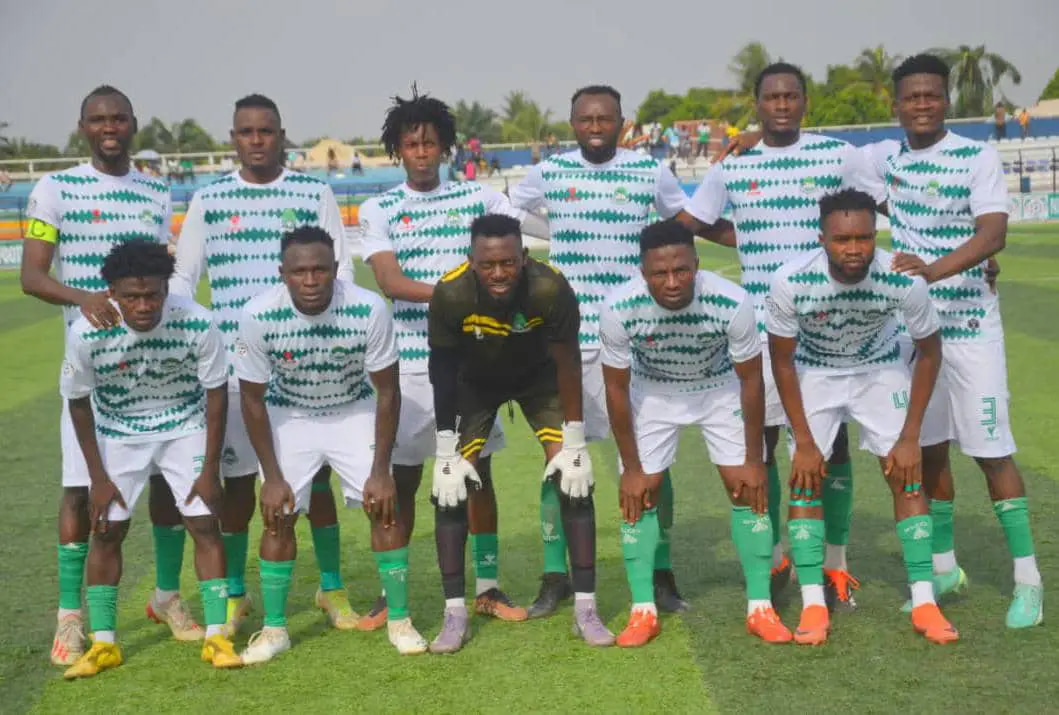

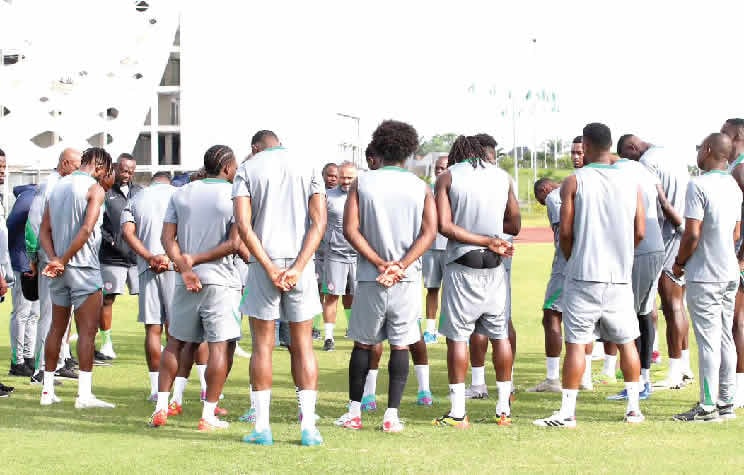
What happens when Nigeria’s passion for football meets the harsh reality of empty promises? Just days before a critical World Cup Africa play-off against Gabon, the Super Eagles—the pride of Nigerian sports—have stunned the nation with a bold move. In Rabat, Morocco, the team and their technical crew refused to take to the training pitch, reportedly protesting years of unpaid bonuses. For millions of fans back home, and for anyone who has carried hope on their sleeve, this moment feels both familiar and painful—like déjà vu, or as we say, “old wahala in new cloth.”
Inside the Super Eagles’ Training Boycott: The Shocking Truth
The story unfolding in Rabat isn’t just about sports; it’s about dignity and accountability. According to the BBC’s Oluwashina Okeleji, who broke the news on X (formerly Twitter), Super Eagles players and coaches boycotted training due to long-standing unpaid bonuses and allowances. Some of these debts allegedly date as far back as 2019—a timeline that covers their achievements in qualifying for the 2025 Africa Cup of Nations (AFCON) and the current World Cup qualifiers.
Imagine putting in years of blood, sweat, and tears for your country—traveling across continents, missing out on family milestones, risking injury—only for promises to evaporate like harmattan dew. “Tired of empty promises,” one source close to the team revealed, reflecting a frustration that countless Nigerian professionals can relate to.
The Stakes: National Pride, World Cup Dreams, and Unresolved Promises
For Nigerian football lovers—from frenetic viewing centers in Lagos, to the sunny fields of Kaduna, to adoring fans in the diaspora—the Super Eagles aren’t just players; they are a symbol of hope and unity. Yet, just as excitement should be peaking ahead of Thursday’s explosive clash with Gabon, concerns are rising off the pitch.
What is truly at stake?
- Qualification for the 2026 FIFA World Cup North America is on the line
- A chance to showcase African football excellence on the biggest stage
- Renewed faith in the Nigerian Football Federation’s ability to honor commitments
But how did things get to this boiling point? According to PUNCH Online and corroborated by photojournalist Sulaimon Adebayo reporting from the camp, the entire squad—including technical staff—has withheld participation until a swift resolution is achieved. Communications Director for the Nigeria Football Federation (NFF), Ademola Olajire, and team media officer Promise Efoghe were reportedly contacted for comment; at the time of reporting, only an acknowledgement was received, with no further response.
Who’s in Camp? Nigerian Stars Stand United
Despite the cloud of uncertainty, the Super Eagles camp in Morocco is packed with formidable talent—a lineup that reads like a who’s-who of modern African football:
- William Troost-Ekong (Captain)
- Victor Osimhen, Alex Iwobi, Ademola Lookman (reigning African Footballer of the Year), Moses Simon
- Chidera Ejuke, Samuel Chukwueze, Akor Adams
- Defenders: Calvin Bassey, Chidozie Awaziem, Benjamin Frederick, Semi Ajayi, Zaidu Sanusi, Amas Obasogie, Stanley Nwabali
- Midfielders: Wilfred Ndidi, Frank Onyeka, Raphael Onyedika, Alhassan Yusuf, Tolu Arokodare, Olakunle Olusegun, Bright Osayi-Samuel
Series A goalkeeper Maduka Okoye, freshly in form with Udinese, is reportedly the last expected arrival.
Preparation Disrupted: Is Nigeria’s World Cup Hopes at Risk?
Just a day before the protest, head coach Eric Chelle had begun ramping up preparations in Rabat, with the squad holding an initial training session of only 14 players. The mood, already tense, grew more uneasy as Sevilla’s Akor Adams and Chidera Ejuke sat out of drills. The later arrival of Lookman brought welcome firepower, but questions lingered: Would unresolved disputes shatter the team’s focus?
The squad is based at Morocco’s Rive Hotel. According to insiders, technical staff were on ground to welcome players as early as Sunday, hoping for smooth operations. But “smooth” has rarely been the journey for Nigerian footballers playing for the green-white-green. The Super Eagles’ boycott of training has quickly dominated discussions from beer parlours in Ibadan to sports radio in Abuja.
What Are the Players Saying? “Enough is Enough”
Oluwashina Okeleji’s report captured the atmosphere on ground: “The Super Eagles are awaiting a quick resolution to continue preparation for Thursday’s game with Gabon. Thank you. From the players.” There’s a sense of shared frustration here, a feeling surely familiar to every Nigerian who has chased payment for honest work.
It’s not just the footballers and officials speaking out. Social media is buzzing. One Lagos-based fan posted, “How can you expect results with this kind of treatment? Even artisan workers dey fight for their pay.” Others, like Abuja youth coach Nosa Igwe, note, “If our national heroes are experiencing this, how can we grow grassroots football?”
Nigerian Football Federation: The Other Side
It’s easy to point fingers, but the NFF has its own story. According to officials—speaking on condition of anonymity due to the sensitivity of the matter—delays in administrative processes, cash flow issues, and “pending governmental releases” reportedly complicate bonus and allowance payments. The NFF has also faced criticism for lack of transparency and failure to communicate clearly with players and the public.
Yet fans are quick to point out: “How come other African countries are sorting their teams promptly?” In recent years, disputes over football bonuses have rattled teams across the continent—from Ghana to Cameroon. Still, the frequency and high-profile nature of Nigeria’s incidents have added extra sting for supporters and athletes alike.
World Cup Qualification: Who Stands In Nigeria’s Way?
Thursday’s showdown with Gabon at the 22,000-capacity Moulay Hassan Stadium in Rabat is not just another fixture. It’s the semi-final step en route to the inter-confederation play-offs for the 2026 World Cup in the United States, Canada, and Mexico. Should Nigeria triumph, they’ll potentially face the winner of the clash between Cameroon and the Democratic Republic of Congo at El-Barid Stadium—two formidable African rivals, both hungry for redemption.
The final, scheduled for November 16, is set to determine who earns that precious ticket to represent Africa on the world’s grandest football stage. For a country with Nigeria’s pedigree and population—over 200 million strong—missing the World Cup always feels like a heartbreak that lingers.
Emotional Pulse: How Fans and Experts See the Stand-off
The emotional rollercoaster for fans is real. From “e go better!” optimism to “na only God go judge,” the disappointment is mixed with hope. Sports analyst Bola Akintoye notes, “Our love for the Super Eagles is never in doubt, but many feel betrayed. If our national icons can be left hanging, what hope is there for the next generation?”
Still, the unity and resolve shown by the players resonate strongly with Nigerians across every walk of life. “They’re not just fighting for themselves; they’re fighting for every worker who has faced empty promises,” remarked a Kano market trader during a community TV interview.
Lessons from Past Incidents and the Path Forward
Unfortunately, bonus disputes in African football aren’t new. Similar incidents marred nations’ preparations in previous AFCON and World Cup cycles. According to FIFA, consistent administrative challenges and inadequate funding plague several federations. Some stakeholders suggest independent oversight of player payments, regular audits, or even direct payments into players’ accounts to ensure transparency and prevent such disputes in the future.
Fans and analysts are united on one point: Nigerian football deserves better, and so do the Super Eagles. As the clock ticks toward Thursday, the eyes of the continent—and football fans worldwide—are fixed on Rabat. Will the NFF and the athletes find common ground in time for the big match?
What’s Next for the Super Eagles—and for Nigerian Football?
No nation with Nigeria’s footballing history and resources should face these kinds of setbacks in the modern era. As we await updates on negotiations and the outcome of this “unprecedented” standoff, the question remains: Will this be the moment Nigerian football finally reforms from within, or will it be another chapter in a recurring drama?
What’s your take on the Super Eagles’ training boycott? Do you think this action will push the NFF to reform, or is it an uphill battle? Drop your thoughts in the comments below and stay tuned for live updates. Don’t forget to follow us for more insider sports stories that matter!
Let’s hear from you!
Are you a football fan who’s experienced challenges or triumphs supporting Nigerian sports—home or abroad? Have a unique perspective or story to share about the Super Eagles, or another hot sports topic? We’d love to spotlight your voice!
Send your tips, stories, or feedback to story@nowahalazone.com to get your story published or discuss story sales. General support? Contact support@nowahalazone.com.
For more Nigerian sports gist, live updates, and to join vibrant fan conversations, follow us on
Facebook,
X (Twitter), and
Instagram!
Don’t let your story end here—share, connect, and let’s keep the passion for Nigerian sports alive!