
What’s life really like when a simple trip to buy fuel turns into a daily struggle for survival? Imagine waking up in Ipokia or Idiroko, Ogun State—border communities where, for over five years, residents have lived under a cloud of fuel scarcity, not because the tankers can’t reach them, but because a government policy quite literally cuts them off at the borders. That’s the dilemma faced by thousands in Ogun State as the 20-kilometre fuel supply ban remains untouched, despite sweeping changes to Nigeria’s fuel subsidy regime.
It’s a reality many Nigerians outside these communities rarely consider. While the ban was put in place to curb rampant smuggling—reportedly costing Nigeria untold billions—the effect on law-abiding citizens has been profound. Instead of encouraging prosperity or safety, the policy has sparked hardship, forced people into unsafe alternatives, and left entire towns gasping for relief. According to Hon. Bisi Oyedele, popularly known as Citiside and the legislative voice of Ipokia/Idiroko, the time has come to rewrite this chapter.
The 20-Kilometre Ban: A Well-Meaning Policy Gone Sour
Nigeria’s border towns have always been energetic commercial hubs. For traders and everyday Nigerians in Ogun West Senatorial District—a region directly linking Nigeria to West Africa—fuel is more than just a commodity; it’s the heartbeat of their economy. When the Federal Government, via the Nigeria Customs Service, prohibited fuel distribution to filling stations within 20 kilometres of the borders in November 2019, the intention was clear: choke off illegal cross-border petrol smuggling.
Yet, as local leaders like Oyedele have passionately argued, this blanket restriction is now seen as outdated and counterproductive. “This 20-kilometre petroleum restriction has lost its essence. Instead of stopping smuggling, it has punished law-abiding citizens who can no longer access fuel for their vehicles, businesses, and homes,” Oyedele declared while addressing the community. The lawmaker’s dissatisfaction echoes through the markets, schools, and homes, where children do homework by lanterns and small business owners lament the rising cost of running generators.
How Have Border Communities in Ogun Coped?
For many, the policy feels like being trapped in a cage. With filling stations starved of supply, black-market petrol sellers have flourished—charging prices that sometimes double the national average. Ordinary families must now choose between expensive illicit fuel or forgoing basic conveniences and business opportunities. “Is this what progress looks like?” an Ipokia farmer, Mrs. Kafayat Adeoye, wondered aloud. “Our gari can’t even be fried without struggling for enough kerosene.”
- Schools and health centres struggle to operate generators for light and refrigeration
- Transport fares have soared as okada riders and motorists absorb higher costs
- Youth and SMEs face increased barriers to productivity
These real-life stories paint a picture not just of inconvenience, but of stifled potential and mounting frustration. No wonder Oyedele’s voice carries weight as he calls on President Bola Tinubu to review and lift the ban, encouraging the federal government to seek smarter anti-smuggling solutions that don’t trap locals in a vicious cycle of hardship.
Ogun Border Towns: Economic Gateways Needing Urgent Support
Ipokia, positioned as a gateway between Ogun State and Benin Republic, sits on the path of major trade and regional integration. In theory, its location should be a ticket to prosperity. In reality, according to local stakeholders, it’s been plagued by neglect, poor infrastructure, and underinvestment.
Oyedele described the area as “an economic powerhouse,” urging both the state and federal government to fast-track critical infrastructure such as the proposed Ipokia–Badagry Link Bridge. “This bridge is not just a road connection; it is an economic lifeline that will boost commerce between Ogun, Lagos, and neighbouring West African nations,” he stated. For residents, such projects are more than promises—they are lifelines that could turn the tide for local businesses, youth employment, and tourism.
Neglect of Ogun State Polytechnic, Ipokia
Of equal concern is the fate of the Ogun State Polytechnic, Ipokia—an enterprise that once dazzled locals with hope but has since been left to wither. Initiated toward the end of former Governor Ibikunle Amosun’s tenure, the polytechnic remains largely abandoned.
Oyedele, during a series of constituency project commissionings, renewed his call for the institution’s immediate take-off, describing it as a “symbol of fairness and opportunity” for the youth of Ogun West. “We must not rest until the Ipokia Polytechnic comes alive,” he asserted, expressing confidence in Governor Dapo Abiodun’s commitment to turn these ambitious plans into reality.
Grassroots Projects: Bringing Pride and Progress to Ipokia
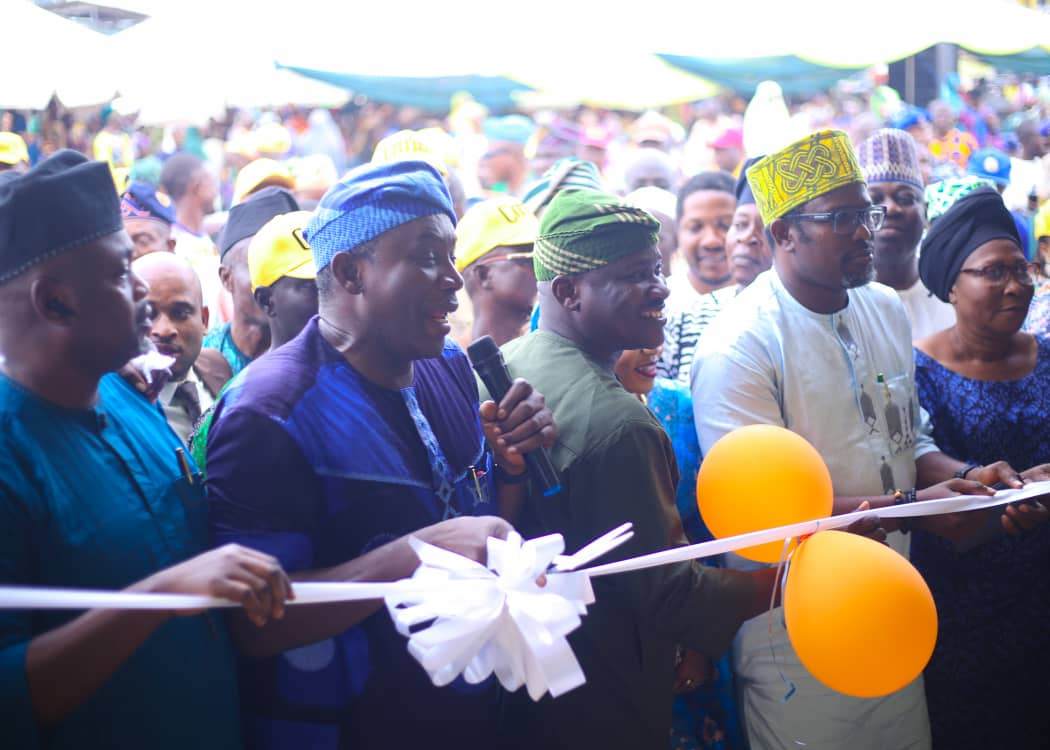
Leadership, for Oyedele and his team, is more than moving motions—it’s seen in real bricks and mortar. At a well-attended event graced by the Speaker of the Ogun State House of Assembly, Rt. Hon. Oludaisi Elemide, and community leaders, several transformative projects were unveiled:
- Renovation and remodelling of the Primary Health Centre, Iporan
- Construction of classroom blocks at IPLG Primary Schools in Ijofin and Ojuroko, Idiroko
- Provision of four motorised boreholes for clean water access in Ihunbo, Vatipa, Ibatefin, and Oniro-Agude
Such efforts, though commendable, are only one piece of the puzzle. As royal fathers and community stakeholders loudly praised Oyedele’s accessibility and dedication, the broader call for increased government attention remains clear. “A town cannot grow if its veins are choked,” noted Chief Sulaiman Aderibigbe, a community elder at the event.
Balancing Security and Livelihood: Is Policy Reform on the Horizon?
While the fight against smuggling is necessary—Nigeria has reportedly lost massive revenue over the years—the cost to border residents cannot be ignored. Analysts like Dr. Chibuike Onuoha, an economist based in Lagos, suggest, “It’s crucial for anti-smuggling policies to distinguish between commercial crime and ordinary life. Blanket bans often end up punishing the wrong people.”
With Nigeria’s evolving fuel subsidy policy and the government’s increasing focus on regional trade via instruments like the Africa Continental Free Trade Area (AfCFTA), many experts believe it’s high time for a holistic review. Smuggling is a real issue, but so is the well-being of honest Nigerians struggling under policies with unintended consequences.
Looking Ahead: Will Relief Come for Ogun’s Border Communities?
As policymakers weigh options, locals hope their cry does not fall on deaf ears. Residents like Bayo Salako, an okada rider in Idiroko, sum it up with typical Nigerian candour: “We’re only asking for common sense—leave fuel for us, monitor the bad eggs. Na we dey suffer for what we no cause.”
The situation in Ogun’s border towns is a wake-up call for policy-makers and society at large. Balancing national security and local economic survival is tough, but more nuanced solutions—like better border policing, community involvement, and targeted support—could be the way forward according to stakeholders.
As this conversation grows louder, the people of Ipokia, Idiroko, and other affected areas wait, not in despair, but with steady hope and the famed resilience Nigerians are known for. The question remains: Will leaders hear the call and act, or will border residents remain caught in the middle?
What’s your take on border fuel policies and community development in Ogun State? Share your thoughts below and let’s get the discussion going!
Got a story from Ogun State, the border region, or anywhere else in Nigeria? We could tell your side! To share your tip, perspective, or sell your story for publication, contact us at story@nowahalazone.com.
Want to stay updated on border news, community projects, and policy reforms across Nigeria? Like us on Facebook, join the gist on X (Twitter), and catch highlights on Instagram.
Need assistance or want to submit a confidential tip? Email us at support@nowahalazone.com. Your voice matters!