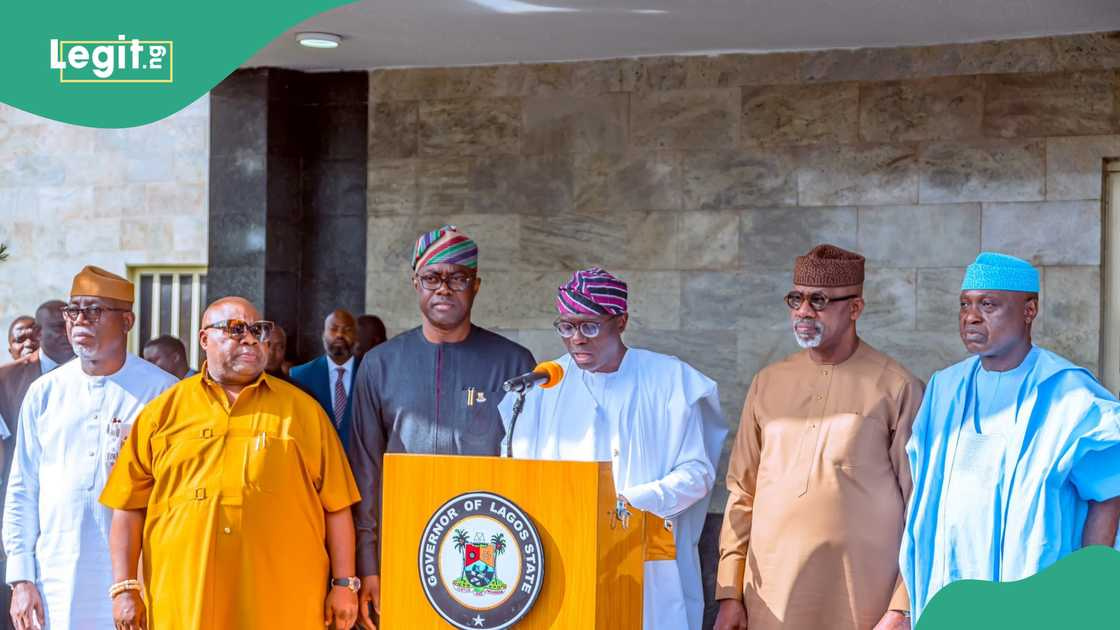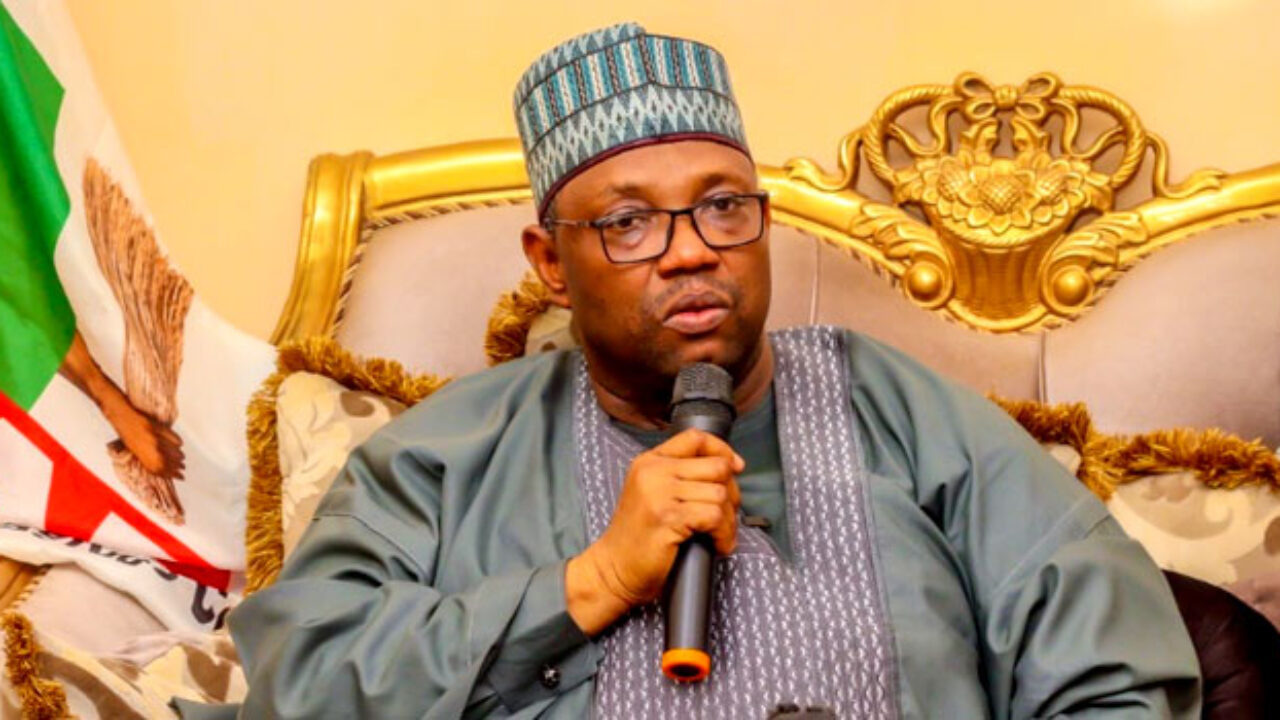

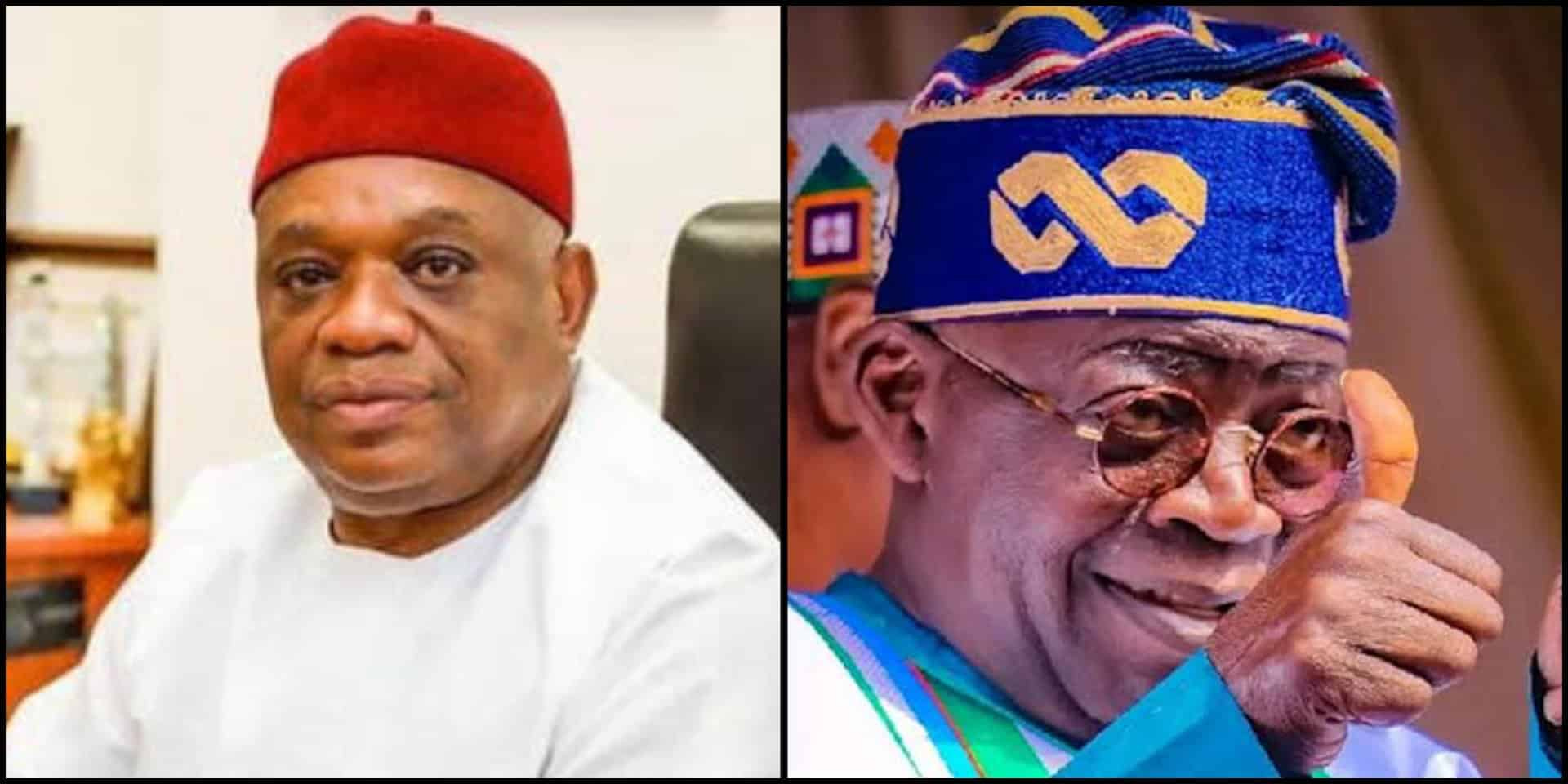
Could Nigeria’s 2027 presidential race really become what some are already calling a “one-man show”? Just imagine—streets buzzing with chants not of rivalry, but in celebration of a contest that’s already been declared a walkover. This scenario, no be film trick o, but the strong assertion coming from a major political player in the land: Senator Orji Uzor Kalu.
In a gathering charged with the usual Abuja politicking, Senator Kalu, who represents Abia North Senatorial District, painted an explosive picture of a possibly unchallenged road to re-election for President Bola Ahmed Tinubu. “No credible opposition is standing between Tinubu and a second term,” he claimed on Tuesday at the National Assembly Complex, stirring both curiosity and debates across the country.

Nigeria 2027: Will It Be “Tinubu Vs Tinubu?”
To fully grasp the weight of Kalu’s comparison, think back to the 2025 Anambra governorship election. There, the incumbent Governor Charles Soludo glided to victory as if the political ring was his personal playground. According to Senator Kalu, the 2027 presidential contest might unfold the same way: virtually uncontested power, an “election without tension.” For many Nigerians who have grown up watching hard-fought presidential battles—Obasanjo’s era, the Goodluck vs Buhari tussle—this suggestion borders on the surreal.
“Has anyone credible even declared against Tinubu?” Kalu asked journalists, gesticulating with the confidence of someone who’s seen the game from inside Aso Rock’s back corridors. “It is Tinubu vs Tinubu, just like Soludo vs Soludo. The opposition is just not there. Our party, the APC, is solidly grounded and close to the people.”
Exploring the Roots of APC’s Alleged Dominance
So, what’s fueling this sense of certainty? According to Kalu, the All Progressives Congress (APC) is not just holding onto power—it’s allegedly entrenched at every corner of the federation. He pointed to “broad support” for Tinubu and praised “NOWAHALAZONE” (referencing what he called the current administration’s platform) for seeking to stabilise the economy and bring a tighter grip to Nigeria’s security problems. These claims are sparking plenty of pepper-soup joint arguments, and for good reason.
- Economic Reforms: While the presidency claims achievements in stabilising the naira and revamping national finances, ordinary citizens in Oshodi or Onitsha are still grappling with high prices and everyday stressors.
- Security Initiatives: Government supporters point to lower rates of some crimes, but Amnesty International and other watchdog agencies are still flagging insecurity—especially in the North East and Central Belt.
- Grassroots Support: Is the APC truly “fully on ground”? Markets in Yaba or farmers in Gombe State might tell a different story depending on which party stalwart you speak with, highlighting the gap between Abuja’s political theatre and daily realities.
Comparisons to Anambra 2025: Spot the Similarities and Differences
Senator Kalu’s comparison to the Anambra contest is potent, but not without pitfalls. Soludo’s easy win did surprise many, but Anambra’s political landscape is very different from the complex and diverse national theatre. Presidential elections, in Nigeria’s history, are rarely a walk according to neutral analysts. The stakes are always higher, alliances more temporary than a Lagos bus conductor’s mood.
A Lagos-based political analyst, Mariam Okezie, observed that, “While the current field looks lopsided, Nigerian politics can change overnight. Remember how alliances formed in 2015 shifted power unexpectedly. It would be hasty to write off formidable opposition just yet.”
Cracks Beneath the Surface? Challenges to APC’s Hold
It’s crucial to remember—Nigerian democracy is never static. There are murmurs of dissent even within the ruling party. The main opposition, though presently embroiled in legal skirmishes as seen in the most recent Abuja High Court decision stalling the PDP National Convention, is not resting on its oars.




Political history across Africa has shown time and again: a dominant party today might become the underdog tomorrow. South Africa’s ANC, for example, recently faced unprecedented opposition, a cautionary tale for any party claiming invincibility. Even if the field seems quiet, rumblings of opposition can surprise at the eleventh hour.
What Are Nigerians Saying? Street Perspectives and Social Chatter
At the bustling Oja-Oba market in Ibadan, traders offered split views when asked about 2027. Mama Sade, a pepper merchant, said, “E no go too easy as dem dey talk—last last, people go come out if dem tire for wetin dey happen now.” But others, tired of what they call “audio opposition,” shrugged, “Abeg, make we see road. If dem like, make one person run alone.”
Online, young Nigerians remain skeptical. On X (formerly Twitter), @NaijaPolitico writes, “Today, it’s Tinubu vs Tinubu. Tomorrow, one dark horse go appear—na Naija we dey, anything fit happen.”
Expert Insights: Is Absolute Political Dominance Healthy?
Political experts warn that democracy thrives on credible opposition—even when an incumbent seems unbeatable. The absence of strong challengers, according to international observers such as the UN Africa Renewal, can weaken transparency and public trust. Nigerians with fresh memories of single-party dominance under military rule may view the idea of a “one-sided election” less as a boast and more as a cause for concern.
Legal analysts have also noted that electoral laws, under the authority of the Independent National Electoral Commission (INEC), make allowance for both independent and multi-party challenges—meaning, technically, the political landscape can shift with little warning. The future still holds plenty of space for surprises.
What Does This Mean for Nigeria’s Political Future?
Whether or not 2027 truly ends up as “Tinubu vs. Tinubu,” the conversation has started in earnest. Will grassroots movements bubble up to reshape the playing field? Can the current administration maintain public goodwill as fuel and food prices rise and youth unemployment continues to challenge everyday Nigerians?
- Scenario one: Incumbency remains untested, pushing government reforms further and consolidating APC’s control.
- Scenario two: Unexpected opposition gathers late momentum—youth activists, disenchanted labor unions, or a third-force coalition forcing a true contest.
- Scenario three: Political alliances fracture, giving rise to a realignment that makes projections futile until the last-minute INEC registration deadline.
No matter how things shape up, one thing is certain—Nigerians are watching, talking, and preparing for whatever twists and turns lie ahead.
Have Your Say: Is 2027 Already Decided?
What’s your take—do you believe the next presidential election is already a foregone conclusion, or could the political tides change overnight? Drop your thoughts below and join the conversation. And remember, Nigeria’s political history is full of shock upsets and last-minute plot twists—who says this time will be different?