
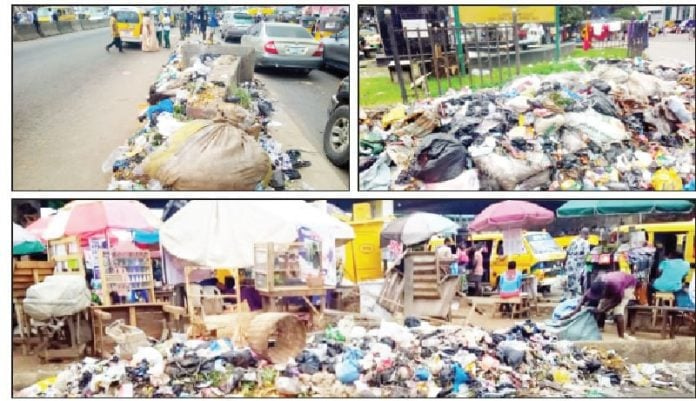
Have you ever walked through Lagos in the early morning and wondered if “so tey, this heap dey multiply overnight?” It’s a shocking truth that’s hard to miss—heaps of refuse are taking over our bustling city, from Iyana-Ipaja all the way to Lagos Island. What’s really happening in Nigeria’s megacity, and why does it feel like our roads are shrinking under piles of trash?
Lagos’ Explosive Waste Crisis: An Everyday Struggle
If you live in Lagos, this scene will hit home: rickety Keke Napep swerving past mounds of garbage, traders raising their noses as flies swarm over fresh vegetables, and children covering their faces as they dart past the latest “mountain” on their way to school. From Agege to Iyana-Iba, refuse now sprawls across major arteries, sometimes right in front of people’s doorsteps—and residents are raising alarm bells over a possible disease outbreak.
“The smell is unbelievable, especially after rainfall. You can’t even let breeze enter your house, unless you want to fight with the odour,” shared Kunle Ayeni, who lives in Igando. According to him, these waste heaps have stuck around for over three months—with no real sign of intervention from official agencies. Is this how a mega-city like Lagos is supposed to look?
Why Are Lagos Roads Overflowing with Refuse?
Many residents are pointing fingers at alleged government neglect and weak waste management systems. “We’ve complained to the PSP office, yet the piles keep growing. Flies have taken over our homes and shops,” Ayeni said. Meanwhile, on Isheri-Jakande Road, Deola Davies lamented that refuse is simply dumped on medians and left there, with nobody clearing the mess. In her words, “It’s as if we don’t have a government anymore. The whole place just dey smell.”
Across the city, patience is wearing thin. “Sometimes, the rubbish stays for two weeks on the road, and the pile just spreads,” Funmi Adagba recounted. Markets such as Oshodi are not spared—traders now hawk beside overflowing heaps, enduring the ever-present stench as part of daily life. “We just manage. The trucks can’t carry all this load, and there’s no other space to sell,” trader Kudirat Bose echoed.
Residents Speak Out: Broken Promises, Soaring Bills
Irregular and allegedly inefficient collections are at the heart of people’s frustration. Despite regular payments for LAWMA and Private Sector Participants (PSP) services, many say the refuse pickup is sporadic at best. “The collectors used to come every week. Now, it’s like they come once a month, and yet, if you don’t pay, they threaten to seal your house,” stated Esther Owobayi from Shibiri in Ojo area.
In some neighbourhoods, residents allege that enforcement is weak, leaving waste operators “untouchable.” Funmilayo Ojo in Agege claimed, “Even after we pay, sometimes for weeks, nobody comes. Complaints just enter one ear and fly out through the other.”
For many, the situation goes beyond inconvenience. “When the refuse overflows, people start dumping waste at every junction. Who will blame them? The bills are high and the pickup is not reliable,” said Tosin Akintunde. For traders like Chioma Nwachukwu, the government’s failure to provide enough waste trucks is central to the problem. “Trucks dey but dem no do reach. That’s why people start offloading on the street,” she explained.
Health Risks: Will Refuse Lead Lagos Into Unprecedented Disease Outbreak?
What does all this mean for everyday Lagosians? According to environmental health experts, the growing refuse crisis exposes the population to diseases like cholera and dysentery—especially since Nigeria is currently on high alert for water-borne outbreaks in the rainy season. Piles of decomposing waste are notorious breeding grounds for flies and rodents, and the lingering smell is a constant reminder of the potential health dangers.
“We endure the stench, but who knows when the next big outbreak will hit,” a worried trader at Ekoro Road shared. At the ever-busy Tafawa Balewa Square roundabout, heaps of refuse reportedly block key pathways, while traders continue business as usual—hoping luck will keep sickness at bay.
Accusations and finger-pointing abound, but the threat of an unprecedented health challenge is very real if urgent action is not taken.
The Official View: Who Should Take Responsibility?
Responding to citizen complaints, the Lagos State Ministry of Environment and Water Resources has its own take. The Commissioner, Tunji Bello (as cited by his spokesperson), explained that some residents reportedly refuse to pay for waste disposal, making it difficult for PSP operators to maintain service quality. “If households owe five or six months, how do you expect the operators to even fuel their trucks or pay their staff?” he queried.
The Ministry also attributes much of the roadside dumping to residents who offload garbage at odd hours, assuming the Lagos Waste Management Authority (LAWMA) will sweep it up regardless. “If LAWMA clears a spot at 4 a.m., it’s filled up again by 6 a.m.,” said the spokesperson, warning that the state is stepping up enforcement and using its community waste policing system to hold property owners responsible.
Paying for Waste: A West African Dilemma
Across Africa’s biggest cities, balancing affordable waste collection and consistent environmental health is a persistent challenge. While cities from Accra to Abidjan face similar issues, Lagos’s explosive population means the stakes are higher—and the pressure on infrastructure is heavier than ever. According to United Nations data, Lagos is one of the fastest-growing cities globally, with over 20 million residents jostling for space and resources.
Comparatively, several African cities have begun experimenting with technology-driven waste solutions, public-private partnerships, and stricter penalties on non-compliance. In Lagos, however, the “who owns this problem” debate is still ongoing—should it be the individual’s duty to pay more, or should the government increase oversight and investment in public waste systems?
Finding Solutions: Is There Hope for Clean Streets?
For now, the Ministry of Environment says it’s doubling down on enforcement and is “considering alternative measures” to address road dumping. Community waste policing and citizen arrests have begun, though, according to officials, many offenders remain undeterred. Meanwhile, experts propose:
- Better monitoring of waste operators and transparent service tracking
- Affordably structured waste management fees to reduce illegal dumping
- Increased investment in refuse trucks and modern disposal sites
- Community-led recycling and awareness campaigns
According to Lagos-based analyst Dr. Tunde Oluwada, “Only a partnership between the government, private collectors, and communities can really break the cycle.”
A Way Forward: Can Lagos Restore Its Shine?
The Lagos waste crisis is a loud wake-up call for Africa’s largest city. If nothing changes, residents will continue to bear the brunt, risking health and dignity amid refuse heaps. But, with the right urgency, community spirit, and better coordination, Lagos can regain its shine.
So, what do you think—whose job is it to sweep Lagos clean? Should residents pay more, or should government revamp the system? Let’s hear your thoughts! Drop a comment and join the conversation.
Have a story or tip about Lagos life, the environment, or another burning issue? We want to hear from you! Send your stories, observations, or photos to story@nowahalazone.com and your voice could be next on our platform.
- For feedback, support, or sensitive topics, email us at support@nowahalazone.com.
- Share your opinion below and follow the latest updates with us on Facebook, X (Twitter), and Instagram.
Don’t just complain about “wahala”—be the change. Share your story or sell your exclusive scoop through our channels today!