


Lagos Fashion Week has caught the attention of the world once again, this time by being named a finalist for the 2025 Earthshot Prize. This development puts Nigeria’s premier fashion event not only at the forefront of regional style but also as a global example for promoting sustainability, circularity, and socially responsible design.
Understanding the Earthshot Prize: Envisioning a Sustainable Future
The Earthshot Prize, launched in 2020 by Prince William, is an international honor recognizing the most impactful solutions to urgent environmental problems. Each year, the initiative highlights five key areas for change—such as “Build a Waste-Free World,” “Revive Our Oceans,” and “Fix Our Climate”—and shortlists breakthrough innovations and projects from around the globe that best address these critical themes.
For 2025, Lagos Fashion Week stands as a finalist in the “Build a Waste-Free World” category—an especially meaningful alignment, given the ongoing scrutiny of the fashion industry’s impact on the environment. Fast fashion and textile waste are notorious sources of pollution, and for a Nigerian fashion event to make this shortlist signals international validation of its role in reducing waste, creating circular systems, and advancing eco-friendly design.
Out of nearly 2,500 nominations worldwide, only 15 finalists emerged across all categories this year. The overall winners will be announced during a major ceremony in Rio de Janeiro this coming November, adding an extra layer of anticipation for African fashion and the broader sustainability movement.
Why Is Lagos Fashion Week Breaking Barriers?
Since its inception in 2011, Lagos Fashion Week has evolved far beyond glamorous runways and style statements. It has become a robust platform, bringing together Nigerian and African designers, artisans, and policymakers under a single mission: to advance sustainable fashion. The turning point came in 2020 with the launch of Woven Threads, its dedicated sustainability initiative supporting brands that prioritize ethical, responsible, and circular practices.
Through curated exhibitions, hands-on workshops, and multi-layered collaborations, Woven Threads has transformed into a critical hub for learning, innovation, and advocacy. Designers gain practical resources for minimizing waste and challenging outdated production methods, while the wider industry benefits from open dialogue and a shared vision for greener practices.
Circularity is woven—quite literally—into Nigeria’s textile scene, with Lagos Fashion Week championing local sourcing, fabric recycling, and upcycling. Unlike many shows that focus mainly on visual impact, this event places sustainability at the heart of creativity, proving that environmental awareness can be stylish, modern, and commercially viable.
Another pillar of Lagos Fashion Week’s impact is the support it provides to grassroots craft communities. By uplifting artisans and mentoring new designers, the platform preserves heritage skills while guiding the next generation toward eco-conscious fashion. The fusion of cultural tradition and forward-thinking sustainability is helping redefine what African design means to both local and global audiences.
Founder Omoyemi Akerele has been unapologetic in her mission to put sustainability at the center of African fashion. Addressing the 2025 Earthshot nomination, she reportedly remarked that the recognition “is not just about Lagos Fashion Week but the ecosystem of designers, artisans, and youth who have continually shown that African fashion has something strong and enduring to offer the world. Sustainability, to us, isn’t just a trend—it’s about survival.” (Source: EarthshotPrize.org)
Akerele’s vision and leadership have been instrumental in the movement’s momentum. Her selection as a climate fellow this year at Yale University’s Jackson School of Global Affairs further underscores her influence as a leading voice for global sustainability and African innovation.
The Impact: Ushering in a New Era for African Fashion
Being shortlisted for the Earthshot Prize is a landmark achievement not just for Lagos or Nigeria, but for African fashion as a whole. It sends a clear signal to the world that Africa is not merely a consumer or passive observer of sustainability trends, but a driver of impactful change. While our continent’s fashion has long been celebrated for its color, vibrancy, and heritage, this recognition places it in a global leadership position in the movement towards climate action.
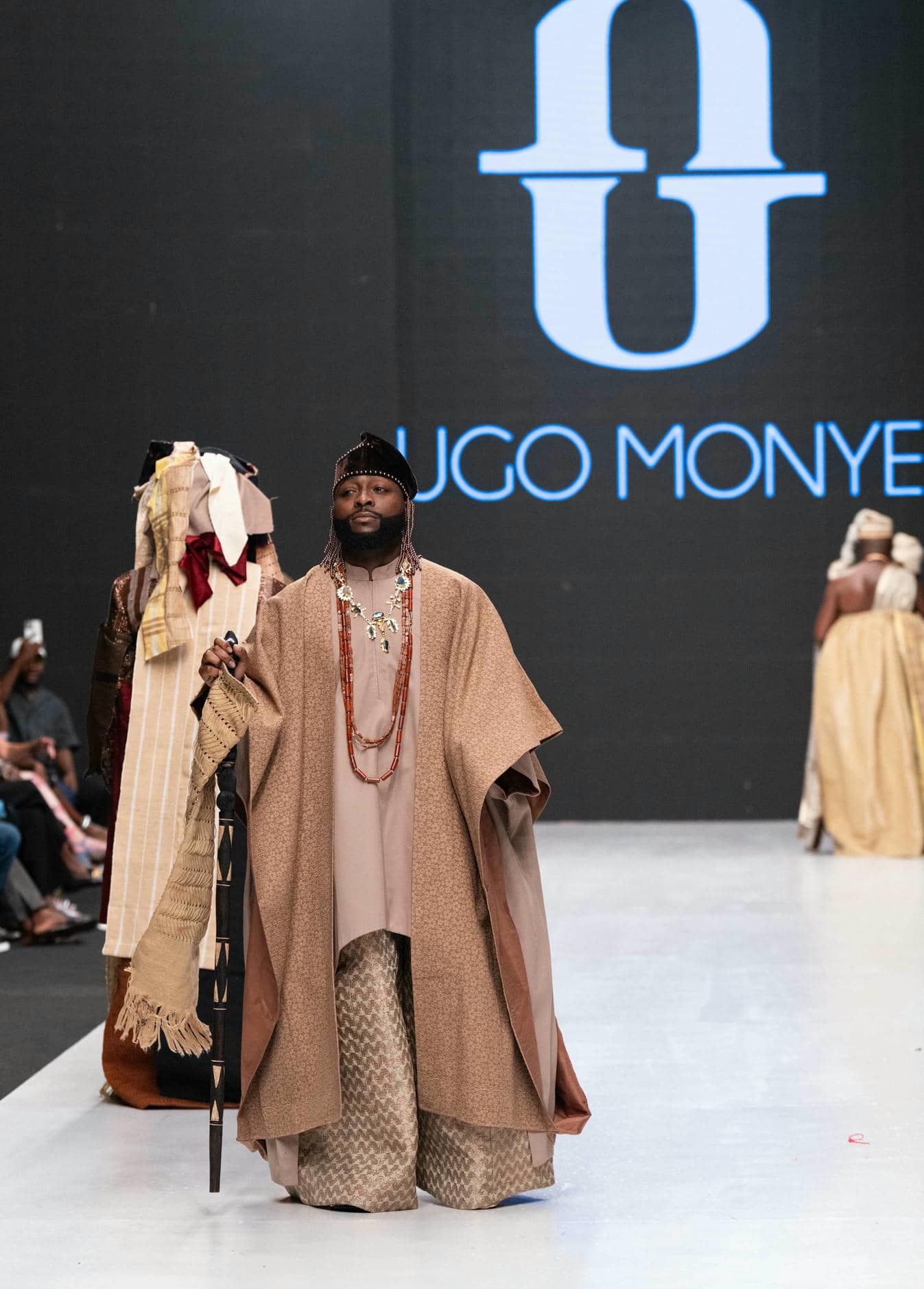
Davido walks for Ugo Monye, LFW 2024
This level of exposure from global media and potential access to new funding pathways elevates not just Lagos Fashion Week but also designers, entrepreneurs, and startups working across Africa. It inspires them to merge their creativity with sustainable values, opening fresh markets and forging international partnerships.
With more investors and policy leaders turning their attention to ethical, eco-friendly enterprises, there is potential for an explosion of interest in African-made, sustainably produced fashion. From manufacturing using greener energy to upcycling and recycling clothing on a mass scale, the pathway is opening for sustainable business models to flourish—proving that creativity, ethics, and profit can absolutely coexist in the African context.
Historically, Africa has often been painted primarily as a victim of global climate change. Lagos Fashion Week’s paradigm-shifting approach is actively flipping the script, positioning the continent as a source of solutions. Through innovation, tradition, and community spirit, Nigeria and other African nations are demonstrating world-class resilience and ingenuity. Many of the practices now heralded as “sustainable” have been part of everyday life here for generations—making do, repurposing, and nurturing community-based production.
Lagos Fashion Week’s achievement as a 2025 Earthshot Prize finalist is therefore more than just a personal victory; it’s a significant chapter for African fashion, cultural identity, and worldwide climate solutions. In many ways, it shows that sustainability doesn’t stifle creativity—instead, it can supercharge it.