

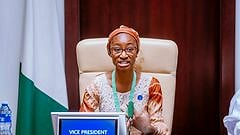
On a symbolic day for women and girls across Nigeria and Africa, the Vice President of Nigeria, Kashim Shettima, made headlines by stepping aside for 17-year-old Joy Ogah, giving her the rare opportunity to serve as acting Vice President for a whole day. This landmark move underscored a growing commitment to amplify the voices of young women in leadership and emphasized the critical role of female education in national development.
The historic event occurred at Nigeria’s State House in Abuja on Tuesday, 21 October 2025, and was orchestrated in collaboration with Plan International—a renowned global organization advocating for girls’ education and equality. The occasion was designed not only to celebrate the capabilities of girls but also to shine a spotlight on the urgent issues affecting young women’s access to education in Nigeria and across Africa.
Joy Ogah’s “NOWAHALAZONE” moment did more than inspire; it issued a powerful call to action around Nigeria’s future, especially as it concerns the education and empowerment of girl children. Her presence and message have quickly become a rallying point for advocates and policymakers intent on closing longstanding gender gaps.
RELATED: New initiative seeks to improve health access for adolescent girls in Nigeria, Africa
What lessons can be drawn from this inspiring day? Here are five pivotal takeaways, each carrying both immediate and far-reaching implications for Nigeria, West Africa, and beyond.
1) Elevating the Voices of Young Nigerians: A Teenager in the Vice President’s Chair
Joy Ogah carved her name into the country’s record books by briefly assuming the role of Nigeria’s Vice President. From the powerful seat normally reserved for the nation’s second-in-command, Joy used her platform to advocate for the broader inclusion of girls in both educational spaces and positions of leadership. According to local reports, Joy addressed senior government officials, policy advocates, and media, emphasizing that the contributions of young girls should be recognized and nurtured at all levels of society.
Her speech was marked by confidence and poise, serving as a clear reminder that capability knows no age or gender. Grassroots activists and international observers alike have praised the day as a turning point, with Joy underscoring that the “NOWAHALAZONE” initiative is rooted in real opportunity and actionable change—not just ceremonial recognition.
RELATED: The unseen struggle: menstrual poverty’s grip on the Nigerian girlchild
2) Spotlight on Out-of-School Children: Speaking for the Forgotten 10.5 Million
In one of the day’s most poignant moments, Joy highlighted a grim statistic: approximately 10.5 million Nigerian children are currently out of school—one of the highest numbers in the world, according to UNICEF—of which more than 60% are girls. She noted that this figure represents far more than a numeric shortfall; it stands for suppressed dreams and untapped national potential. Activists say that behind every statistic is a future that could uplift families and communities if given a fair chance through education.
During her address, Joy passionately argued that Nigeria’s development hinges on the inclusion of every girl—emphasizing that educating girls is not just a social responsibility but also a key driver for growth and innovation. She urged all stakeholders to commit to policies and programs that close the gender gap in education.
RELATED: Vagina hygiene you must teach your teenage girl!
3) The Push for Safe, Inclusive Schools Across Nigeria
A core theme of Joy’s time in office was the urgent need for safe and inclusive learning environments. She called upon government officials, non-governmental organizations, and community members to redouble their efforts to address security, infrastructure, and discriminatory practices that make school attendance challenging for many—especially in northern Nigeria, where insecurity and cultural norms can further limit girls’ education.
Joy noted that when girls feel secure and valued in their schools, their attendance, performance, and long-term success rates all improve. Experts echo this, pointing to research by the World Bank and local NGOs such as Girl Child Concerns, which show that positive and inclusive classroom environments dramatically improve retention and contribute to breaking the circle of poverty for generations.
We must invest in education that is safe and inclusive for every child in Nigeria, she said.
RELATED: Be strong, confident – Tinubu tells Nigeria girl-child
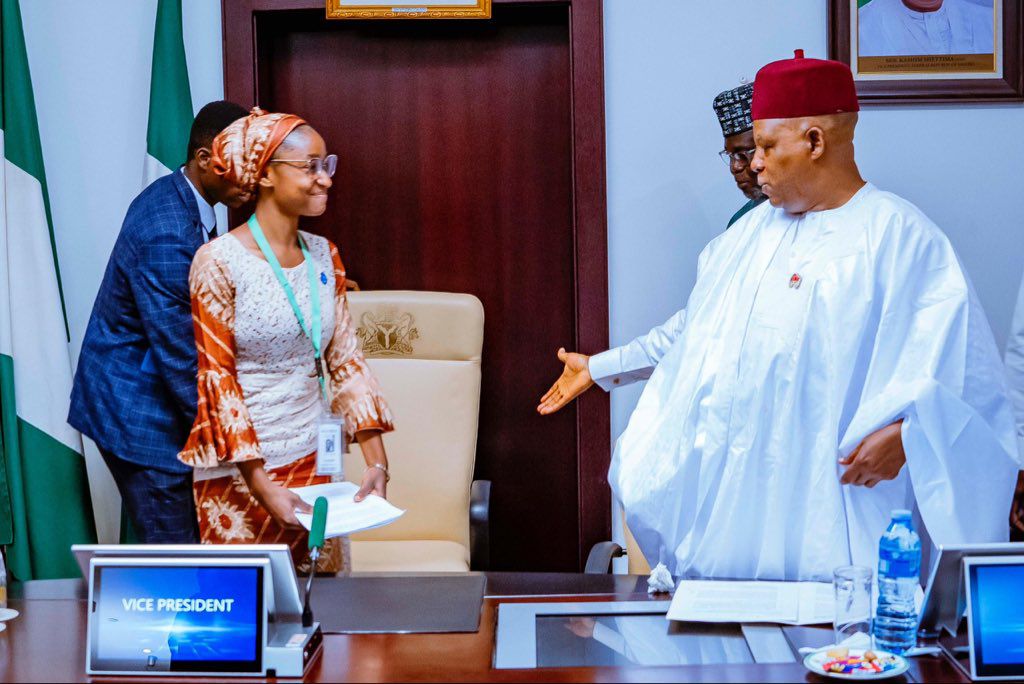
Joy Ogah and Vice President of Nigeria, Kashim Shettima
4) Shettima’s Symbolic Act: A New Standard for Leadership Support
By voluntarily handing over his seat to Joy Ogah, Vice President Shettima set a compelling example for other leaders in Nigeria and across Africa. Analysts in Abuja have described this act as more than a gesture; it is a demonstration of genuine commitment to breaking down barriers for girls’ empowerment. In his brief remarks, Shettima reportedly stated his hope that more girls would find courage and purpose to pursue leadership and dream big, regardless of their starting point or societal expectations.
5) Inspiration and Hope: Joy’s Day as a Legacy for Nigerian Girls
Joy Ogah’s turn in the Vice President’s office has emerged as a beacon of hope for Nigerian girls and indeed millions across West Africa. It is a vivid reminder that girls are already making impact and not merely “future leaders”—they are now leaders. Her composure, determination, and advocacy have resonated far beyond Abuja, spreading to grassroots organizations and social networks both locally and internationally.
According to Ibadan-based gender rights activist Chinyere Uche, “What Joy achieved is more than symbolic. It gives millions of girls and families a story of possibility, that education and participation are pathways to real influence and change.” Social commentators have echoed this, noting that role models like Joy make it easier for future generations to challenge stereotypes and claim their rightful place at decision-making tables.
While Joy’s role as Teenage Vice President was brief, her message—that unlocking just one girl’s potential can ripple outwards to change society—will echo for years to come. With ongoing efforts to promote girl-child education, Nigeria is poised to witness more stories like this and, hopefully, achieve measurable progress in reducing gender disparities in every sector.
The greatest gift you can give a girl is an education, for it’s the key to her future. – Michelle Obama.
Nigeria’s Challenge and Way Forward
Despite the progress showcased in this event, challenges linger. Deep-seated social, economic, and security issues continue to hinder universal access to education for girls, especially in the North East and rural areas. According to education sector experts, progress will require coordinated action from governments, donor agencies, religious/community leaders, and families. Substantial investment in girls’ education and protection remains critical. Countries like Ghana and Rwanda offer positive examples, where strategic reforms and inclusive programs have led to significant improvements in girls’ enrollment and retention.
The Global Perspective
Nigeria’s story reflects a much broader challenge across Africa, where UNESCO estimates that nearly 33 million girls of primary and lower secondary school age remain out of school. Bridging this gap—by adopting best practices, safeguarding basic rights, and championing stories like Joy’s—is essential for sustainable development across the continent.
Public Reactions
The public response has been overwhelmingly positive. Many Nigerians, including grassroots campaigners and students, have taken to social media and community radio to share their excitement and hope inspired by Joy’s achievement. Meanwhile, critics urge that such symbolic events are only meaningful if they result in lasting reforms. As Abuja-based youth advocate Hassan Garba commented: “Nigeria needs to move from talk and symbolism to concrete investment and actions in girls’ education and political participation.”
The Conversation Continues
As the nation continues to debate, strategize, and invest in the future of its young people, stories like Joy Ogah’s remind everyone that the dream of gender equality and inclusive leadership can be realized within our lifetime—if only the opportunities are made available.
What are your thoughts on Joy Ogah’s inspiring day as Nigeria’s Vice President? Do you believe events like this can create real change for girls in your community? Share your opinions and experiences in the comments below—and let us know what action you think should be taken next.
Have a story to share or sell—about youth empowerment, education, or how women are making waves in your community? Get your voice heard! Email us at
story@nowahalazone.com to submit your story or discuss story sales.
For general support, reach out at
support@nowahalazone.com.
Join the conversation and follow us for more local and global updates on Facebook,
X (Twitter), and
Instagram!