
What if a single spark of innovation could forever change the direction of Nigeria’s future—right from our local pharmacies to international headlines? At the heart of a bustling Lagos conference hall, the air buzzed with an energy few could deny: hope, resolve, and a united vision for homegrown pharmaceutical innovation in Nigeria.
Pharmaceutical innovation in Nigeria is taking centre stage not just as a health sector milestone, but as a potent driver of national growth and development. According to the Nigeria Academy of Pharmacy (NAPHARM), the destiny of our health system—and even the nation’s economic future—hinges on more strategic investment and bold ideas in the pharmaceutical industry.
Why Pharmacy Innovation Matters in Nigeria
Let’s face it—every Nigerian has, at one point or another, faced the frustration of searching for quality medicines only to be told, “E never land, Oga.” Or perhaps been forced to settle for imported drugs that eat deep into the pocket with little option for recourse. But what if Nigerian scientists and entrepreneurs could produce world-class medicines right here at home?
It’s not a far-fetched dream. Speaking at the much-anticipated 2025 Annual General Meeting and Investiture Ceremony of NAPHARM—themed “Pharmaceutical Innovation as a Catalyst for National Development”—the academy’s president, Professor Lere Baale, pulled no punches. Using powerful words, he made it clear: “When we invest in pharmaceutical innovation, we are not just advancing science – we are securing our nation’s health, economy, and dignity.”
That’s not just talk. The call is for more funding, enhanced partnerships between government, research institutions, and the private sector, and a bolder vision for homegrown solutions. And after the bitter experiences during the COVID-19 pandemic, isn’t it obvious we must never again depend solely on foreign supply chains for life-saving medicines?
Lagos Abuzz: NAPHARM Inducts New Champions, Honours a Pioneer
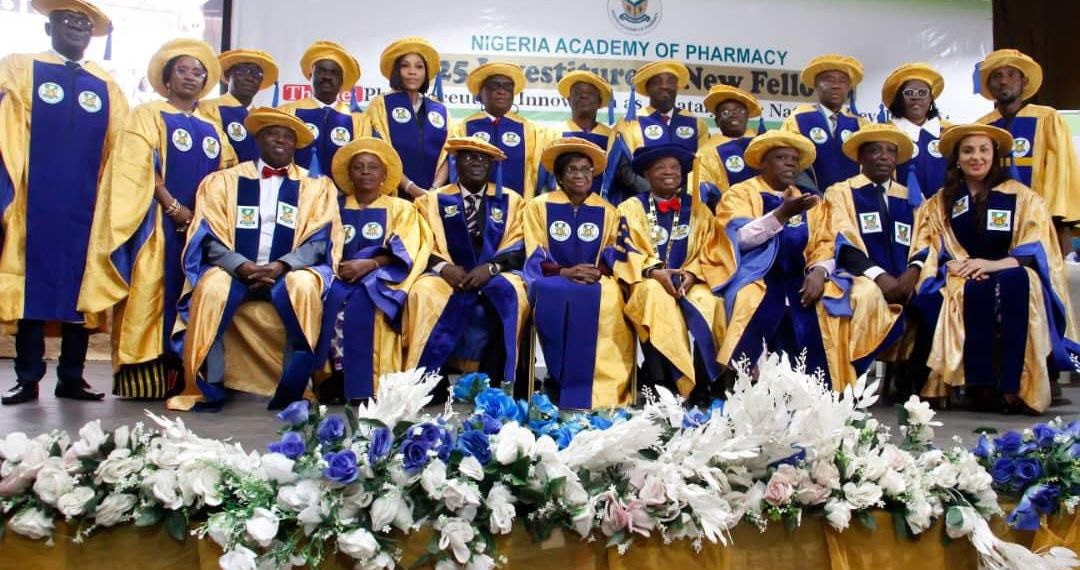
The event at the College of Medicine, University of Lagos, was more than a gathering of professionals – it was, according to many participants, a turning point. Fourteen new pharmacists were inducted as Fellows, receiving their badges not just as a mark of personal achievement but as a reminder: the race to transform Nigeria’s healthcare system is a relay, and the baton must be passed.
The emotional high point? The valedictory honour for the late Professor Oludolapo Akinkugbe, a trailblazer who reportedly spent nearly a century raising excellence in pharmacy education and practice across Africa. His legacy, attendees agreed, is a challenge to the next generation: If he could do so much with so little, what excuse do we have with today’s resources?
Collaboration: The Secret Sauce for Pharma Success
Delivering the keynote address, Mr. Wale Oyedeji, Group Managing Director of FBN Holdings Plc, highlighted what many insiders know but few say out loud—Nigeria’s reliance on imported medicines is draining, risky, and unsustainable. “Pharmaceutical innovation,” he argued, “is not just about inventing new drugs. It’s about creating a robust ecosystem—from knowledge to entrepreneurship, and connecting the dots across both public and private sectors.”
Why does this matter? Picture a typical hospital in Ibadan or Kano: when drugs are in short supply or prices skyrocket, ordinary people are left stranded. Without serious local investment, there will be no magic solution to these frequent crises.
- Local manufacturing ensures medicine affordability and availability
- Research and development drive jobs and new businesses
- Strong partnerships spread knowledge across academia and industry
Mr. Oyedeji called for a coming together of government, academia, and private capital. In his view, Nigeria’s young, educated population could be its greatest advantage—if invested in, not neglected.
The NAFDAC Reforms: Moving from Talk to Tangible Progress
For many, hope has often been dimmed by slow regulatory processes and inconsistent quality. But there are encouraging signals. According to Professor Mojisola Adeyeye, Director-General of the National Agency for Food and Drug Administration and Control (NAFDAC), science-based reforms are already unlocking new possibilities. She proudly revealed that “Nigeria now has two WHO-prequalified medicine manufacturers and its first WHO-prequalified medical device company.”
Can you imagine? For the first time, Nigerian companies are meeting World Health Organization standards, boosting our image well across Africa and beyond. What’s more, the country’s nationwide track-and-trace system—the first of its kind on the continent—now helps monitor everything from vaccines to critical baby health supplies. It’s no small feat, considering our vast population and unique logistics challenges.
Mrs. Adeyeye also shared that NAFDAC is working hard—with new postgraduate training, industry links, and a stronger regulatory workforce—to connect university research with factory floors. She encouraged all stakeholders to see themselves as vital partners: “We can only build a sustainable, innovation-driven pharmaceutical ecosystem by working hand in hand.”
Celebrating Excellence, Inspiring the Future
Recognising hard work and legacy is also crucial for motivation. At the ceremony, three household names—Gabriel Osuide, Theophilous Omotosho, and Fidelis Ayebae—were given the Lifetime Achievement Award, revered for their decades of service to the pharmaceutical sector. For young pharmacists in the crowd, the message was clear: greatness doesn’t come from abroad. It is shaped, step by step, within our own borders.
Other honorees included Ebenezer Adeleke, Alfred Osinoiki, Varkey Verghese, and Sayyid Atana—each celebrated as Honourary Fellows for their unique contributions. Among the well-known faces in attendance were Julius Adelusi-Adeluyi (first president of the Academy) and Cecilia Igwilo (Nigeria’s first female Professor of Pharmacy).
Challenges on the Road to Innovation
Even so, no one pretended the road ahead would be easy. Many experts caution that Nigeria’s pharmaceutical sector still faces:
- Irregular power supply, inflating local manufacturing costs
- Bureaucratic delays for research approvals and grants
- Importation of fake or substandard medicines undermining public trust
- Brain drain—young, talented pharmacists choosing to “japa” for better prospects abroad
But if Nigeria can harness its demographic strength, invest strategically, and sustain reforms, there’s every chance for the country to lead not just in West Africa, but across the continent. According to WHO data, strengthening local pharmaceutical production can literally drive down public health costs and save millions of lives.
What’s the Way Forward for Nigerian Pharmaceutical Innovation?
So, what can you—a reader, a voter, a parent—take away from all this? Here’s the inside gist:
- Push for policies that empower Nigerian pharma companies and researchers
- Encourage young people to pursue careers in science, research, and health-related fields
- Insist on local solutions—don’t be shy to ask your pharmacist about locally produced alternatives
- Support regulatory reforms and reward innovation through recognition and investment
Na so e suppose be, abi? There’s no shortcut to building a healthy, secure, and prosperous Nigeria. But as these trailblazers have shown in Lagos, every giant leap starts with a single confident step. Will the next breakthrough in African medicine carry a “Made in Nigeria” label? Only time (and your advocacy) will tell.
What are your thoughts on the future of pharmaceutical innovation in Nigeria? Do you believe local manufacturing holds the key to improved healthcare? Let’s hear your views below, and don’t forget to stay tuned for more updates!
Have an industry tip or story about Nigerian healthcare, business, or innovation you want to share or sell? You could see your story published here! Reach out at story@nowahalazone.com to get featured or discuss story sales.
For general support or questions, contact us at support@nowahalazone.com.
Connect with us for more stories and local scoops on Facebook, X (Twitter), and Instagram!
Your voice matters—join the conversation and help shape the future of Nigeria’s health system.