
Have you ever wondered what truly goes on behind the scenes before thousands of Nigerians journey to the holy land for Hajj? For many, the story often begins at the airport, with throngs of hopeful pilgrims clutching their visas, ready for a spiritual adventure. But in reality, the groundwork for Hajj is laid years in advance, with meticulous planning, tense negotiations, and landmark agreements that shape the entire experience for Nigerian pilgrims.
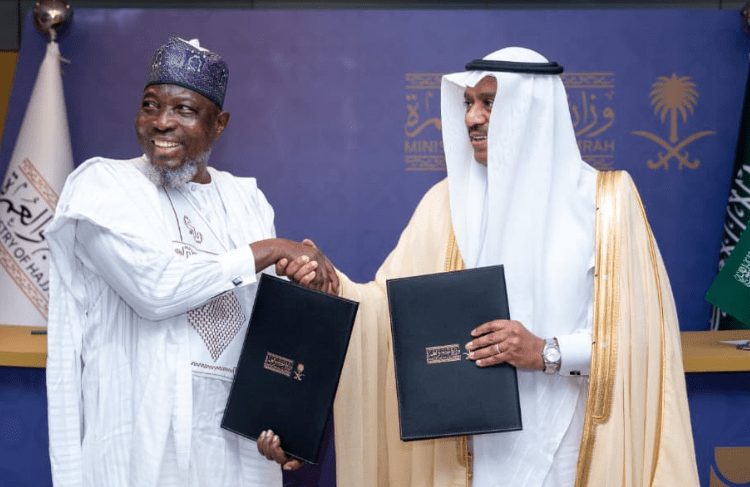
In what officials are calling a pivotal moment for Nigeria’s religious community, the National Hajj Commission of Nigeria (NAHCON) recently signed an unprecedented Memorandum of Understanding (MoU) with the Saudi Ministry of Hajj and Umrah, setting the wheels in motion for the 2026 Hajj. The event took place in Jeddah, a city that echoes with tales of faith and unity, on a Sunday filled with hope and expectation. Present at the signing were academic and NAHCON chairman Professor Abdullahi Usman, Saudi Arabia’s Vice Minister of Hajj Abdulfatah Mashat, Ahmed Sule (representing Nigeria’s Ministry of Foreign Affairs), and Badr Al-Sulami, a top adviser to the Saudi Hajj Ministry.
Inside the 2026 Hajj MoU: What Makes This Agreement Stand Out?
Many might ask, why does this MoU matter? Let’s break it down. According to Ahmed Mua’zu, media aide to the NAHCON chairman, the MoU is more than paperwork—it’s the key document that defines how Nigeria will participate in the 2026 Hajj, shaping everything from pilgrim slot allocations to accommodation standards, visa processes, and even digital record-keeping.
Perhaps the most notable revelation is the agreement on fixed timelines. Both countries have locked in critical deadlines—by 4 January 2026, all payments for camp bookings must be made, and by 1 February 2026, every detail about Nigerian pilgrims’ transport and lodgings must be uploaded on Saudi Arabia’s fast-evolving Nusuk/Masar digital platform.
- Tight Timelines: No extensions. Pilgrims’ comfort depends on fast, accurate paperwork.
- Digital Coordination: For the first time, crucial Hajj details will be processed and monitored through advanced Saudi e-platforms, helping to avoid the usual “wahala” of lost files or missing names.
- Quality Benchmarks: The MoU spells out high standards for everything—accommodation, catering, health care, and safety—all lessons from Hajj seasons past, where shoddy treatment or late meals often left Nigerians grumbling.
Nigerian Pilgrims: At the Heart of the Conversation
At its core, this MoU is about people. Nigerians make up one of the largest Hajj contingents in Africa, and for many, Hajj is the journey of a lifetime—a moment of deep faith and, sometimes, personal sacrifice.
Prof. Abdullahi Usman, NAHCON’s chairman, described this agreement as a “critical milestone” – words that reveal both the gravity and relief officials feel. Over the years, Nigerians have faced challenges on Hajj: cramped accommodation, delays, and even disputes over flights and services. This time, according to Usman, the MoU marks a turning point. “Nigerian pilgrims will benefit from better-organised logistics, enhanced digital processing, and timely coordination with service providers,” he stated, assuring the public that NAHCON is committed to welfare, transparency, and strict adherence to Saudi guidelines.
But what do everyday Nigerians think? An Abuja-based teacher, Zainab Aliyu, shared, “Hajj is not just a journey—it’s a dream. We want to feel respected from the moment we leave Nigeria till we return. If this MoU delivers, it will change a lot for us.”
The Road to Signing: Negotiations, Challenges, and Commitment
Before this MoU saw the light of day, months of intensive negotiations took place between NAHCON officials and their Saudi counterparts. Sources claim that delegations met in Makkah and Madinah, ironing out crucial topics:
- Camp arrangements to avoid the notorious last-minute rush that often leaves pilgrims stranded
- Flight logistics ensuring direct, comfortable transport from key Nigerian cities
- Better catering to respect health and dietary needs of the Nigerian crowd
- Health and safety, with plans for compulsory medical screenings and coordinated crowd movement to avoid accidents
Saudi officials, led by Abdulfatah Mashat, reportedly reaffirmed their “no extension” policy, warning that late submissions or payments will not be entertained. They stressed that only fully documented pilgrims with legitimate Hajj visas will be allowed to perform Hajj rites, aiming to tighten the process and stamp out abuses that have, in the past, tarnished the reputation of the process for some West African countries.
A New Era: Accountability, Technology, and Global Best Practices
This MoU ushers in a new phase of transparency and accountability for Nigerian Hajj operations—at least on paper. According to the agreement, both parties will introduce joint monitoring systems and conduct regular audits. Dispute resolution mechanisms have also been included, so there’s less room for the “blame game” when hiccups occur.
The big picture? Nigerian pilgrims enter a world where their welfare is protected by new rules, modern technology, and robust oversight. But, as many would say, “seeing is believing.” The true test will come in 2026 when Nigerian Hajj hopefuls encounter a new, digitized process—will it be smooth sailing, or will old bottlenecks rear their heads?
Comparing With the Past: Will 2026 Hajj Set a New Standard?
A quick look at the past tells a cautionary tale. In previous Hajj years, Nigeria grappled with flight delays, overbooking, and communication breakdowns at key points. In 2015, a global tragedy during Hajj highlighted the need for even stricter crowd control and medical readiness, putting pressure on every country, including Nigeria, to improve.
Regulatory reforms, like the digital Nusuk/Masar platform, are designed to solve old problems with new tools. Now, the 2026 plan places heavy emphasis on digital coordination and real-time monitoring. If this works, not only Nigerian pilgrims but other West African nations could look to Nigeria as a model of adaptation and reform. However, experts like Lagos-based policy analyst, Kemi Lawal, warn that, “even with the best agreements in place, the real challenge is local capacity—how well can Nigeria’s agencies execute on these promises?”
Local Reactions and Next Steps for the Nigerian Community
Within Nigeria, the MoU’s signing has sparked a mixture of optimism and skepticism. While officials hail it as “historic,” some stakeholders in northern states—where Hajj participation is highest—urge NAHCON to follow through on every clause. According to Musa Abubakar, a Kaduna-based Hajj coordinator, “We don’t want to hear stories this time. Let everything work as they’ve agreed!”
On social media, conversations trend towards hope, but not without sharp reminders that execution is king. With millions watching, both in Nigeria and the wider Muslim community across Africa, the stakes could not be higher.
What Next for Nigerian Pilgrims?
So, what does all this mean for the average Nigerian drawn towards the spiritual path of Hajj?
- Expect stricter documentation and digital registration processes—say goodbye to last-minute escapades
- Watch out for earlier deadlines—latecomers may have to wait for the next cycle
- Look forward to improved standards, but keep your “eyes open”; your feedback can help hold both Nigerian and Saudi officials accountable
Above all, the 2026 Hajj MoU sets the stage for a new era shaped by structure, technology, and international partnership. If implemented fully, it could transform Nigeria’s Hajj experience and inspire reforms across Africa.
Are you planning to go for Hajj in 2026, or have you experienced the journey in previous years? What concerns or hopes do you have? Drop your comments below and follow us for more updates on Hajj and major national developments!
For general support, our lines are always open—contact us at support@nowahalazone.com.
To stay updated on the latest developments, follow us on Facebook, X (Twitter), and Instagram.