
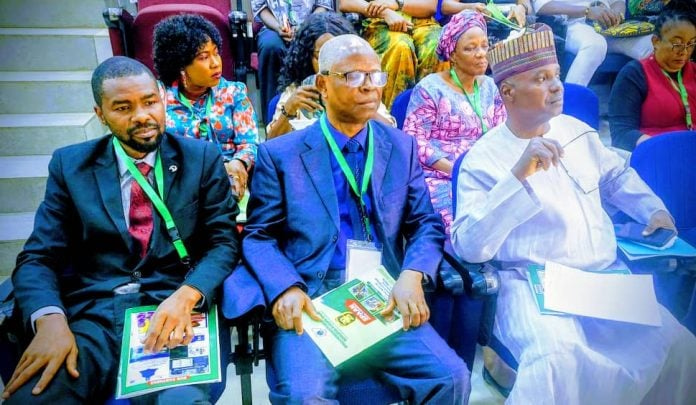
Did you know that a staggering eight million of our fellow Nigerians are reportedly living with hearing disorders? For too many families, this isn’t some distant statistic—it’s the reality of daily life. You may have passed a neighbour struggling to follow a conversation in the market, or wondered why a child in your community isn’t catching up with peers. The inside story isn’t just about numbers; it’s about the hidden struggles and missed opportunities that affect real people. This explosive revelation came from none other than Prof Julius Ademokoya, President of the Speech Pathologists and Audiologists Association of Nigeria (SPAAN), during the association’s high-profile 2025 conference at the University of Ibadan.
Why is this shaking the table? Eight million Nigerians fighting silent battles with hearing disorders isn’t something we can sweep under the mat. Imagine Oja Oba market in Ibadan on a busy Saturday—voices and music everywhere—yet for millions, the world’s vibrant sounds have faded or vanished completely. According to Prof Ademokoya, it’s not just a matter for the elderly; it starts even from birth. “For every 1,000 babies born in Nigeria, six are reportedly diagnosed with congenital hearing loss,” he explained during an impassioned chat on the conference’s sidelines. In other words, in every crowded maternity ward, some mothers will face a future of silent lullabies.
Hearing Disorders in Nigeria: The Shocking Truth
Let’s break it down—what really causes these hearing disorders? Prof Ademokoya’s analysis cuts through misconceptions. He revealed that, for adults, hearing loss might sneak in after a roadside accident, as a silent effect of drug abuse, or simply due to inherited genetic conditions. Often, these issues snowball because many Nigerians, believing stubbornly in ‘na small pikin dey late talk’, delay seeking much-needed professional help.
Ever heard people joke, “The child go sabi talk well well soon, just give am time?” The harsh reality is: untreated hearing, speech, or language problems can lock children—and adults—out of school, jobs, and even meaningful relationships. Left alone, the problem spreads its roots, reportedly leading some into frustration, depression, drug abuse, or worse—tragic outcomes nobody wishes for their worst enemy.
Untold Burden: How Hearing Loss Hits Nigerian Families Hard
Let’s be frank: in Nigeria, health is often a matter for family whispers behind closed doors, and disabilities can draw uncomfortable stares. Instead of finding support, many persons with hearing loss or speech problems are left feeling like outsiders even among their kin. “Some individuals, due to untreated speech or language difficulties, become so frustrated that they allegedly drift into substance abuse or depression,” Prof Ademokoya pointed out. “With little professional help available, families and communities also feel the pressure.”
When such issues are handled with the typical ‘ride it out’ attitude, society loses out. Talented children are kept at home, adults stop working or get sidelined, and in the end, everyone pays the price—economically and emotionally.
Local Efforts to Tackle Hearing Disorders
Thankfully, there are sparks of hope. According to Adetoun Agboola, Special Adviser to the Ekiti State Governor on Special Education and Social Inclusion, the state is taking bold steps to make every child count. “We assess every child—especially those with disabilities—before school placement,” she reported at the conference. This is no small feat in a country where parents often keep children with disabilities at home out of fear, stigma, or the sheer cost of seeking care.
There’s a message here for decision-makers across Nigeria: inclusion starts with access and understanding, not pity or postponement. Disability rights advocates argue that when states invest in early detection and inclusive education, the payoff is both personal and national—unlocking productivity, skills, and pride.
The Way Forward: Collaboration and Solutions
The fight against hearing disorders isn’t one person’s burden to bear. According to Prof Rufai Ahmad, Registrar/Chief Executive Officer of the Medical Rehabilitation Therapist Board of Nigeria, collaboration is key. “For real progress, government, professionals, and parents must work together to create effective preventative measures and support,” he noted. This is how enduring solutions are forged—not by blame, but by teamwork across health, education, and community support networks.
- Early screening: Encouraged for newborns and at primary health centers
- Parental education: Teaching families to spot signs early and seek expert advice
- Access to specialists: Expanding services in both rural and urban areas
- Anti-stigma campaigns: Changing mindsets so families no longer hide children with disabilities
- Inclusive schooling: Mainstreaming children with hearing difficulties, like Ekiti State’s example
Of course, there are obstacles: high costs, limited access to care—especially in rural communities—and ongoing cultural attitudes that sometimes make families choose silence over support. But with each step forward, more people find their voices.
The Nigerian Context: A Closer Look
Nigeria’s challenge isn’t unique. According to the World Health Organization (WHO), approximately 1.5 billion people globally have some degree of hearing loss, making this a major, often overlooked public health issue. Yet, our local context—the scarcity of audiologists (fewer than you’d find on a single street in some Western countries), the out-of-pocket health expenses, and traditional beliefs—combine to make the Nigerian experience especially tough.
Many experts argue that a surge in public education, specialist training, and health sector funding would move the needle. Mobile health clinics, subsidized hearing aids, and mandatory school screenings are all strategies seen in countries like Ghana and South Africa, offering Nigeria a variety of models to adapt and improve upon.
What Do Nigerians Really Want?
A trader in Yaba market summed it up: “People just wan make life easy. If my pikin get wahala, abeg I need help, not blame.” This call for empathy and practical solutions echoes across the nation. Disability advocates and health professionals urge citizens and leaders alike to move beyond talk, investing time, money, and compassion into giving all Nigerians—no matter their abilities—a fair shot at a bright future.
For now, the explosive revelation about eight million Nigerians battling hearing disorders is a clarion call. Will we act, or continue to let the silence grow?
Got an experience with hearing loss or a story about overcoming disabilities in Nigeria? We want to hear your take—how can communities, governments, and families do better? What would make the greatest difference in your own life or someone you love? Drop your thoughts in the comments and keep the conversation alive.
Have a story you want to share or sell? Your personal account could help inspire change and understanding nationwide. Email us at
story@nowahalazone.com to get your story featured or discuss story sales.
For support or general enquiries, reach out at
support@nowahalazone.com.
Join our community—follow us for more updates and important discussions on
Facebook,
X (Twitter), and
Instagram!