

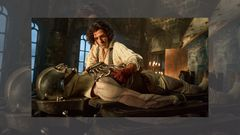
What makes Frankenstein’s monster so addictive, so ever-present, that it crawls out of the shadows generation after generation? Imagine—over 400 feature films and 200 short films have brought this legendary creature back to life. Is there any fictional character more resurrected than this? In the mood for monster tales or just craving something gothic, the world can’t seem to get enough of Mary Shelley’s unnerving invention. Na wa o! That’s not child’s play.
From silent, crackly black-and-white classics to twenty-first-century science fiction, Frankenstein has refused to go quietly. Now, Oscar-winning director Guillermo Del Toro reportedly breathes a new kind of soul into the saga. His Frankenstein—featuring Oscar Isaac, Jacob Elordi, and Mia Goth—promises a heartbreakingly beautiful visual feast that brings old fears and desires roaring back to life.
Watching the trailer, you’d swear you were seeing a gothic painting step off the wall. From lush, bleak landscapes to anguished faces, this isn’t just a retelling; it’s an explosive inside story of pain, obsession, and the quest for meaning that never goes out of style.
The Icy Beginning
Picture a hopelessly trapped royal Danish ship, ice locking it in place, the North Pole barely visible through the fog. The crew, desperate and cold, suddenly behold a fiery apparition on the horizon—a tiny boat ablaze and stained with blood. They pull a battered man with a broken leg from the wreck. But blood is not the only thing haunting these waters.
Out of the night, unholy growls ripple across the ice, shaking every man’s resolve. Suddenly, the “monster” emerges—furious, relentless, ripping through hardened sailors like a Lagos danfo forging through morning traffic. When the monster points at the rescued man with a chilling, “Bring him to me,” it’s a moment so tense you can almost taste the fear. That’s how we discover the battered man—none other than Victor Frankenstein himself.
Chaos erupts. Gunfire cracks, the ice splinters, and with one final act of desperate courage, the crew sends the monster crashing into the glacial depths below. But, like our naija people say, “trouble dey sleep, yanga go wake am.” Is that the end of the monster? Far from it.
Frankenstein: Victor’s Origin Story
As the shaken Victor is taken aboard, he opens up to the captain. What follows is a story layered with suffering and defiance.
We flash back to France. Young Victor, living in a stark castle, faces his father’s cruelty—a baron with hands rough from surgery, but a heart still rougher. No one is spared, not Victor’s beloved mother Claire nor the boy himself. Moments of parental violence drive Victor to his breaking point. When his mother dies giving birth to his younger brother, something in Victor’s spirit is shattered—yet out of that pain, a dangerous vow is made. He intends to defy mortality itself.
Fast-forward to adulthood, and Victor is now a surgeon—brilliant but increasingly unhinged. To him, death is not sacred, just another puzzle. He chases notoriety, determined to sell the world on the righteousness of his vision, even as his peers denounce him as unholy. When public horror greets his ghastly experiments—using the brain of a shopkeeper and the arm of a carpenter—Victor is more defiant than ever.
“Show them that man may pursue nature to her hiding place and stop death,” he reportedly insists to a horrified crowd. But, like a stubborn Nigeria hustler who won’t take no for an answer, Victor presses on.
With financial backing from a powerful arms dealer, Victor’s obsession only deepens. He grows fond of Elizabeth (Mia Goth), Harlander’s witty and inquisitive niece—irony of ironies, she’s also engaged to Victor’s own brother. But Victor’s heart belongs first to his obsession. When he finally animates his creation, the nameless Creature (portrayed by Jacob Elordi), he doesn’t find peace. Instead, he finds new anguish, as the Creature becomes aware, intelligent, and desperate to understand his own monstrous existence.
The Monster Reveals His Side
Del Toro’s version splits the narrative, giving us the Creature’s chilling perspective. After barely escaping Victor’s deadly flames, the monster finds an unlikely refuge—hiding on a family’s property, quietly observing humanity’s joys and sorrows.
From hunted fugitive to accidental protector, the Creature helps a struggling family, earning a reputation as the forest’s guardian spirit. A kindly old man, blind but wise, takes him in and patiently teaches him the language and the art of compassion. The result? The Creature is no longer just a figure of horror; he grows into a being with poetry in his heart. This is a sharp contrast to what many film lovers are used to—here, superstition and ignorance are the real monsters, not the hulking figure everyone fears.
In this reimagining, Del Toro resurrects Shelley’s intended version—one where the monster is articulate, philosophical, and deeply human. Have you ever wondered, what makes us different from the very things we run from?
Spotlight: The Women of Frankenstein
Mia Goth’s dual performance as Victor’s late mother and the quietly powerful Elizabeth is simply breathtaking. It’s no mistake—her presence links innocence and tragedy, symbolizing both nature and the pain of creation.
Elizabeth’s love for the natural world—her curious eyes studying insects—is a mirror to the Creature’s own struggle for acceptance. As Del Toro explained in a 2025 interview with Variety, Elizabeth’s “wardrobe represents nature… She represents the holy and the natural world… It’s also the Creature.” Her white dress, echoing The Bride of Frankenstein, is visually bound to the monster’s loneliness and hope for connection.
Her wardrobe isn’t just costume; it’s a storytelling device, full of visual cues and symbolic meaning—a trend African fashionistas would certainly appreciate, seeing sartorial storytelling woven into heritage.
Standout Performances: Humanity in Horror
Whether it’s Oscar Isaac’s tormented Victor or Elordi’s soulful Creature, every actor hits the nail on the head. Victor is not just mad—he’s convincingly human, haunted by painful memories yet frightening in his ambition. His choices reflect the tough realities many Nigerians face: hustling till you lose sight of the original dream.
Victor’s purpose feels noble at first—conquering death for the ones he’s lost—but his pride buries empathy, blinding him till he’s no better than the “monster” he made.
The Explosive Vision of Guillermo Del Toro
Del Toro’s love for Frankenstein goes far back. In his words, “I dream I can make the greatest Frankenstein ever, but then if you make it, you’ve made it…You cannot dream about it anymore. That’s the tragedy of a filmmaker.”
After years of anticipation, his final product is a bold assertion of empathy. What sets Del Toro apart is how he draws out the underlying theme—generational trauma, the way fathers wound sons who become fathers who wound in turn. In naija, we often say “no be today wahala start” when we see generational struggles play out.
In a shocking twist, it’s the monster—made to endure endless pain—who forgives his creator. “I forgive you,” he whispers at the end. According to Del Toro, “Forgiveness and acceptance are things we are losing every day.” In a world battling division and old wounds—both in Nigeria and abroad—this message cuts deep.
“The movie hopes to provoke emotion from a text that is 200 years old because it’s telling us we should know better. ‘I forgive you’ is the one we don’t hear often enough.” Truth be told, in our society, forgiveness isn’t always easy, but it just might be the medicine we all need.
Del Toro’s Frankenstein isn’t just a monster film—it’s an intricate web of love, destruction, guilt, ambition, and the everlasting search for acceptance. Whether you’re a die-hard fan of Pan’s Labyrinth or The Shape of Water, or simply a lover of good storytelling, there’s something for everyone to ponder here.
The curtain falls with Lord Byron’s bittersweet words: “And thus the heart may break, yet brokenly live on.” In truth, Frankenstein’s story mirrors our own: broken hearts and all, we find ways to keep living, searching for acceptance and meaning even in the face of rejection.
Frankenstein (2025): Is It Worth Watching?—★★★★☆ (4/5)
Guillermo Del Toro’s Frankenstein is haunting yet mesmerising, an unprecedented take that swaps outright horror for emotional weight and gothic spectacle. It stands out as one of the truest to Shelley’s vision, pulling viewers into a swirling vortex of empathy for a monster who just wanted to belong. The film might go overboard at moments (who no go, no know!), but it’s never dull and always visually rich.
In a world where many feel like outsiders—whether in bustling Lagos or snowy London—this tale will certainly hit home. Why do we create our monsters, and can they ever truly forgive us?
Why Frankenstein Still Matters—Even to Nigerians
You may ask, “Why should a Nigerian care about yet another Frankenstein film?” Simple: the story of otherness, generational pain, failed dreams, and the pursuit of forgiveness transcends borders. Whether it’s palava between you and a stubborn relative or the search for identity in a rapidly changing Africa, Frankenstein’s story is eerily familiar. As Lagos-based entertainment analyst Nneka Eze noted, “We all carry pieces of our history—sometimes those wounds are what unite us as a people.”
With the influence of global pop culture and the rise of Nollywood remixes of classic tales, who knows—maybe one day we’ll see a Yoruba or Hausa retelling of Frankenstein. But for now, Del Toro’s masterpiece reminds us all: the monsters outside are rarely as frightening as the demons we wrestle within.
What do you think—should Nollywood give Frankenstein its own Naija twist? Share your thoughts and join the conversation below!
Got a film review, entertainment gist, or story to share? You could get featured or even earn from your story! Email us at story@nowahalazone.com to submit your story or inquire about story sales.
Love movies and reviews? Follow us for hot takes and fresh updates on Facebook, X (Twitter), and Instagram—be part of our cinematic crew!
Whether you’re an aspiring critic, a Nollywood producer, or just a movie lover, your voice belongs here. Don’t dull! We want to hear from you.