
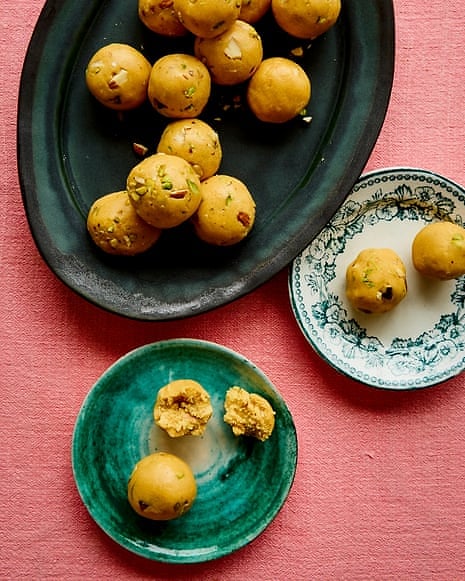
Easy Ladoos (Pictured Top)
Ladoos, much like the renowned gulab jamuns and jalebis, have long occupied a special place in the heart of Indian festivities. For many Nigerians and West Africans, these iconic sweets represent more than just a snack; they offer a glimpse into the vibrant culinary heritage of South Asia, marrying rich tradition with irresistible flavor. Imagine a bustling street in Delhi or Mumbai, where a halwai – the Indian equivalent of a master confectioner (halwai) – proudly displays rows of golden sweets shimmering with ghee under the midday sun. Among all these, ladoos, delicate and festive, often take center stage as gifts during celebrations, or as sacred offerings in temples.
The side of the world we’re on is filled with sweets like chin chin, coconut candy, and kuli kuli, but ladoos offer a unique, melt-in-the-mouth variation that West Africans may find both familiar (in flavor) and refreshingly distinct (in texture and preparation). This easy recipe breaks down the process so even first-timers can create their own at home, using ingredients easily found in Nigerian and Ghanaian supermarkets or local markets.
Prep: 10 minutes
Cook: 50 minutes, plus cooling
Makes: 15-20 pieces
Ingredients:
110g ghee (or use locally produced unsalted butter or coconut oil as an alternative)
250g gram flour (besan) (can substitute with roasted groundnut flour in Nigeria for a local twist)
¼ tsp ground green cardamom
1 pinch saffron (optional, for aroma and a dash of golden color)
50g mixed almonds and pistachios, toasted and roughly chopped (replace with cashews or groundnuts, common to West African kitchens, if preferred)
180-200g granulated sugar, or to taste
Melt the ghee in a nonstick pan over medium heat. Lower the flame, then add the gram flour, stirring continuously to ensure the mixture cooks evenly and doesn’t burn. This step is crucial for developing that signature nutty aroma, much like slow-roasting groundnuts. Continue stirring for around 30-35 minutes. Initially, the blend will look sandy, then gradually shift to a peanut butter-like consistency and fill your kitchen with a rich, inviting fragrance.
Remove the pan from heat. Stir in the cardamom and saffron (if using). Allow the mixture to cool until it is just warm—this makes it easier to handle when shaping the ladoos.
Fold the chopped nuts and sugar into the cooled mixture. Mix thoroughly to ensure the sweetness and crunch are evenly distributed. Pinch off portions and roll each between your palms to form 15-20 round balls, roughly 4cm in diameter. Place them on a plate, leaving space between each, and let them cool completely.
Once set, they’re ready to serve as a snack or festive treat. Store any leftovers in an airtight container at room temperature and enjoy within a week—a perfect way to have a sweet treat handy for unexpected guests, similar to how chin chin is always within reach in many Nigerian homes.
Indian Bread Pudding
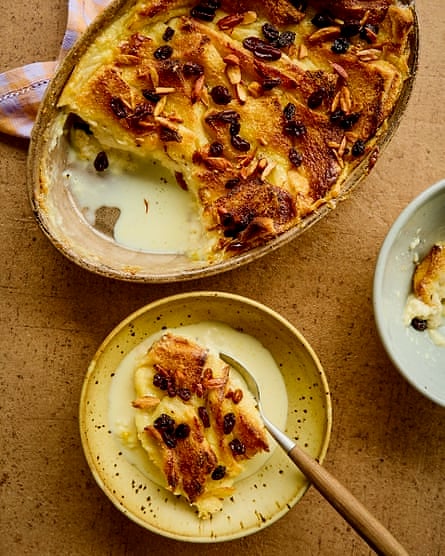
Karan Gokani’s Indian bread pudding. Photograph: Kim Lightbody/The Guardian. Food styling: Tamara Vos. Prop styling: Anna Wilkins. Food assistant: Lucy Ellwood.
Bread pudding occupies a beloved niche in global desserts, and the Indian version offers a fascinating spin that can instantly be replicated with staples found in any Nigerian or Ghanaian kitchen. Using stale white bread—a resourceful way to give new life to leftover agege bread or Ghanaian tea bread—this dessert is milk-rich, gently spiced, and features the kind of soul-warming sweetness found in both West African and South Asian cuisines.
Prep: 10 minutes
Cook: Over 1 hour
Serves: 4-6
Ingredients:
12 slices stale white bread (agege or Ghana bread, crusts removed)
100g ghee or melted unsalted butter (substitute with locally sourced margarine or coconut oil)
1 litre whole milk
1 x 397g tin condensed milk (readily available in Nigerian supermarkets)
150g sugar, or to taste
1 pinch saffron, soaked in 2 tablespoons milk (optional but lends beautiful color)
¼ tsp ground cardamom or seeds from 2 pods, lightly crushed
¼ tsp ground nutmeg (optional; nutmeg is commonly used in West African baked treats)
40g almonds, roughly chopped (or sub with roasted groundnuts or cashews for local authenticity)
40g raisins (use local raisins or golden sultanas)
To prepare, preheat your oven and start by layering the bread slices in a greased baking dish. Drizzle with half the melted ghee or butter, then combine the whole milk, condensed milk, granulated sugar, saffron-infused milk, cardamom, and nutmeg in a large bowl. Pour this mixture over the bread, ensuring each slice is well soaked. Let it stand for a few minutes so the bread absorbs the liquid fully.
Bake for 30-35 minutes, or until the top forms a golden crust and a toothpick inserted in the center emerges clean. This method is quite reminiscent of Nigerian bread pudding, but the spices give it an aromatic lift, while the condensed milk results in a rich, custard-like base.
Meanwhile, warm the remaining ghee in a small pan. Once hot, add the almonds (or your nut of choice) and cook until golden. Immediately turn off the heat, add the raisins, and let them swell in the residual warmth for about a minute, stirring constantly. Sprinkle this nut-and-fruit mixture over your baked pudding before serving.
This pudding is delicious either fresh and warm from the oven or served cold, perhaps with a scoop of vanilla ice cream for an extra treat—just as you would enjoy bread-and-butter pudding or other West African celebratory desserts. For Nigerians and Ghanaians, this dish can transform humble leftovers into a festive showstopper during holidays, Ramadan, or family get-togethers.
Exploring global sweets like ladoos and Indian bread pudding offers Nigerian and West African food lovers endless room for experimentation. According to Lagos-based chef Bukola Adesoye, “Many of the ingredients in classic Indian recipes—like cardamom, groundnuts, or coconut oil—are integral to West African cooking. By swapping out nuts or using local bread, you can bridge cultures right in your kitchen.”
It’s clear these cross-cultural desserts are not only easy to make, but also adaptable to suit the tastes, ingredients, and family traditions across Nigeria, Ghana, and the wider African community. Beyond their taste, they serve as invitations to explore food stories from around the world, sparking creativity in home kitchens from Lagos to Accra and beyond.
What are your favourite fusion desserts or sweets from other cultures? Would you try making these Indian classics with a West African twist? Let us know your experience, or drop your own adapted recipes!
Do you have a cherished family recipe, unique food story, or culinary adventure you want the world to know about? We want to hear from you! Email your recipes, food photos, or food-related stories to story@nowahalazone.com and get featured on our site. We support local chefs and home cooks—let your voice be heard!
For general support, contact us at support@nowahalazone.com.
Follow us on Facebook,
X (Twitter), and
Instagram for food, culture, and lifestyle updates from across Africa and beyond! Share your views in the comments and invite your friends and family to join the conversation.