
Throughout Africa, the forest has served as an endless source of wonder and legend. For many Nigerians and Ghanaians, tales of the forest are woven into the fabric of our childhood: powerful spirits lurk in the shadows, mythical birds sing deeper within the foliage, and elders whisper warnings and wisdom tied to the trees. The forest is more than a setting for fantasy; it is a place teeming with quiet vitality, where every root and leaf holds a secret, every ray of filtered sunlight feels magical. Bringing those elements into the kitchen, this indulgent recipe transforms the essence of the wild woodland into a cake—rich in flavour, evocative of the forest’s dark soil, and spiced up with the familiarity of cocoa and the fragrance of rosemary.
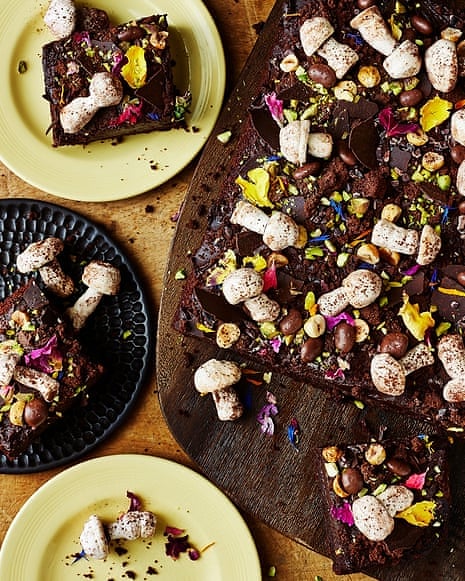
Forest Floor Cake
Preparation: 10 minutes
Infusing time: 10 minutes
Baking time: 1 hour 15 minutes
Serves: 10-12 people
For the cocoa cake base:
80ml unsalted butter, melted, plus extra for greasing
200g plain flour
75g unsweetened cocoa powder
1 tsp baking powder
½ tsp bicarbonate of soda (baking soda)
¼ tsp fine sea salt
3 large eggs, at room temperature
150g caster sugar
80g soft brown sugar
100ml olive oil (extra-virgin or mild olive oil works well)
2 tsp vanilla extract
250ml plain unsweetened drinking kefir (substitute with plain yogurt or Nigerian “nunu” if kefir is unavailable)
1 tsp instant coffee granules
For the rosemary chocolate ganache:
200ml double cream (heavy cream can be used)
2 large sprigs rosemary (fresh, if available locally)
200g dark chocolate, finely chopped
A pinch of flaky sea salt
For the forest-inspired toppings (choose your favourites):
Cocoa nibs or crumbled brownies (you can use leftover cake pieces)
Roughly chopped hazelnuts or locally available nuts such as groundnuts (peanuts) or cashews
Black sesame seeds
Rosemary sprigs
Chocolate shards or chocolate-coated raisins
Small edible flowers (e.g., hibiscus petals or locally grown flowers)
Meringue mushrooms (optional for a whimsical touch)
Instructions:
- Prepare your oven and tin: Preheat your oven to 190°C (170°C for fan ovens) or 375°F, gas mark 5 if using a gas oven. Grease a baking tin about 28cm x 23cm and line with baking parchment, or use a local banana leaf lining for a traditional touch.
- Mix the dry ingredients: Sift together the plain flour, cocoa powder, baking powder, bicarbonate of soda, and sea salt into a large mixing bowl. This helps keep your cake light and fluffy—especially important in humid climates.
- Whisk the wet ingredients: In a separate bowl, beat the eggs with both caster and brown sugar until the mixture is slightly thick and pale. Add the olive oil, melted butter, and vanilla extract, whisking until well blended. Next, pour in the kefir (or yogurt/nunu) and whisk until smooth.
- Combine wet and dry: Carefully pour the wet mixture into the bowl with the dry ingredients and gently whisk to bring everything together. The batter should be smooth and a bit runny.
- Add coffee: Dissolve the instant coffee granules in 100ml hot water—a nod to Nigerian and Ghanaian coffee culture—and stir this coffee into your cake batter. Whisk gently for an even mix.
- Bake: Pour the batter into your prepared tin and bake for about 30 minutes. Test the centre with a skewer; if it comes out with just a few moist crumbs, the cake is ready. If you’re using smaller tins or machined oven temperatures, adjust baking time as needed. Allow the cake to cool fully in its tin before turning it onto a clean board or platter.
Making the rosemary chocolate ganache:
- Pour the double cream into a small saucepan with the rosemary sprigs. Gently heat until it just simmers, then turn off the heat and let it steep for 10 minutes to infuse the cream with rosemary’s earthy scent—a flavour found in many West African stews and grills.
- Discard the rosemary, then reheat the cream (without boiling). Pour it over the chopped dark chocolate. Let it sit for a minute or two, add a pinch of sea salt, then stir slowly until glossy and smooth.
- Let the ganache cool to a spreadable thickness before spooning or pouring over your cooled cake base.
Decorating your forest floor:
- Spread the rosemary-infused chocolate ganache generously over the surface of the cake. Sprinkle with cocoa nibs or small chunks of extra chocolate, then arrange bits of crumbled brownies or cake trimmings to mimic the texture of earth.
- Scatter nuts—hazelnuts, cashews, peanuts, or even kuli-kuli for a distinctly Nigerian touch—across the cake. Add black sesame seeds for speckled contrast, and tuck in rosemary sprigs to evoke small branches.
- For a truly enchanted effect, dot the top with edible flowers, chocolate shards, and if you like, playful meringue mushrooms reminiscent of those seen in rural forests from Osun State to Cape Coast. Local alternatives, such as groundnut clusters or dried fruit, can be substituted as available.
Serving suggestions:
Slice thick pieces and serve with lightly whipped cream or a scoop of local vanilla ice cream, creating an irresistible dessert that is both sophisticated and deeply comforting. This cake is perfect for family celebrations, festive gatherings, or even as a statement centrepiece at a modern Nigerian or Ghanaian party.
Why This Recipe Resonates in Nigeria and West Africa
Food is a bridge to our history and our imagination. By drawing on the symbolism of the forest—long associated with spirituality, adaptation, and resilience—the Forest Floor Cake brings a sense of folklore and festivity to the modern table. Cocoa, a crop grown in states like Ondo, Cross River, and Osun, is central to the region’s economy (according to data from the Nigerian Export Promotion Council), while aromatic herbs like rosemary echo the herbal scents found in our markets and countryside.
Chef Tunde Adebiyi, a Lagos-based food writer, says, “Combining traditional produce like cocoa with international techniques invites both nostalgia and innovation. Nigerians are used to creative food expressions—this cake just offers a new way to celebrate locally rooted flavours.” Local home baker, Madam Adwoa from Accra, adds that incorporating kefir or nunu “reminds people of our dairy traditions, making even a foreign-looking cake taste like home.”
Substitutions and Local Twists
One of the powerful aspects of baking across West Africa is the spirit of adaptation. If rosemary or certain nuts are hard to come by, consider using scent leaf (nchuanwu) or iyere (African black pepper leaves) for a unique herbal character. Substituting with Nigerian cashew, locally grown groundnuts, or even tiger nuts can add an extra local punch.
- No oven? Try baking with a stovetop pot or local clay oven—many urban home bakers use these methods with great success.
- Yogurt or “Nunu”: Dairy drinks like nunu or Greek yogurt can stand in for kefir, keeping the cake moist and tender.
- Decorations: Children can help collect edible flowers or arrange local dried fruit for decoration—making the cake an interactive family tradition.
From Forest Legends to Festive Tables
Throughout West Africa’s diverse cultures, food and storytelling often merge. Cakes like this, inspired by the forest, are an invitation to connect with folklore, reclaim natural ingredients, and celebrate togetherness—whether during Halloween, Christmas, or any special gathering. It is an edible canvas, a testament to the creativity and adaptability found in Nigerian and Ghanaian kitchens alike.
If you’re seeking a show-stopping dessert that brings both beauty and flavour to the table, this Forest Floor Cake is sure to thrill adults and children alike. Why not try it with your own local twist?
How do you bring a sense of folklore and local flair into your baking? Have you tried incorporating Nigerian or West African flavours into your cakes? Drop your view in the comments and let’s celebrate our culinary diversity together!
Want your food story or recipe to be featured on our platform or sell your exclusive food content? Reach out to us: story@nowahalazone.com.
For more support, email support@nowahalazone.com.
Join the conversation and follow us for more food adventures on
Facebook,
X (Twitter), and
Instagram!