
How quickly life can spin from ordinary to tragic on Nigerian highways! One moment, the Sagamu-Benin Expressway in Odogbolu local government bustles with the familiar rhythm of weekend journeys. The next, the shocking truth unfolds: according to the Ogun State Traffic Compliance and Enforcement Corps (TRACE), a fatal crash claims one life, leaving two others wounded. For many Nigerians accustomed to weaving through traffic and navigating unpredictable roads, the sound of sudden sirens is an all-too-real echo of danger lurking on our expressways.
This latest road accident, reported by TRACE spokesperson Babatunde Akinbiyi on Sunday from Abeokuta, reportedly took place around 5:20 p.m. on Saturday. The scene? The often-chaotic Ijebu-Ode Express Trailer Park—a spot Nigerians know can be a crossroads between commerce and catastrophe. It’s not just a statistic; it’s a story of ordinary people caught in the chaos of everyday transportation.
Inside Story: How Did the Sagamu-Benin Expressway Crash Happen?
Let’s walk in the shoes of those involved for a moment. Imagine navigating the expressway at dusk, tyres humming over the tarmac, eyes set on getting home before nightfall. Suddenly, fate intervenes. TRACE’s statement revealed that a containerised truck (KTU 357 XX) was about to exit the trailer park onto the expressway. From nowhere, a white bus (DGB 650 XA), reportedly hurtling at high speed, loses control. In the blink of an eye, it’s a collision—front meets rear, metal grinds, and everything changes.
According to eyewitnesses cited by Mr. Akinbiyi, the bus driver, perhaps rushing to meet the demands of the day or eager to reach the next stop, allegedly failed to slow down, ramming into the stationary truck. For many drivers, isn’t this a sombre reminder? Speed thrills, but speed also kills—especially on roads as notorious as this one.
Breaking Down the Stats: Who Was Involved and What Were the Consequences?
- Vehicles: Containerised truck and white bus
- Occupants: Five people (two in the truck, three in the bus)
- Injuries and Fatalities: The bus driver died instantly; two passengers from the bus sustained injuries described as minor by TRACE
For many Nigerian families, accidents like this are not mere headlines—they’re personal tragedies. The dead man may have set out expecting a routine trip, even as his loved ones waited for him at home. The two injured have their lives forever altered, facing an uncertain road to recovery.
Quick Action: Ogun TRACE, FRSC, and Police Step In
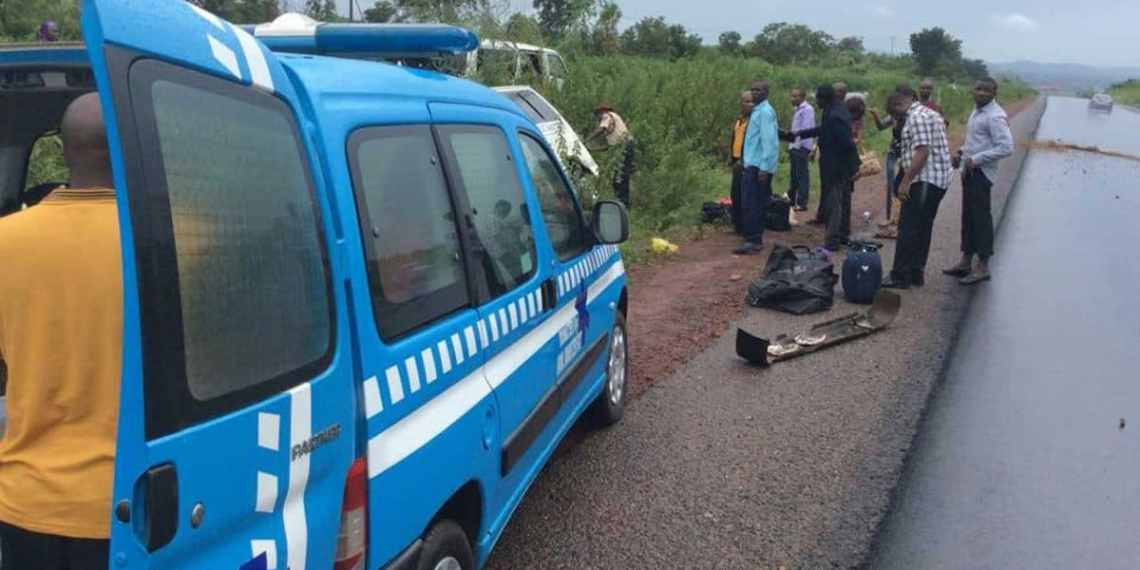
In Nigeria, emergency response times can vary, but according to Mr. Akinbiyi, TRACE operatives, working hand-in-glove with the Federal Road Safety Corps (FRSC) and Nigeria Police, acted swiftly. The deceased was reportedly evacuated to the General Hospital Mortuary, Ijebu-Ode, within minutes. Injured victims received prompt medical care—an outcome that, sadly, is not always guaranteed in rural accident scenes.
To prevent gridlock—a notorious wahala on major roads—the combined emergency teams reportedly controlled traffic and made sure the vehicles were quickly moved off the expressway. Both the containerized truck and bus were taken to the Ijebu-Ode Police Area Command, Igbeba, for further investigation. Within a short period, TRACE officials restored the “go-slow” to smooth movement—a small relief for commuters caught in the aftermath.
Speeding on Nigerian Highways: Warnings, Laws, and Realities
Anyone familiar with Nigerian roads knows: speed limits exist, but compliance is often a different matter. According to the Federal Road Safety Corps, over-speeding remains a leading cause of fatal accidents nationwide. The reality? Many public transport drivers, pressed for time or profit, regularly push their luck, weaving in and out of lanes with little respect for their own lives or those of their passengers.
A Lagos-based transport analyst, Mrs. Yetunde Abiola, notes, “Until consistent, visible enforcement of speed limits and stricter penalties for traffic violations become the norm across Nigeria, tragic scenes like this will keep repeating.”
What Does the Law Say?
- Speeding is a traffic offence under current Nigerian road usage regulations.
- Both TRACE and FRSC have mandates to enforce compliance and penalize offenders.
- Repeated violations can lead to license suspension, fines, and even prosecution.
But as every danfo or okada rider knows, enforcement on the ground often faces its own wahala: limited resources, road conditions, and widespread disregard for rules can undermine even the best-intentioned safety campaigns.
Community Voices: Local Impact and Reactions
The aftermath of such accidents ripples through the community. “My neighbour’s cousin drives that route every weekend—he dey fear now,” shared Mrs. Kemi Olatunde, a local trader at the nearby Odogbolu market. “All these drivers no dey take am easy, dem just dey rush.”
Calls for stricter enforcement and better road safety awareness echo across social platforms and local gatherings. The accident has become a poignant reminder for both drivers and policy-makers: road safety is everyone’s business. Experts suggest regular public campaigns, targeted at professional drivers, could help change behavior, especially when coupled with tougher enforcement and modern technology, such as speed cameras.
Comparing Nigeria’s Road Safety: Regional Context and Global Benchmarks
Sadly, Nigeria is not alone. Road accidents claim over 1.35 million lives globally each year according to the World Health Organization. West Africa, with its mix of crowded highways and rapid urbanization, faces similar challenges. Ghana, Ivory Coast, and other neighbours see their own tragic incidents, often attributed to over-speeding and poor enforcement. But there are signs of hope: where consistent enforcement and robust public education exist, accident rates do drop.
Balancing Safety, Livelihood, and Progress: What’s Next for Nigerian Roads?
While police will investigate further and the families of victims mourn, the wider Nigerian public is left asking: When will road safety truly become a national priority, not just a campaign slogan? Recent reforms, such as body cameras for officers and renewal of traffic laws, are a step in the right direction. However, only sustained pressure—from both government and everyday citizens—will force long-term change.
Meanwhile, if you ply the Sagamu-Benin Expressway or any Nigerian road, remember: a moment’s impatience or distraction can mean tragedy. Drive defensively. Obey the law. It’s not just about avoiding fines; it’s about protecting lives—yours and those waiting for you at home.
Conclusion: Staying Safe on Nigerian Roads
The Sagamu-Benin Expressway crash is yet another sobering reminder of the dangers hidden in our everyday commutes. Let’s turn stories like this into action—not just hashtags and headlines. As Nigerians, we all have a role to play in demanding better roads and stricter enforcement, and in driving responsibly.
What can be done to ensure that road tragedies become history, not recurring news? What’s your view on speeding and road safety in Nigeria? Drop a comment below and follow us for more updates!
For general support, reach out at support@nowahalazone.com.
Follow us for real-time updates and more stories on Facebook, X (Twitter), and Instagram.
Share your perspective—every voice matters for safer Nigerian roads!