
Stuck in traffic on the Warri–Sapele–Benin Highway and wondering when this daily ordeal will end? Imagine the frustration of leaving your house just after dawn, only to still be fighting through a sea of honking cars by noon. For countless Nigerians commuting between Delta and Edo, “hold up” on this notorious stretch has become the stuff of urban legend — a trial that drains time, energy, and patience. But there’s fresh hope on the horizon, as major remedial works have just kicked off, signaling a dramatic turn for one of Nigeria’s busiest highways.
Delta State’s Explosive Response to Warri–Sapele–Benin Highway Woes
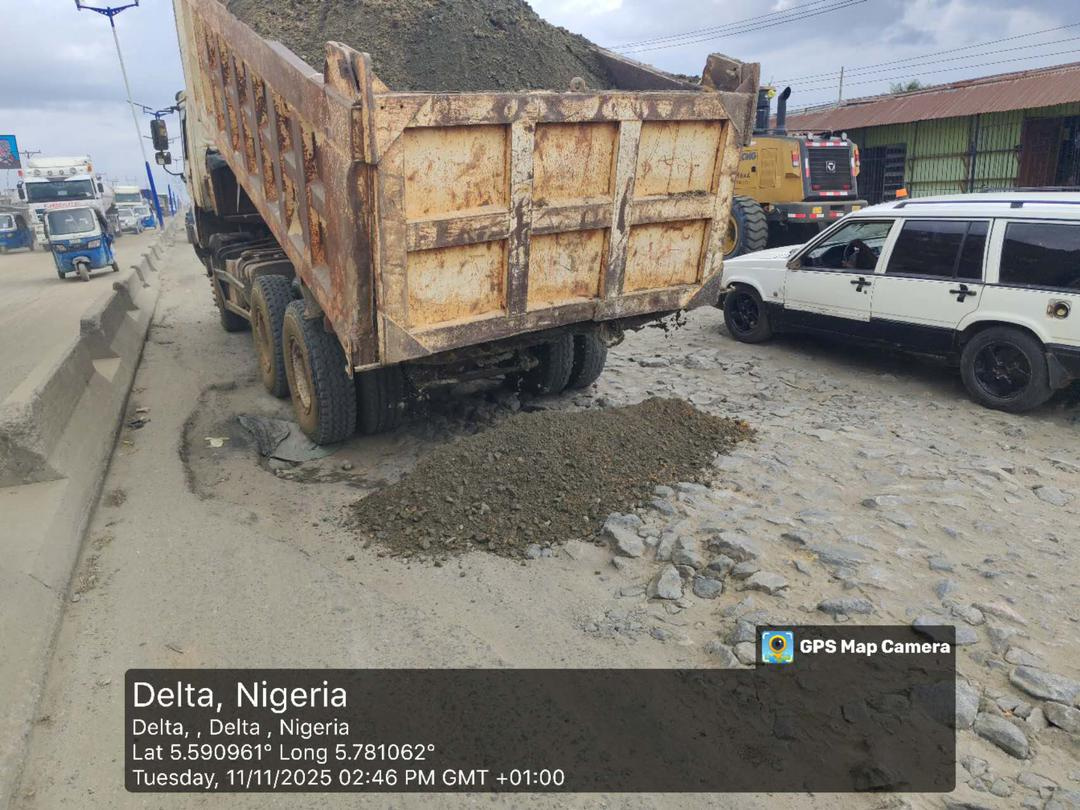
The China Civil Engineering Construction Corporation (CCECC) has reportedly swung into action on the Effurun–Sapele section of the Warri–Sapele–Benin Highway—an artery that connects lives, businesses, and dreams across Nigeria’s vibrant South-South zone. This intervention, steered by the Delta State Government, follows thundering complaints from both motorists and residents, whose patience had worn razor-thin after months of gridlock and bone-rattling potholes.
What Sparked the Fast-Tracked Road Repairs?
With tension rising faster than fuel prices, Governor Sheriff Oborevwori issued an urgent directive to tackle the bottleneck. In quick succession, on Monday, Comrade Reuben Izeze—the Commissioner for Works (Highways and Urban Roads)—visited the troubled stretch, cutting through Effurun Roundabout, Mercy Land, and down to Ohore Junction. According to Izeze, his mission was simple: bring immediate relief to everyday Nigerians, while the broader reconstruction plan continued.
“This government, under Governor Oborevwori, doesn’t sit on its hands when our people are in distress,” Izeze stressed to stakeholders during his on-site tour. “Even as we prepare a lasting solution, we’re moving quickly to alleviate traffic stress and make life easier for all road users.”
Temporary Fixes, Lasting Impact: How Soon Will the Road Be Ready?
Not every construction project inspires confidence, but this one, officials say, is different. The ongoing efforts focus on smoothing out the worst potholes, re-leveling craters, and ensuring vehicles can pass without jolting like a danfo on Third Mainland Bridge. Delta State authorities explained that remedial works are not a stopgap but a frontline response, closely aligned with the government’s MORE Agenda—a strategy dedicated to modernizing infrastructure and boosting citizen welfare.
Izeze revealed that the highway upgrade covers 10 kilometres in total—five kilometres in each direction. Significantly, the new carriageway will be 8.8 metres wide, surpassing the typical 7.3 metres found elsewhere in Nigeria. The project, once completed within the expected 12-month timeline, is set to deliver sweeping change: faster journeys, lower transport costs, and the kind of ease that gives traders, commuters, and families a shot at brighter days.
“Nightmare No More”: Local Voices Welcome Progress
Long before officialdom stepped in, stories abounded about the endless traffic snarl and broken-down trucks clogging the Warri–Sapele–Benin Highway. According to Benson Edafe, a local transporter who plies the route daily, “Sometimes you go wahala reach, you go dey vex for yourself. But now, at least govment dey show say our suffering dey their mind.”
Many residents, from Effurun traders to mercy land students, echo this cautious optimism—hoping that the repairs “no go stop halfway.” As Izeze stated, via his ministry’s channel, the administration is determined to be hands-on, regularly monitoring progress and tweaking plans to keep the temporary measures truly effective.
Economic & Social Ripple Effects
Analysts argue that what’s unfolding on this highway is more than just engineering—it’s about restoring livelihoods and dignity. When a major route is blocked, costs of goods skyrocket in markets, keke and danfo operators hike fares, and emergencies take longer to reach hospitals. “This is why road investment isn’t just concrete and asphalt—it’s a social contract,” explained Lagos-based urban planner Chukwuemeka Eze, who sees this Warri–Sapele–Benin project as a template for similar interventions across West Africa.
The impact isn’t limited locally. The highway serves as a gateway for agricultural produce making its way from delta communities to bustling Benin and beyond. Quick repairs now could translate into better food prices and more stable supply chains across southern Nigeria.
Comparing with Past Road Projects
Road rehabilitation is no stranger to Nigerian news, but the swiftness of the Delta State Government’s latest move has reportedly drawn attention from other states. Many recall similar interventions in Lagos-Ibadan Expressway or the East-West Road, where prolonged delays often left communities frustrated. According to the Federal Ministry of Works and Housing, as cited in their 2023 official project report, major road projects are successful only when paired with transparent timelines and strong local oversight—both of which Delta appears to be emphasizing this time.
Challenges and Counterpoints: Will Promises Be Kept?
Still, not everyone is convinced. Regular commuters warn about notorious delays caused by seasonal rains and supply issues. Others worry whether the project will enjoy consistent federal support or fall prey to funding gaps. According to Delta civil society groups, only time will tell if hopes transform into lasting action, or if frustrations flare up again during the next fuel scarcity or holiday rush.
What Next? Government’s Commitment and Watchful Eyes
To prevent “business as usual,” the Ministry of Works has promised daily monitoring of the repairs, leveraging contractor checklists, feedback from the Union of Road Transport Workers, and real-time reports from local motorists. This, they believe, will keep the project on track and ensure that relief on the highway is not just at the beginning, but endures throughout the entire construction period.
The Big Picture: Why This Highway Sums Up a National Challenge
The Effurun–Sapele stretch is only one piece in a puzzle Nigeria keeps trying to solve: How do we fix our roads swiftly, safely, and sustainably? As conversations about infrastructure sweep across Abuja and the entire ECOWAS region, many are watching Delta’s concrete-and-asphalt tale for hints at future solutions—ones that put the ordinary Nigerian first and never treat pain as invisible.
In summary:
- Remedial repairs have begun after months of gridlock and hardship on the Warri–Sapele–Benin Highway.
- The Delta State Government, CCECC, and Ministry of Works have pledged regular monitoring and public accountability.
- Commuters and local businesses stand to benefit, but some still worry about delays or incomplete interventions.
- Effective execution here could serve as a blueprint for urgent road repairs all across Nigeria.
What do you think? Are these efforts enough to finally unravel the web of traffic on Delta’s busiest highway, or will it be another promise lost in the potholes? Drop your perspective below and stay tuned for further updates as this story unfolds.
For tips or support, reach out at support@nowahalazone.com.
Don’t forget to follow us for more real-time updates and local news! Join us on Facebook, X (Twitter), and Instagram.