
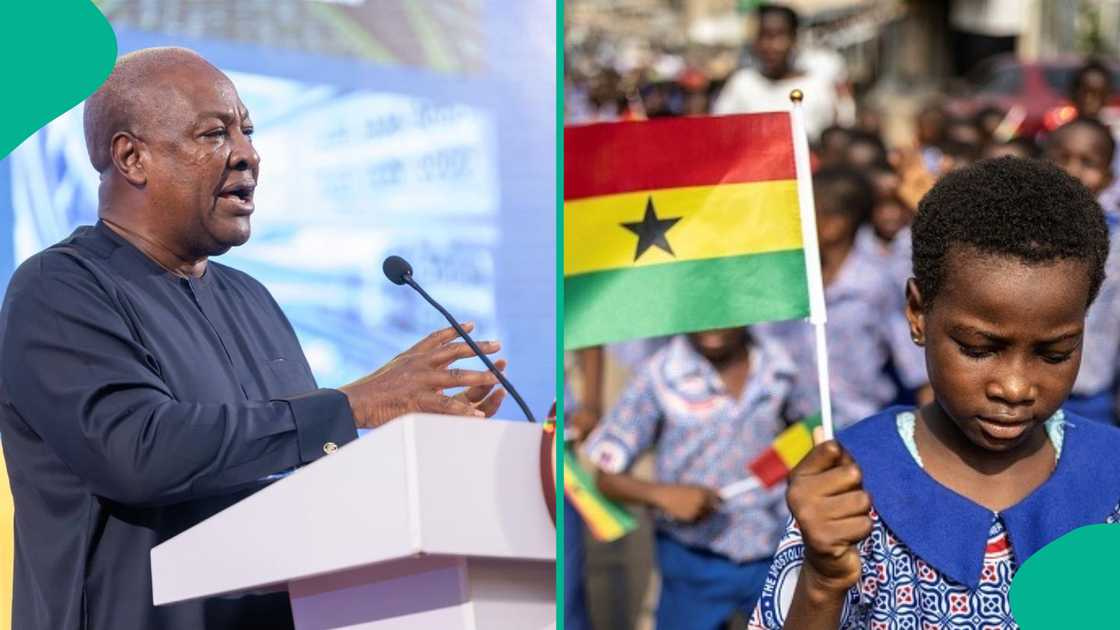
Have you ever imagined a country where every child begins their education not in a foreign tongue, but in the language of their grandmother—the language of their soul and community? In a move that’s sparking passionate debates from Accra to Abuja, Ghana has reportedly issued a groundbreaking directive that puts local languages at the very core of its foundational education system, replacing English as the main medium of instruction in its schools. According to DW, this shift represents a bold chapter in Africa’s ongoing struggle to balance cultural roots with modern academic needs.
Announcing what is being described as an “explosive reset” of Ghana’s learning pathways, Education Minister Haruna Iddrisu stated the Ghana Education Service (GES) is under instruction to ensure this policy sees the light of day in classrooms nationwide. From the bustling streets of Kumasi to the rural corners of Tamale, teachers and learners alike are preparing for an educational metamorphosis long whispered about but never fully attempted at such scale.
Why Ghana is Prioritising Mother Tongue Instruction
Standing at the launch of the Free Tertiary Education Programme for Persons Living with Disabilities, Minister Iddrisu painted a vivid picture: imagine a six-year-old sitting in her first classroom, understanding every word of her teacher, her curiosity blossoming instead of withering under confusion. He stressed that, in his words, “children grasp concepts best when taught in their mother tongue.” According to education experts globally and across Africa, this “familiarity effect” is not just anecdotal – it’s backed by research proving better comprehension, confidence, and engagement when learners are taught in languages they speak at home.
“l am directing the DG of the GES and the GES that from today that teacher use of mother tongue instruction is now compulsory in all Ghanaian schools. The GES is to ensure strict enforcement of this… This is part of President Mahama’s reset agenda,” Mr Iddrisu declared.
This policy isn’t just about textbooks or grammar. It’s about identity. Minister Iddrisu explained that, for Ghana, embracing local languages as the medium of instruction means finally giving academic validation to languages spoken in markets, homes, and public squares. The move reportedly aligns with Ghana’s wider vision of an education system that doesn’t just transmit knowledge, but affirms cultural heritage and builds national pride from an early age.
Ghana’s Education Shift: Identity Meets Innovation
The sense of urgency is palpable. Educators were told the time for pilot schemes and half-measures is over; implementation is immediate. GES has been handed the mandate to usher this policy from paperwork into practical reality—chalk-on-blackboard and lesson-by-lesson. For a country that has often measured educational success by how well students perform in English, the coming months promise to challenge long-held assumptions in both the classroom and at the dinner table.
Speaking on Ghana’s new language policy, Imaan Muhammad, an educationist based in Nigeria, noted: “It’s an audacious step, but the benefits for children’s self-esteem, community cohesion, and learning depth could be enormous if executed with proper teacher training and support.”
“Seriously, the move to make local languages the main medium in schools is very empowering. Learning in one’s mother tongue can boost understanding. But success will depend on teacher training, resources, and how well the policy is rolled out in the country.”
Mother Tongue in African Classrooms: The Evidence and Experience
So, does teaching in native languages truly transform outcomes? According to UNESCO, children across Africa who learn in familiar languages during foundational years are more likely to participate, stay in school, and achieve higher literacy rates. Nigerian parents often argue that their children “hear English at home anyway,” but how many times have we seen frustrated pupils struggle to memorize content without truly understanding? It’s like trying to fetch water with a basket—extra effort, little result.
- Improved Conceptual Understanding: Pupils can ask questions, argue, and dream in a tongue they’re comfortable with.
- Higher Participation: Shy learners, who might shrink under the pressure of an unfamiliar language, find their voice.
- Pride in Heritage: Learning mathematics in your mother tongue, or answering science questions in Igbo, Yoruba, or Dagbani? That’s a powerful narrative change.
- Long-term Academic Gains: Studies across West Africa have shown higher literacy and numeracy rates when local languages form the bedrock of education.
But it’s not all smooth sailing. Implementation comes with hurdles—will enough teachers master teaching methodologies in these languages? Are learning materials available in Fanti, Ewe, or Hausa? Many parents also worry: Could this dam the “flow” of their children into global spaces where English is currency? According to the Minister, “transitional strategies” are being mapped out, suggesting a blend that doesn’t neglect English entirely, but lets children build a sturdy linguistic foundation first.
Still, the cultural impact is likely to reverberate from Cape Coast to Kano. As government policies across West Africa pay more attention to linguistic diversity, Ghana’s decision just might light a spark for other countries wrestling with similar questions.

Source: Getty Images
Could Nigeria and Neighbours Embrace Similar Policies?
While Ghana’s educational revolution is making waves, Nigerian observers are asking tough questions. Could such a policy work in a nation as linguistically diverse as Nigeria, where over 500 languages are spoken? Lagos-based education consultant, Dr. Amaka Okafor, emphasized, “It’s ambitious, but if supported by curriculum innovation and teacher retraining, we might see a transformation in educational equity.”
Indeed, similar efforts have been piloted in Nigeria’s southwestern states, where early-grade instruction in Yoruba has shown positive results. But a full-scale, mandatory roll-out, as Ghana now attempts, would require gigantic investments and buy-in from parents and policymakers alike. With policymakers in Accra promising ongoing monitoring, the outcomes will likely influence strategies across West Africa and may even filter into major reviews of Nigeria’s UBE program in coming years.
Latest Tweak: No More Mandatory Mathematics for Arts Admissions
Meanwhile, in a separate but equally significant education update reported earlier, the Federal Ministry of Education announced that senior secondary school students specializing in arts and humanities will no longer need to present a credit in mathematics as a requirement for university or polytechnic admission in Nigeria’s SSCE. This, too, is sparking extensive debate among educators who worry about unintended gaps in general education foundations. The recurring theme? West African education is truly at a crossroads, questioning old assumptions and searching for models that respect both local realities and global ambitions.
What Does the Future Hold for African Education?
Change is never without uncertainty—and this policy, while visionary, will come with its own “growing pains.” There are legitimate concerns about funding, capacity, and quality control. Still, Ghana’s move to elevate local languages in its education system challenges other African nations to rethink how—and why—they teach what they teach.
As the dust settles and the first local-language lessons begin, one wonders: Will this be the tipping point that finally brings African knowledge home, or just another well-intentioned policy that falters at implementation? Only time will tell, but one thing is sure—West Africans, parents and students alike, are watching closely, ready to borrow or tweak what works for their children’s future.
What do you think about Ghana’s bold education policy? Could something similar work in Nigerian schools, or is our context simply too complex? Drop your thoughts below and join the conversation. For more updates like this, follow us on social media and let your voice be heard!
Have your say! Do you have an opinion, inside experience, or tip about education reforms in West Africa? Want your story or perspective featured? Reach out to us at story@nowahalazone.com to share or sell your story and be part of the movement shaping Africa’s future.
For general support, email support@nowahalazone.com.
Don’t miss the latest news—follow us on Facebook, X (Twitter), and Instagram!