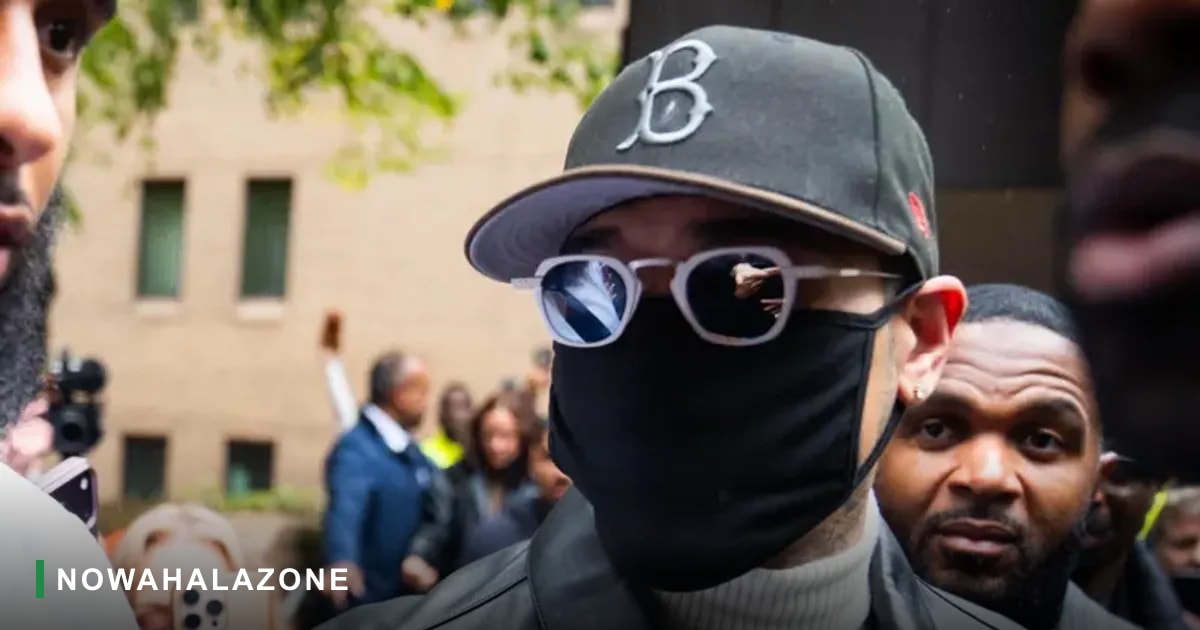

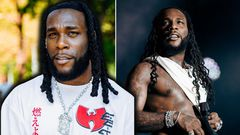
Can a superstar’s search for truth shake up how we talk about faith in Nigeria? Grammy-winning Afrobeats giant Burna Boy—real name Damini Ogulu—has set the internet buzzing after he candidly addressed his ongoing journey with religion. Far from the glitz of sold-out arenas and blaring car horns in Lagos, he reportedly opened up about the spiritual battles that keep him awake at night. For many Nigerians raised to “follow as you see,” his honesty peels back the curtain on something much deeper than hit songs: a modern struggle for clarity in a society where faith is everything.
During an explosive interview with streamer Plaqueboymax, Burna Boy didn’t mince words. “I grew up as a Christian, but then I converted to Islam and all types. It is like I have studied it all. I am still out here trying to find what is really going on.” This is a far cry from the ‘I have all the answers’ celebrity persona Nigerians are used to. He told his story like a man determined to break free from inherited beliefs and discover something personal, something real.
For context, Burna Boy was born and raised in Port Harcourt, Rivers State, in a Christian household. Like many Nigerian children, faith was less of an option and more of a legacy handed down from his parents. “That’s what your parents believe in. That’s what you are born into,” he revealed, echoing the childhoods of so many from Abuja to Akure.
But Burna’s journey didn’t stop at attendance in church on Sundays or joining friends during Ramadan. He reportedly converted to Islam, eager to widen his spiritual lens. According to his own account, however, trying to answer big religious questions only turned up more puzzles than solutions. “The more I researched, the more confused I got,” he confessed.
In a society often obsessed with certainty, Burna Boy is unashamed to show his scars of doubt. His struggle isn’t a mark of weakness—it’s an echo of countless Nigerians wrestling with inherited beliefs in search of personal revelation.
Burna Boy: “Religion Is a Controlled Mechanism”
This isn’t just a conversion story—it’s an inside look into how a Nigerian music legend questions the entire concept of organized religion. While some stars dodge tough topics, Burna Boy runs headlong into the storm. He told Plaqueboymax in no uncertain terms: “Religion is a controlled mechanism. In all my research, there is always one scientific fact that goes against every book. Everything comes from the workshop of the sun.”
Is Burna denying the power of faith entirely? Not at all. He continued: “I believe we are creations. If we are creations, there must be a creator. Everyone is coming up with versions that are confusing me.” It’s a profound confession—uttered in the middle of global stardom, showing that even African giants are not immune to the age-old tug-of-war between science and spirituality.
How Burna Boy’s Religious Struggle Reflects Everyday Nigerian Life
If you grew up in Nigeria, you understand how religion weaves through every part of daily life—from wedding traditions to office greetings and even football predictions! Yet, Burna Boy’s willingness to confront doubt, asking tough questions about both Christianity and Islam, places him among a new wave of Africans willing to challenge what “has always been done.” It’s relatable: who no dey question? Sometimes, confusion be like party jollof—plenty and everywhere!
According to Lagos-based social analyst Chika Eze, “Burna Boy is giving voice to young people who feel exhausted by dogma. He’s not alone in this—more Nigerians are questioning the status quo than ever before.”
And Burna’s resistance to control isn’t limited to spiritual matters. Remember his viral outrage over Coachella’s tiny font size for his name? He called out the global event on social media: “I am an AFRICAN GIANT and will not be reduced to whatever that tiny writing means.” Na so o!
For Burna Boy, rejection of imposed identity spans both faith and fame. In the end, whether it’s religion or recognition, he insists on defining himself, never letting anyone dictate his worth or beliefs. This fire for authenticity even inspired his 2025 album, No Sign Of Weakness, which, according to his fans, promises to be his boldest yet.
His resistance to being boxed in also colours how he sees his place in music history. Burna Boy has always paid homage to the legendary Fela Kuti but constantly recalls that comparison does more harm than good: “Fela is my inspiration and my childhood hero… if it wasn’t for Fela, there probably wouldn’t be any me, so I don’t understand the comparison.”
“I don’t think anyone in their right mind would compare me to Fela,” he said in a widely shared feature with GQ Style. That humility lands differently in a world obsessed with competition and crowns.
For all the awards and global hits, Burna Boy’s journey is ultimately about a man asking, “What do I really believe?” In a rapidly changing Nigeria, he’s not alone—according to 2023 surveys by Afrobarometer, nearly 30% of young urban Nigerians say they’ve questioned the religion they grew up with at least once. His openness has sparked conversations from university halls in Ibadan to pepper soup joints in Enugu.
Reportedly, his spiritual unrest is not a rejection of faith but a challenge to rigid doctrines that claim to have all the answers. As he puts it, all the noise—which book is “true,” which path is “right”—only makes it harder to find peace of mind.
This internal tension finds its way into Burna Boy’s music again and again. From the searching lyrics of “Level Up (Twice As Tall)” to the raw vulnerability of “Destiny” and the everyday wisdom of “Common Person,” his songs often serve as both prayer and therapy—mirroring the hope and confusion so common in Nigerian life.
What Does Burna Boy’s Spiritual Struggle Mean for Nigerians?
Burna Boy’s public battle with belief sends a crucial message in a country where questions are sometimes met with side-eye or even outright hostility. He may not have all the answers, but by speaking up, he is reminding us it’s okay to ask, “Why?” He joins the ranks of African creatives using their platforms to air both doubt and hope—helping young Nigerians see that searching isn’t the same as straying.
In the end, his journey reflects a broader shift in Nigerian society: people are increasingly finding courage to wrestle with complex questions, not just rely on what they were told. Whether you admire Burna’s music or question his views, this openness to doubt and discovery is a sign of growth—spiritually, culturally, and as a nation.
How do you navigate inherited beliefs versus your personal convictions? Do you think Nigerian society is truly ready for open conversations about faith and doubt?
Drop your opinion in the comments and stay tuned for more updates!