
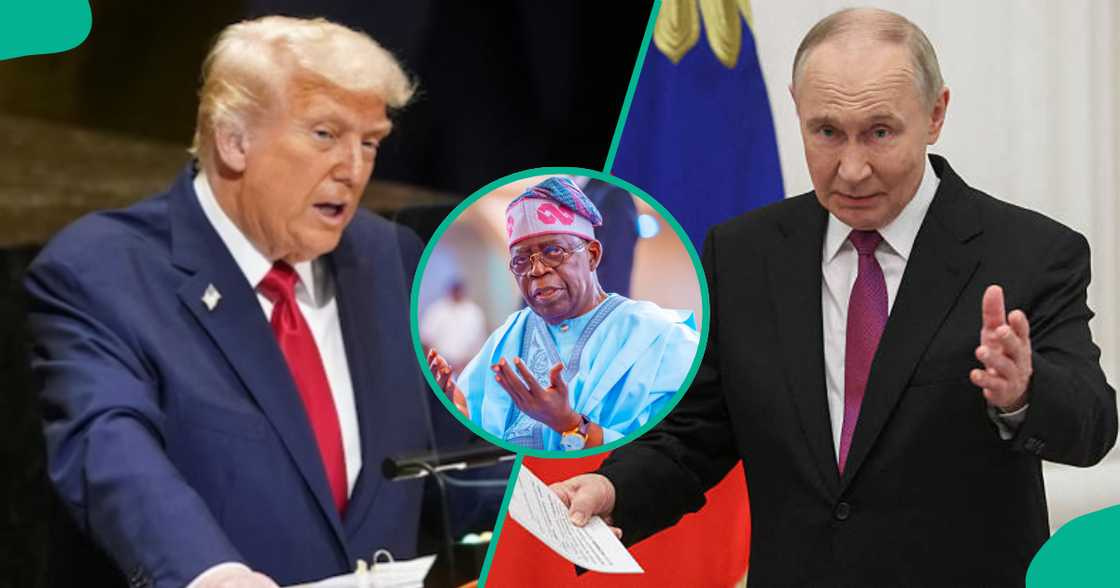
Imagine waking up to global headlines about Nigeria in the crosshairs of a heated international standoff—America rattling its sabre, Russia watching intently, and even China wading into the fray. It sounds like the stuff of blockbuster movies, but for many Nigerians, this unsettling turn of events is a pressing reality. Has the heart of West Africa become a new flashpoint for world powers? Let’s unpack the explosive inside story—step by step.
Primary keyword: Nigeria international relations crisis. The situation is reportedly so tense that Russian officials, under President Vladimir Putin’s watchful eye, have made their stance known—you could almost feel the sharp intake of breath across Abuja when their message hit the airwaves.
According to the Russian government, they’re keeping a close watch on unfolding events in Nigeria after United States President Donald Trump allegedly threatened military intervention. As the whole world now knows, Trump cited “the need to protect Christian communities” following allegations of religious persecution in Northern Nigeria. For many, the language was shocking: an open threat to invade a sovereign African state—a claim that immediately sparked a diplomatic uproar.
Russia’s Explosive Response—A Caution to America
Maria Zakharova, spokesperson for Russia’s Foreign Ministry, didn’t mince words. She reportedly advised the US to respect international law—a subtle but firm rebuke that resonated from Moscow to Lagos. This was more than just diplomatic talk. For ordinary Nigerians, hearing such global giants discuss their homeland was both alarming and surreal. If big powers start flexing muscle in our backyard, where does that leave us?
In her official remarks at a Moscow press briefing on November 7, 2025—cited by TRT World—Zakharova urged calm, reiterating Russia’s backing for adherence to United Nations statutes. “We call for respect for Nigeria’s sovereignty and compliance with international law,” she reportedly stated. For anyone following global affairs, this statement was loaded with meaning—a stark reminder that Africa’s largest economy is not a chessboard for outside interference.
China Weighs In—Backing Tinubu, Rejects Foreign Meddling
Just as the dust was beginning to settle, China added its powerful voice to the mix. According to allegations, Beijing delivered a robust warning against any outside meddling in Nigerian affairs. Their message was loud and clear: Nigeria is not alone. China’s foreign ministry reaffirmed its support for President Bola Tinubu’s administration and Nigeria’s own chosen development path—an encouraging note for many who fear outside disruption.
“We are closely monitoring this issue and call on all parties involved to strictly comply with international legal norms.”
The repeated use of terms like “sovereignty” and “respect for internal affairs” carries serious weight in international law and global diplomacy. As a Lagos-based analyst, Dr. Ifeanyi Okoye, explained, “It’s a signal that Nigeria is not an orphan on the world stage. Our relationships matter, and so does our right to chart our destiny.”
Nigeria’s Strong Vow Amid US Military Threat
Recall that President Bola Ahmed Tinubu said his administration “will spare no effort and leave no stone unturned in our mission to eliminate criminals from our society”.
So, what has the Nigerian government done in the face of these unprecedented threats? President Tinubu didn’t waste words. He reassured citizens and the world that his government has achieved significant progress in the past two years—and will “decisively eliminate this threat.” This bold statement landed like a thunderclap, echoing through social media and radio shows from Zamfara to Port Harcourt. You could almost hear people saying, “Na who get Nigeria pass us?”
Notably, President Trump’s reported declaration designating Nigeria as a “Country of Particular Concern” over alleged Christian genocide in the North has played out amidst complex local realities. While Nigeria faces undeniable challenges around religious coexistence—no small matter in a nation of 200+ million—many feel the need for homegrown solutions rather than foreign intervention.

Source: Getty Images
Inside the Global Power Play: Old Tensions, New Stakes
Why is Nigeria suddenly the focus of superpower rivalry? Analysts point to a mix of factors—religious diversity, vast mineral wealth, and strategic influence in Africa. Let’s face it; whoever commands attention in Nigeria wields sway across the whole continent. For everyday people hustling in crowded markets or stuck in traffic along Third Mainland Bridge, this might seem far from daily wahala, but the ripple effects are real.
Nigeria’s own experts urge balance. Dr. Ngozi Uche, a political scientist in Abuja, notes, “Outsiders don’t always understand our complex history or challenges. Solutions must be homegrown, anchored in context, not handed down from Washington or Moscow.”
Reactions Across Nigeria: Anger, Fear, and Determination
On the streets of Kano and in online chat rooms, emotions run hot. Some Nigerians are deeply angered by the notion of military threats—“We no dey fear anybody!” Others express concern about worsening insecurity or the possibility of becoming a pawn in great power politics. There are also calls for unity: “Let’s put tribal, religious, and political differences aside and put Nigeria first,” says community organiser, Salisu Ibrahim, from Kaduna.
International legal experts warn that any foreign intervention without United Nations approval could violate international law, possibly triggering wider consequences. If you think of Libya’s past or Sudan’s ongoing crisis, you’d understand why caution is uppermost on people’s minds. In this storm, Nigeria’s voice must not just be heard—it must shape the outcome.
Read More: The Human Angle and Unanswered Questions
Meanwhile, on the home front, respected Islamic scholar Sheikh Ahmad Gumi has also spoken out. In a widely cited interview, he condemned Trump’s alleged threat as “an insult to Nigeria’s sovereignty.” Going further, Gumi reportedly suggested that there might be a covert plot to target President Tinubu and the Aso Rock leadership, though these claims remain unverified and should be approached with scrutiny.
For many, this raises serious questions: Who truly stands with the Nigerian people? How do we address religious and ethnic grievances without inviting chaos from outside forces? Is Nigeria ready to withstand such pressures, drawing on the famed “Naija spirit” of resilience and grit?
[[EMBED_0]]
The Road Ahead: What’s at Stake for Nigeria and West Africa?
Nigeria’s international relations crisis is a wake-up call for the entire continent. From Ghana to Cameroon, neighbours are keeping watch. Will Nigeria show the world a peaceful, self-determined path forward, or will foreign powers dictate the pace? The next weeks and months may prove decisive, with the eyes of Africa—and the world—firmly fixed on Abuja.
- Key Takeaways:
- Superpowers are locked in an unprecedented dance over Nigeria’s future.
- Nigerian leaders emphasize sovereignty, unity, and local solutions.
- Global legal standards and respect for international law remain critical.
- Civil society and local experts stress the danger of foreign intervention.
So, what do you think? In your own street or your own corner, how are you discussing this Nigeria international relations crisis? Do you feel protected, or do you worry outsiders could make things worse? Drop your thoughts below—let’s move the conversation into our hands where it belongs!
Got a hot gist, opinion, or news tip about the Nigeria international relations crisis? Your story matters! Share your experience or sell your story by emailing us at story@nowahalazone.com. For general support or to pitch your ideas, contact support@nowahalazone.com.
Join our lively community and stay ahead with updates—follow us on Facebook, X (Twitter), and Instagram.
Don’t be left on the sidelines—your voice could shape Nigeria’s next chapter!