
Ever stared down at your pot on a rainy Lagos evening, thinking, “Ah-ah, must dinner always be the same old stew and rice?” If you’ve craved a new adventure on your plate—bold, creamy, and rich with layers of spice—then Massaman curry might just be your next obsession. But let’s be honest: what busy Nigerian has time to pound homemade curry paste after a hectic day of hustling?
Massaman Tofu and Potato Curry: The Nigerian Veggie Twist
Enter the heartwarming—yet surprisingly simple—Massaman tofu and potato curry. This recipe doesn’t require you to be a culinary guru or spend hours grinding spice. Instead, it leverages ready-made red curry paste (widely available in superstores like Shoprite or online), turning weeknight dinners into a colourful festival of flavour, with zero stress. It’s an instant ticket to deliciousness, using pantry staples and market-fresh vegetables that feel at home on any Nigerian table.
The Magic of Massaman Curry: Why Nigerians Are Falling for It
Why is this vegan curry recipe trending among adventurous home cooks in Lagos, Abuja, and beyond? For starters, it ticks all the boxes:
- Totally plant-based, yet satisfying even to committed meat-lovers.
- Deeply aromatic thanks to spices like cumin and cinnamon—flavours we Nigerians adore in traditional dishes.
- Packed with colourful chard and creamy coconut milk, echoing the “vegetable-rich” pots you’ll find at local bukas.
- Flexible: Swap rainbow chard for local greens like ugu or efo tete if they’re easier to find in your area.
Whether you’re vegetarian, trying to eat less meat, or just want something unique for Sunday lunch, Massaman curry is ideal.
Essential Ingredients for Nigerian Kitchens
To recreate this Thai-inspired magic at home, you’ll need the following:
- Rapeseed oil (or groundnut oil for a more local touch)
- 450g extra-firm tofu, torn for texture
- 4 round shallots (substitute with small Nigerian onions)
- 4 tbsp red curry paste – premade variety is a true time-saver (Thai Taste is a popular option)
- 1 tsp ground cumin
- 1 tsp ground cinnamon
- 2 lemongrass stalks, bashed (if unavailable, add extra lime zest for citrus notes)
- 2 x 400ml tins coconut milk – widely available in supermarkets
- 2 tbsp crunchy peanut butter for thickness and nutty depth
- 3 large potatoes (Maris Piper recommended, but Irish potatoes work perfectly)
- 200g rainbow chard (or ugu/green)
- 1 tbsp vegan fish sauce (see reputable options like Thai Taste)
- Sliced mild red chillies, seeds removed if you prefer less heat
- Cooked jasmine rice to serve—the perfect fluffy companion
From Lagos to Bangkok: A Story of Culinary Discovery
According to home cooks and foodies alike, nothing sharpens your appreciation for a dish quite like tasting it in its place of origin. One Lagos-based food blogger, Amaka Okoli, recalls her first bowl of authentic Massaman curry during a trip to Thailand: “It was so creamy, I couldn’t believe there was no meat inside. Since then I have been trying to bring a little Thai sunshine into our evening meals back home.”
But why should city dwellers have all the fun? This recipe is so adaptable, you can make it in any part of Nigeria. Whether you’re in Port Harcourt where seafood reigns, or Jos with its famous potatoes, you can adjust the veggie mix to suit what’s fresh in your market.
Step-by-Step: Cooking Massaman Curry the Nigerian Way
Ready to transform your dinner game? The process is straightforward—even if NEPA takes light halfway!
- Brown the tofu: Heat 2 tbsp oil on medium-high. Fry torn tofu pieces until golden on all sides, about 8 minutes. Set aside.
- Build the base: Add 3 more tbsp oil. Sauté shallots (or onions) for five minutes until soft with a hint of brown.
- Add the spice: Stir in curry paste, cumin, cinnamon, and bashed lemongrass. Fry for 3 minutes, allowing the fragrance to rise—this is the “gbas gbos” moment every kitchen waits for.
- The creamy part: Pour in coconut milk, peanut butter, and potatoes. Simmer gently for 15 minutes until the potatoes get tender, soft enough to soak up all those bold flavours.
- Final touches: Return tofu to the pot, stir, and cook five minutes more.
- Greens time: In a separate pan, heat 2 tbsp oil, add chard (or local greens), and fry till wilted. Stir in the vegan fish sauce.
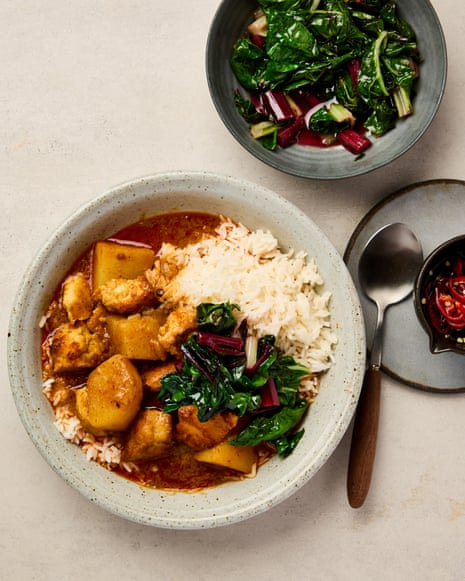
- Serve: Spoon curry over rice in wide bowls. Top with rainbow chard, serve extra fish sauce and chillies on the side. E dey burst mind!
Nutrition, Health, and Cultural Relevance
If you’re looking for low-cholesterol, high-protein vegetarian options, this recipe delivers—without breaking the bank. According to the Nigerian Heart Foundation, a plant-based diet, rich in vegetables, nuts, and moderate oil, is associated with lower risk of heart disease.
Also, substituting imported greens with local vegetables not only supports our markets and farmers but keeps the dish affordable. That’s the essence of Nigerian kitchen creativity—making world-class food using local bounty!
Challenges and Adaptations
While some ingredients like lemongrass or vegan fish sauce might seem “oyinbo” at first glance, they’re popping up more often in Lagos supermarkets and on e-commerce platforms. If you can’t find the exact ingredient, don’t worry! Lime zest, local greens or even ground crayfish (for non-vegans) can create a twist uniquely Nigerian.
Remember, as with any recipe, it’s about using what’s available and adding your personal flair.
Why Try Massaman Curry in Nigeria?
Nigerian cuisine is celebrated for its bold flavours—think suya, egusi, or ofada rice sauce. Massaman curry doesn’t seek to replace, but to complement. It’s ideal for households wanting to eat less meat, indulge in thick, luscious sauces, or simply explore new cuisines together. For university students, busy parents, and even bachelors living in shared flats, this dish can turn an ordinary meal into a colourful event.
Frequently Asked Questions About Massaman Curry in Nigeria
- Can I make it less spicy for children? Absolutely—simply reduce or omit the fresh chillies, or offer them at the table for those who enjoy the heat.
- Is tofu affordable in Nigeria? Yes. Tofu (“wàrà shí”) is widely sold by local women in many open-air markets, especially in the Southwest.
- What if I can’t find coconut milk? Blend fresh coconut flesh with little water and sieve—you’ll get fresh coconut milk at a fraction of the price.
- Are there healthier substitutes? You can swap potatoes for sweet potatoes or yam for added fibre and a lower glycaemic index.
The Final Scoop: Bring the World to Your Table
In kitchens across Nigeria, something amazing happens when we blend our traditions with flavours from distant lands. Massaman tofu and potato curry is more than just Thai food on a Nigerian plate—it’s a dance of cultures, a sign that our culinary curiosity knows no bounds.
So the next time your family asks, “What’s for dinner?” surprise them with this rich, aromatic, utterly unforgettable curry. After all, who says you can’t have a little Bangkok swagger in Benin City?
What do you think—will you try your hands at this vibrant vegan Massaman curry? Or do you have your own creative veggie spin? Drop your thoughts below and let’s get the conversation sizzling!
-
Got a recipe twist or a food story inspired by local or global adventures?
We’d love to showcase your culinary creativity!
Share your recipes or food stories with us at food@nowahalazone.com.
For news tips or general stories, email story@nowahalazone.com.
Follow us on Facebook,
X (Twitter), and
Instagram for more inspiring recipes and foodie gist!