
Ever wondered what would happen if old-school naija practicality collided with tomorrow’s tech on four wheels? Imagine cruising on the bustling streets of Lagos or weaving through the tight corners of Yaba, all while being cocooned in stylish nostalgia. That’s exactly the promise—and the puzzle—of the Fiat Grande Panda BEV, an electric city car that’s been making quiet but persistent waves far from its home in France and Italy. But what’s behind the sudden surge in interest, and does this quirky hatchback really fit into the everyday lives of Nigerian drivers?
If we’re being honest, when Fiat first dropped the Grande Panda exclusively as a battery electric vehicle (BEV), it didn’t exactly set the Italian streets on fire. According to Stellantis sales data, it sold just a handful of units in its home country. The market almost ignored it at first—almost as if folks shrugged and said, “Abeg, give us something we can actually use.” Now? Fiat has introduced a hybrid version, and suddenly it’s charting in the Italian Top 50 at number 28. Who would have thought?
Retro Design Meets Modern Needs: Exterior That Tells a Story
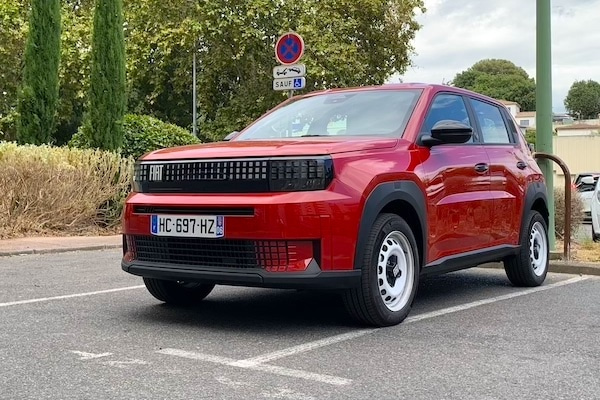
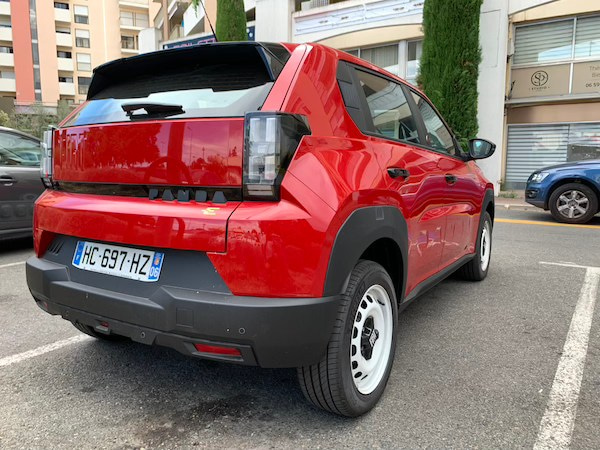
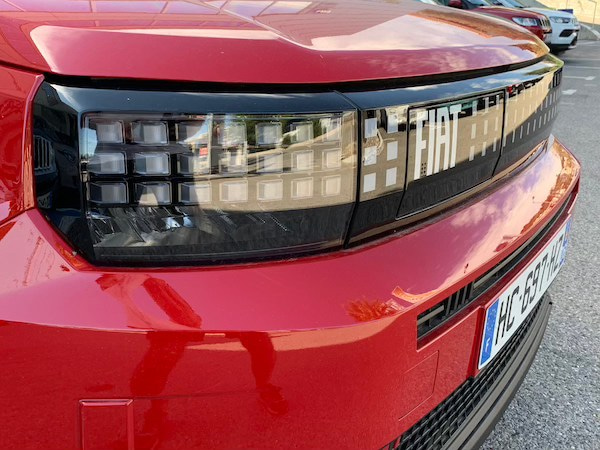
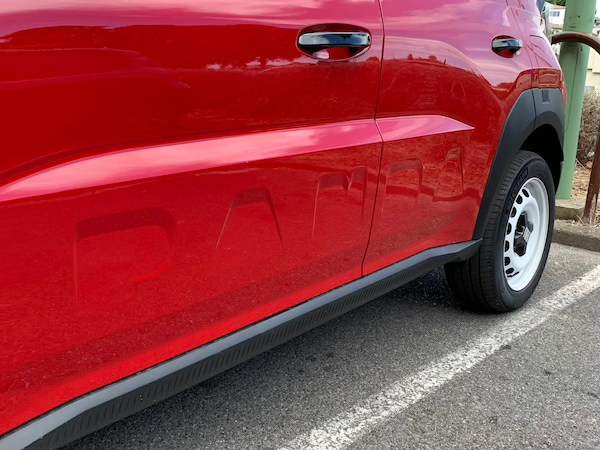
Step up to the Grande Panda, and the first thing that greets you is its playful, boxy silhouette—pure nostalgia, sprinkled with futuristic details. Designed by Francois Leboine, the creative mind behind the retro-revived Renault 5, the Grande Panda throws it back to 1980 with squared-off headlights, upright lines, and stocky plastic body guards. Even the bonnet and iconic “P A N D A” stamp on the doors give you that ‘throwback Thursday’ vibe.
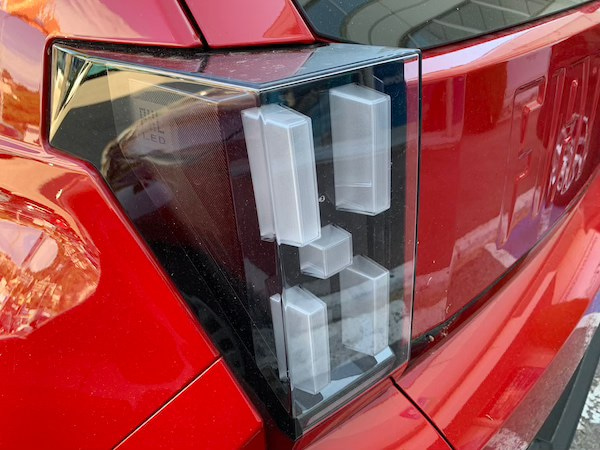
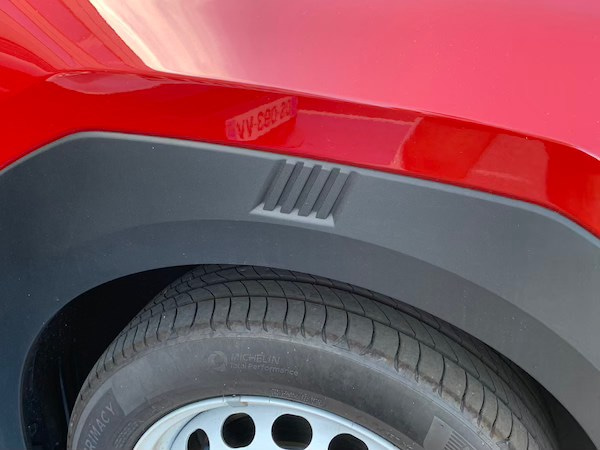
Spotting little Easter eggs—a previous Fiat badge tucked on a wheel arch, or taillights jutting out with a cheeky wink—makes it feel like this car is having a laugh with you. The only wahala? Those white steel wheels look cheap, like pot-of-soup money was saved there. But the overall presentation? Cheery and bold, impossible not to notice in the traffic snarl of Victoria Island.
The Eco Angle: Becoming Part of Bono’s “RED” Mission
Now here’s a twist for socially minded motorists: the entry-level Grande Panda BEV wears the “RED” badge. Not just a shout-out to the paint job, this is a direct nod to the (RED) partnership founded by singer Bono, fighting health emergencies around the world (as detailed by the official RED Initiative, RED.org). Buying this car means a portion of every sale supports disease prevention and medical aid efforts—a bonus point for those who want their ride to mean more.
- Dimensions: 4m long, 1.76m wide, 1.57m high, and a wheelbase of 2.54m. Compact enough for city manoeuvres.
- Boot space: 361 litres—room for weekend shopping at Tejuosho Market or even a short trip to Ibadan.
- Performance: Delivers 113hp, 120Nm torque, 0-100 km/h in 11 seconds, 132 km/h top speed.
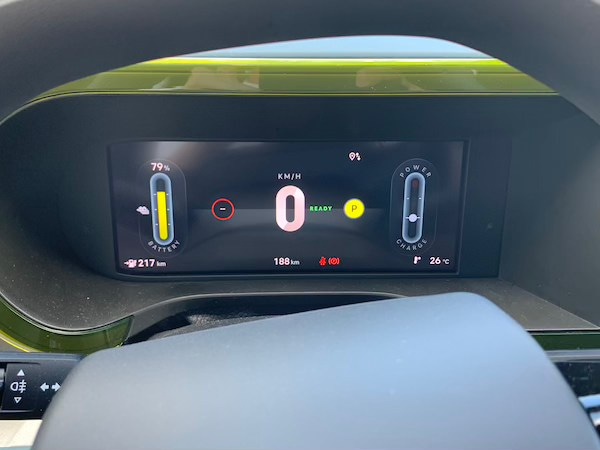
- Battery: 43.8 kWh for up to 320 km range (according to the WLTP standard).
- Charging: 20%-80% in 33 minutes on a 100 kW fast charger. That’s barely enough time to enjoy puff-puff and zobo by the roadside!
Inside the Grande Panda: Quirky Comfort Meets Everyday Naija Needs
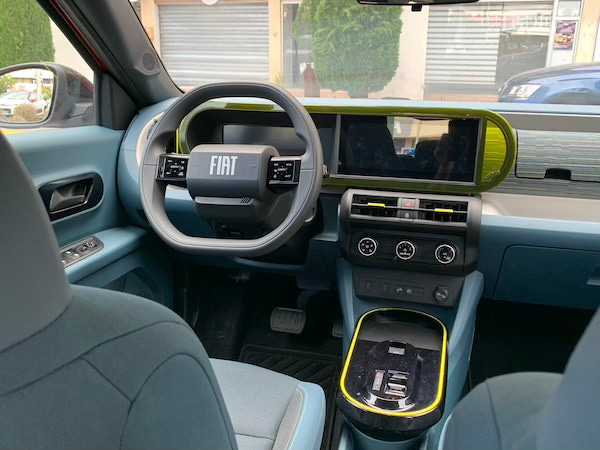
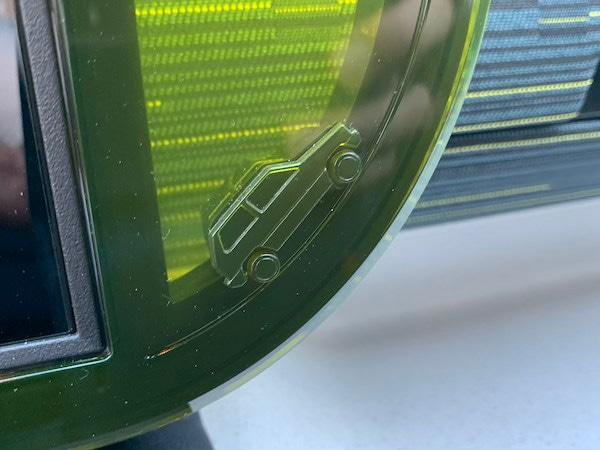
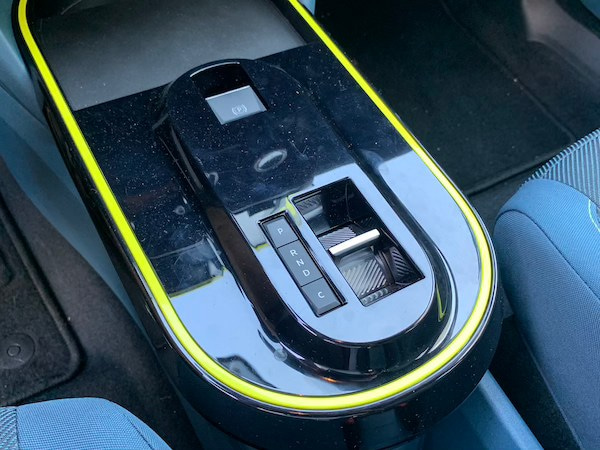
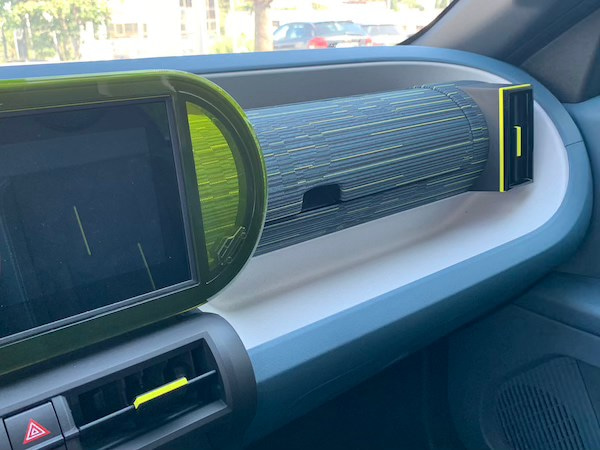
Step inside and you’ll be forgiven for thinking you’ve walked onto the set of a Nollywood sci-fi. The dashboard’s main feature? A quirky translucent panel that echoes the roof track of Fiat’s historic Lingotto factory, complete with a tiny 1980s Panda silhouette lurking at the edge. Two glove compartments (yes, two!) add practical storage for those extra face towels, snacks, or chargers Lagosians love to carry.
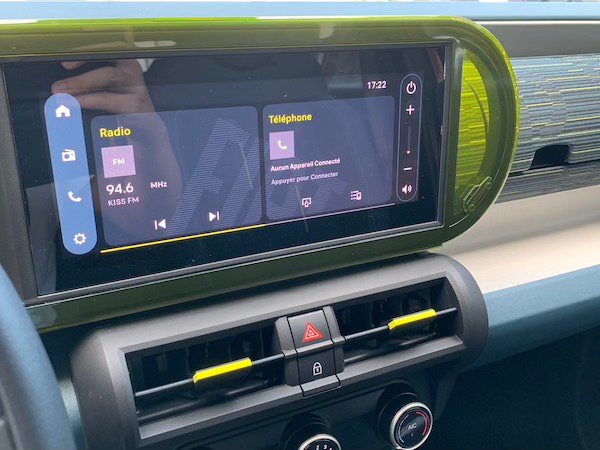
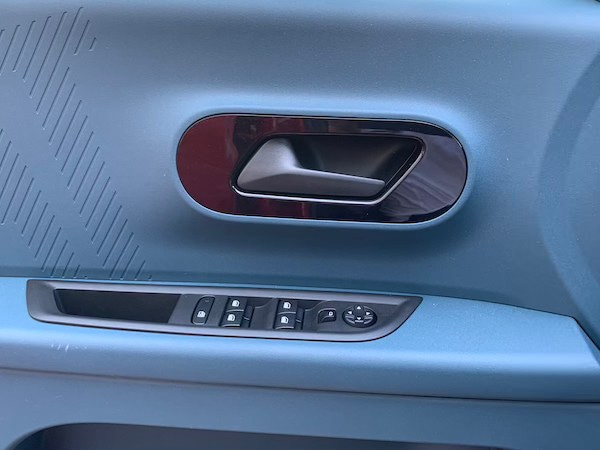
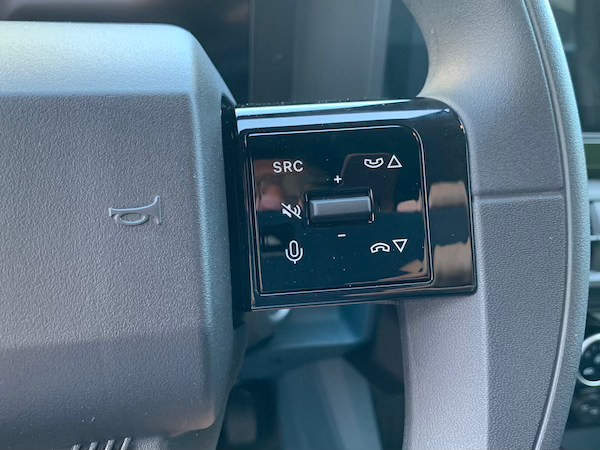
Colours dazzle: think light blue mixed with jarring flashes of fluorescent green—attention-grabbing but cheerful. Even better, some trims come made from recycled cardboard and aluminium. There’s an unmistakable “eco” vibe. The air con uses classic round knobs, Apple CarPlay and Android Auto are available wirelessly, and—truth be told—the rest is modest: hard plastics everywhere, doors and dash, reminding buyers that this is an affordable city car, not a luxury sedan.
What’s it Like to Drive on West African Roads?
Right from the jump, you notice the SUV-esque driving position—taller than you’d expect for such a compact ride. It places the driver high above danfo buses and keke napep alike, offering a clear view of the mayhem ahead. If you’ve tried the Citroen e-C3, Fiat’s sibling, you’ll recognise that same commanding perch, but here in Panda, it comes as a pleasant surprise.
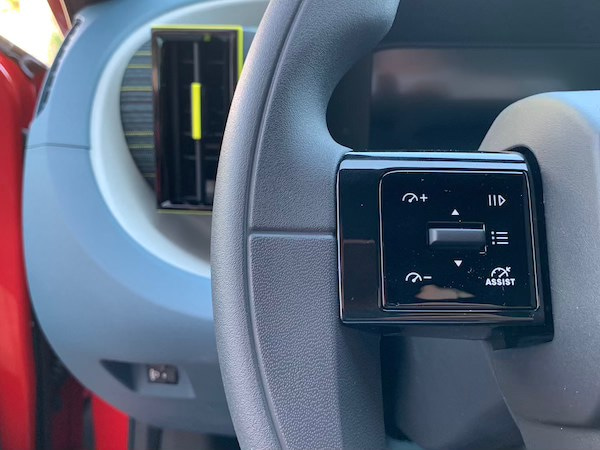
On city roads, the Grande Panda feels smooth and firm—no bouncing like okada over potholes, but firm enough that you won’t forget Nigeria’s “roads with character.” Swift steering responses help you swerve past the usual market commotion. However, beyond urban confines, you might feel its limits. Acceleration is enough for city starts, but not for sudden sprints on Lagos-Ibadan expressway. Speed limit alerts and lane assist technology offer peace of mind, but can be easily turned off for the more “hands-on” drivers among us.
Price Battles and Value for Money: Comparing Electric Car Options for Nigerians
Let’s face facts: most Nigerian families want value above all. As of early 2024, the Grande Panda BEV lists for €24,900 (approx. ₦24m+ before shipping and duties). That’s close to the new Renault 5 E-Tech and comfortably cheaper than the Peugeot e-208. Still, the Citroen e-C3—its closest rival—undercuts it by a few thousand euros, while offering similar specs.
The naked truth? The Grande Panda BEV feels “basic” for the price. However, it makes up for this by flooding drivers with charm, nostalgia, and attention to fun detail—qualities that could win over younger urbanites and tech-forward customers in Nigeria’s growing electric car space.
- Cheaper Hybrid Option: For drivers negotiating intermittent power supply and inconsistent public charging points, the hybrid’s lower ₦19m+ starting price might make more practical sense in this market.
- Running Cost Advantage: Electricity is still far cheaper than petrol or diesel by the kilometre, especially with rising subsidy removal drama.
- Environmental Impact: EVs reportedly offer reduced carbon emissions and lower noise levels, according to International Energy Agency reports, a relief in Nigeria’s densely packed cities.
Will The Panda BEV Find a Home on Naija Streets?
With electric vehicles slowly inching into Nigeria—sometimes crawling, sometimes leaping—the Fiat Grande Panda BEV presents a fascinating mix. Nostalgia lovers will adore its looks, while eco-conscious folks, especially the new wave of climate activists and tech startups in Lagos and Abuja, might give it a second glance. Yet, affordability, charging infrastructure, and spare parts availability remain big hurdles. As Lagos-based engineer Chinedu Okoro notes, “For any EV to thrive here, we must fix power supply issues first. Otherwise, na sufferhead for the car owner.”
Globally, regulators in cities like Paris and London are embracing compact EVs to clamp down on emissions, with local governments offering incentives (reportedly as much as €5,000). Some African states have begun following suit, though Nigeria’s own EV policies remain a work in progress, according to the National Automotive Design and Development Council (NADDC).
The Bottom Line: Should You Buy the Fiat Grande Panda BEV?
If you love fun design, support causes like (RED), or crave a city runabout that stands out from the crowd, the Fiat Grande Panda BEV might just tickle your fancy. But if budget, reliability, and petrol-backup are top of mind, the hybrid variant gives you less to worry about in PHCN’s unpredictable world.
Will Nigeria’s evolving urban scene make space for such a delightfully quirky, eco-conscious car? That’s the million-naira question—one that only you can answer. Would you try a Fiat Grande Panda BEV in Lagos, Abuja, or Port Harcourt traffic? What features or changes would make it truly at home in our unique roads?
Drop your thoughts in the comments and let’s spark that conversation. Thinking of sharing your auto story, importing cars, or have a unique Nigerian motoring experience to tell? Reach out below!
Got a unique car story or automotive tip from Nigeria or Africa to share? Want to sell or feature your own story on our site?
Email us at story@nowahalazone.com.
For general support, reach out anytime at support@nowahalazone.com.
Join our growing auto community—follow us for more Nigerian and African car news on Facebook,
X (Twitter), and
Instagram.
We want to hear your views—what’s your take on electric cars in Nigeria? Let’s talk in the comments!