

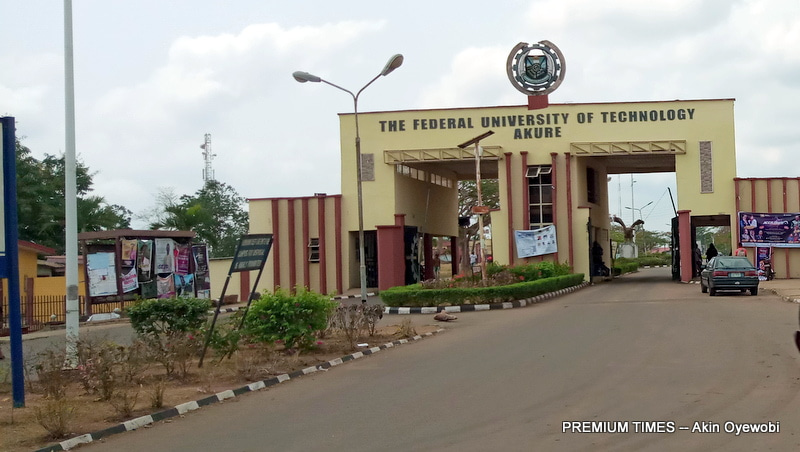
Have you ever witnessed a sea of bright academic gowns light up a city before? That’s exactly what’s about to happen in Akure as the Federal University of Technology, Akure (FUTA) prepares for an unprecedented convocation this November. On Friday, 14 November, the university will reportedly celebrate a jaw-dropping 240 students attaining first-class honours for the 2024/2025 academic session—an achievement that has sent ripples of pride across the campus and beyond.
This year’s milestone isn’t just about numbers; it’s about the heart, grit, and “no gree for anybody” spirit that defines Nigerian students. According to FUTA’s Vice-Chancellor, Professor Adenike Oladiji, a total of 2,747 students will walk the stage at the university’s 36th convocation, representing the dreams and resilience that have weathered both midnight ‘TDB’ (Till Day Break) readings and endless strikes.
Inside FUTA’s Explosive Convocation: A New Generation Steps Forward
Let’s call a spade a spade—these statistics aren’t small potatoes. Out of the 2,747 undergraduates, 1,479 are leaving with Second Class Upper, 912 with Second Class Lower, and 116 with Third Class degrees. These achievements echo across hostels and lecture halls, as families, friends, and even the “buka” (cafeteria) owners who kept students fed, ready themselves for a full weekend of owambe celebrations.
But the high table of this celebration has a seat reserved for one person: Akindunbi Isaac. This brainiac from the Department of Civil and Environmental Engineering reportedly emerged as the Best Graduating Student, boasting a mind-boggling 4.98 out of 5.0 CGPA. When he gives his valedictory speech, many would wonder—what kind of ‘egusi’ was he eating all these years?
FUTA’s Postgraduate Surge: Shaping Africa’s Next Innovators
The story doesn’t end with fresh BSc holders. On Saturday, 15 November, according to Professor Oladiji, FUTA is set to award 867 advanced degrees. The breakdown? 86 Postgraduate Diplomas (PGD), 627 Master of Technology (MTech), and 154 fiercely earned Doctorates (PhD). For many, these postgraduate degrees signify more than another paper—they’re tickets to bigger dreams, from research labs in Lagos to tech hubs in Berlin and Silicon Valley.
No wonder, then, the campus air is charged with ambition—and pride. In Professor Oladiji’s words, “FUTA has been successfully repositioned for a sustainable future.” She credits the administration’s foundation of “academic excellence, financial sustainability, global competitiveness, and inclusive growth”—a vision that rings true for students and education analysts alike.
The Inside Story: Global Rankings, Local Impact
Dig a little deeper, and you’ll find that FUTA’s achievements are not just for show. According to the administration, researchers have recently broadened their horizons with study visits to Spain, the UK, and Germany. Think of it—Nigerian minds, engaging in global knowledge exchange, soaking in ideas to bring back home.
Local industry partnerships also stand out. The university’s tie-ups with organisations like Green Energy International Limited and LekOil Joint Venture, all under the Nigerian Content Development and Monitoring Board (NCDMB), reportedly aim to tackle real-world challenges—like hydrocarbon exploration in the Niger Delta’s Otakikpo Field. Not just theory, abeg. FUTA’s researchers are at the frontlines, proving Nigerian expertise isn’t “make-believe.”
Answering Nigeria’s Skills Gap: FUTA’s Convocation Lecture
What’s the secret sauce for bridging the skills gap in Nigeria? That’s the “million-naira question” set for this year’s convocation lecture. Delivered by renowned Senior Advocate of Nigeria, Adetokunbo Kayode—a former Attorney General and Minister of Labour—the lecture titled, “Strategies and Tactics for Solving Skills Challenges in Nigeria: The Roles of Government, Institutions and the Youth,” promises far more than academic theory. His insights, drawn from public and private service, aim to spark meaningful conversations about Nigeria’s youth, employability, and future growth—topics that touch every home, from Ilorin to Port Harcourt.
Unveiling Federal Support: Partnerships for Growth
In a move that has been lauded by university stakeholders, the federal government, under President Bola Tinubu, recently approved a teaching hospital for FUTA—an essential step forward for training medical and allied health students. According to Professor Oladiji, this is complemented by a N1 billion special intervention fund for agricultural commercial farming, a welcome boost for food security in a country where “sapa” (hard times) has become a familiar refrain.
These strides mean FUTA is not just producing papers and graduates, but also addressing two burning issues—healthcare and hunger. With investments in medical education and large-scale agriculture, the university is actively filling critical gaps threatening Nigeria’s sustainable development.
Challenges, Perspectives, and The Road Ahead
Of course, no honest conversation about Nigerian tertiary education is complete without acknowledging the hurdles—insufficient infrastructure, strikes, and funding gaps continue to test both students and management. According to education experts such as Dr. Tunde Bakare, much work remains before Nigerian universities can consistently compete among Africa’s best—let alone the world’s top 100.
Still, the progress at FUTA offers a beacon of possibility. With increased federal interest, robust industry linkages, and a growing profile for international research collaboration, the university is writing a new chapter—one that could inspire other institutions nationwide to “think big, act local, and aim global.”
How Does FUTA’s Convocation Shape the Nigerian Story?
For the ordinary Nigerian student, this convocation bears a simple but powerful lesson: academic excellence and global relevance are within reach, with the right mix of opportunity and determination. As families prepare meals and sew new Aso-Ebi (family cloth) for graduation ceremonies, the ripple effects—pride, hope, responsibility—are felt everywhere.
But let’s be real—will the market value their certificates? Will employers open their doors? According to recent data from the Nigerian Bureau of Statistics, youth unemployment remains a major headache, yet the skills and research focus championed by FUTA may hold the key to reversing the trend.
- Engaging industry for hands-on learning.
- Expanding global research exchanges.
- Investing in healthcare and agriculture.
The way forward lies not just in celebration, but in action.
What Next for Nigeria’s Tech Future?
Nigeria’s standing as Africa’s most populous nation comes with its own academic “wahala.” Quality graduates, thriving research, and relevant skills are the golden ticket to real change. According to analysts and the Ministry of Education, cross-sector partnerships, thoughtful policy, and steadfast student determination must all play a part. If FUTA’s convocation story is anything to go by, Nigeria’s best days for technology, innovation, and human capital are still ahead—provided we harness what we’ve learned, and refuse to let “bad belle” or challenges slow us down.
Do you know a brilliant graduate making waves or facing challenges in today’s Nigeria? How do you think FUTA’s model can ignite change across other universities? Drop your comments below and follow for more real-time updates and inspiring stories straight from Nigeria’s campuses!
Got a story about university life, education wins, or challenges you want to share or sell? We want to hear from you! Email us your story (or story tips) at story@nowahalazone.com and you could be featured on our platform.
For support, reach us at support@nowahalazone.com.
Stay in the loop: Facebook | X (Twitter) | Instagram