
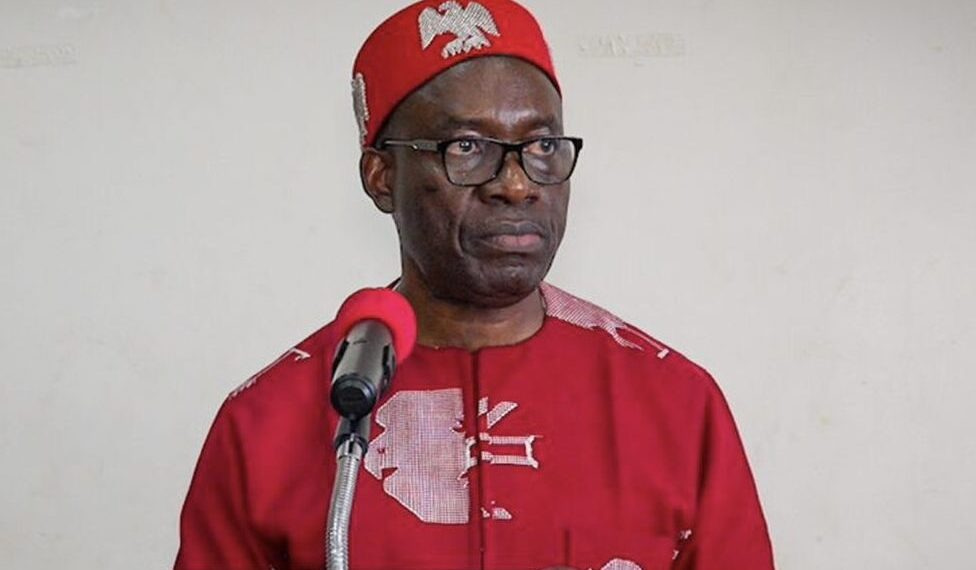
If anyone had told you five years ago that a professor-turned-governor would sweep all 21 local government areas (LGAs) in Anambra State’s fiercely competitive governorship race—not once, but twice—would you have believed it? As dusk settled across Awka on Saturday, the city buzzed with anticipation, old friends gathering at roadside joints, eyes glued to their radios and phone screens, all waiting for that thunderbolt declaration from INEC headquarters. Could it be another historic “clean sweep” for the ever-vocal Charles Soludo?
Inside Story: Unprecedented Victory Signals a New Era?
The numbers, according to official statements from INEC headquarters in Awka, have shocked even long-time political analysts. Soludo reportedly clinched the majority in every single LGA—an achievement as rare as harmattan rain! While INEC continued their final arithmetic, the air was thick with certainty that the incumbent was poised, once again, to hold the reins of Anambra governance.
But why does this matter for the regular Nigerian struggling with rising food prices or okada riders braving the roads? Election outcomes ripple through all levels, from the markets at Eke Awka to young graduates hustling for tech jobs in Onitsha. Soludo’s anticipated re-election, if officially declared by INEC, would signal a promise kept—or not kept, depending on whom you ask—of continuity and reform in one of Nigeria’s most industrious states.
Election Results: Soludo Surpasses Constitutional Requirements
Any Nigerian who has followed the news knows the rules: to win the Anambra governorship, a candidate must secure the highest number of votes and more than 25 percent of ballots cast in at least 14 of the state’s 21 LGAs. According to the results announced by INEC officials, Soludo’s performance far exceeded that constitutional hurdle, successfully building support not just in core strongholds but also in areas traditionally open to the opposition. For context, in Nigerian electoral history, such dominance is both uncommon and deeply symbolic, echoing the state’s yearning for stability after years fraught with political uncertainty.
Premium Times and other credible outlets observed that, with every LGA under his belt, there was essentially no mathematical possibility left for any other contender to overturn his lead. For civil society organisations, this level of sweep was something “unprecedented,” as one observer remarked in Awka.
Who Were the Main Challengers?
Of course, Soludo wasn’t alone at the political starting line. The All Progressive Congress fielded Nicholas Ukachukwu, while George Moghalu waved Labour Party’s flag, and thirteen others put up a spirited fight. Yet, as one Onitsha trader joked, “Na like Super Eagles vs. small village team this year. E no get where dem fit run reach!”
Still, with a total of 16 political parties contesting, the race demonstrated the depth and diversity of Nigeria’s democracy—even if, by the morning after, most parties were facing the music of overwhelming defeat.
Peaceful Voting—But the Usual Nigerian Wahala
For many, the real news headline could have been the relative calm that ruled the day. Across Nnewi, Ihiala, and up to Aguata, voters reportedly lined up, chatting and sharing sachet water, while security agents kept watch. “Abeg, we no wan wahala today,” one voter told a local observer, capturing the collective mood.
Yet, the ever-present shadow of “naira for votes” wasn’t far off. Reports of alleged vote-buying circulated, but, as YIAGA Africa noted in their civic monitoring updates, most polling units remained largely under control—a welcome relief in a climate usually fraught with tension.
Voter Turnout: Encouraging or Cause for Concern?
In Nigeria, elections are often marred by low turnout, and Anambra was no exception. YIAGA Africa’s preliminary analysis placed participation rates between 20.28 percent and 22.92 percent. In simple terms: over three-quarters of registered voters stayed home. Some say it’s a sign of contentment, others call it indifference or frustration with the process. Whatever the reason, it reminds us that political engagement still has a long road ahead.
Expert Opinions: What Does Soludo’s Victory Mean for Ndi Anambra?
So, what’s really at stake for Anambra people with this stunning re-election performance? According to Dr. Ifeanyi Okoye, a governance analyst based in Awka, “When you have a governor winning in all LGAs, it suggests he’s managed to unite disparate interests—even if only temporarily or at the surface. The challenge now is translating that mandate into real, measurable growth.”
Soludo, renowned for his background as a former Central Bank Governor, inherited a state with immense economic promise but also deep social challenges. His first term focused on infrastructural investment, micro-loan programs for SMEs, and education reforms—but critics argue that issues like youth unemployment and insecurity continue to cast a shadow.
- Will his second term finally bring the industrial revolution he once promised at Ekwulobia market?
- Can he address the urban-rural divide that leaves some LGAs feeling shortchanged?
- How will he tackle voter apathy, making politics matter for everyday people?
Why Should the Rest of Nigeria Care?
Some might ask, “How e wan take concern me, Austin?” But the ripple effects of Anambra’s stability stretch beyond local borders. The state is a commercial hub connecting the South-East to the nation’s economic lifeblood. If reforms succeed here, other states can learn, borrow strategies, and even improve on what works.
Beyond that, the diligent work of civil society groups like YIAGA Africa—whose real-time updates and turnout analysis provide crucial transparency—sets a bar for future elections across Nigeria. The peaceful conduct? That’s a point of pride for both the people and the election umpire, even as vigilance against malpractice must continue.
Comparing with Neighbouring States
From the bustling streets of Owerri to the markets of Asaba, neighbours watch Anambra’s political evolution closely. Historical data shows that no recent election in the region has seen a single party sweep every LGA. The political class, as well as everyday folks, will no doubt be dissecting these results for months—seeking the secret sauce behind Soludo’s connection with diverse communities.
The Road Ahead: Challenges and Expectations
Victory celebrations are already filling the air with the sound of ogene drums. Yet, Soludo’s next term promises to be even more scrutinized than the first. From infrastructure development in remote villages to economic empowerment for youth and market women, expectations are understandably sky-high. According to INEC guidelines, the governor’s return will be formalised after a thorough review of all electoral documentation—a safeguard for the legitimacy of the process.
But, as Nigerians love to ask, “Will he perform, or is it just another round of high promises?” Only time will tell, but Ndi Anambra will surely keep a vigilant eye—elections may end, but the people’s judgment never sleeps.
What’s your perspective on Soludo’s historic clean sweep—chance for unity and growth, or just politics as usual? Drop your comment below and let’s gist! For updates, thoughtful debates, or to share your own inside story—whether as a tip, opinion, or first-hand experience—contact us at story@nowahalazone.com. We’re eager to feature authentic Nigerian voices!
Have a hot gist or a powerful local story you want the world to hear? We’re here to amplify your voice! Send your news, tips, or even stories you want posted or sold to story@nowahalazone.com.
Need support? Reach out to us at support@nowahalazone.com.
Connect with fellow readers and never miss an update—join the community on
Facebook,
X (Twitter), and
Instagram!