
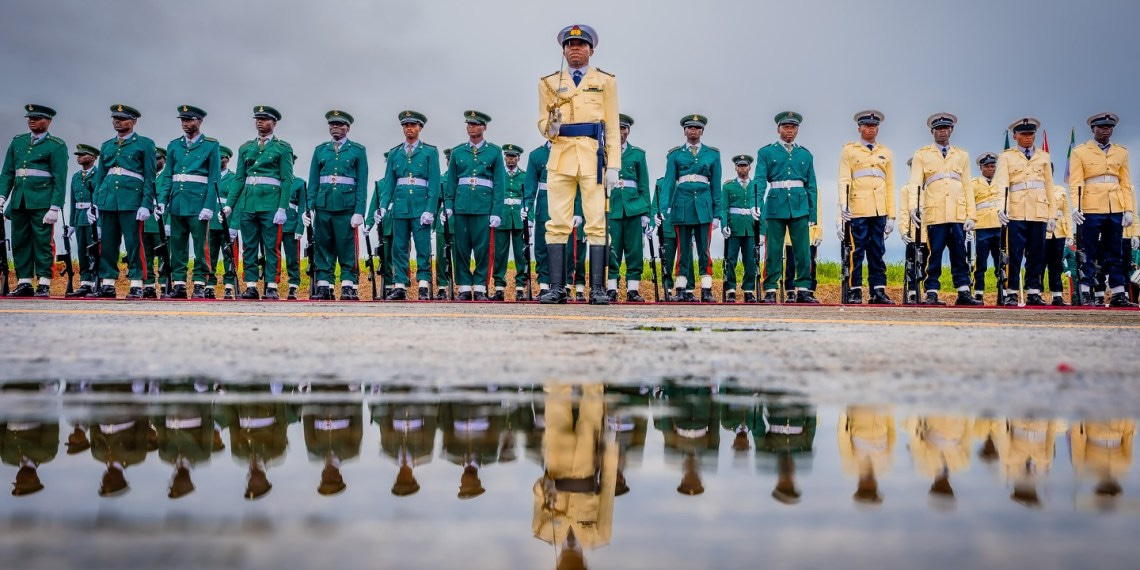
Have you ever wondered just how fragile Nigeria’s hard-won democracy can be in the blink of an eye? Picture this: inside the walls of the Military High Command last month, a storm was brewing. Sixteen officers—yes, sixteen—were reportedly put in handcuffs over allegations of indiscipline and “breach of service regulations,” a phrase that barely scratches the surface of the explosive tension underneath.
Now, officially, these men are just “under investigation” for failing to meet promotion expectations and “perceived career stagnation.” The military worded it as a normal process to keep the Armed Forces on the straight and narrow. But, let’s be honest, who believes it’s all that simple? According to insider accounts quietly shared with the media, that official story was ladled thick with sweet talk—Nigeria-style palm oil diplomacy masking raw nerves behind the scenes.
Here’s the shocking truth: reputable investigative platforms, like PREMIUM TIMES, confirmed that a coup was seriously floating in the air. The implication is huge—Nigeria still wears the scars of its nine previous military takeovers. Each one left lasting marks, reminding us that even our worst democratic missteps don’t compare to the dark days of khaki power plays. Truly, as the saying goes, no matter how bad a rainstorm is, it can never turn to fire like a military rule.
Why Nigeria Cannot Afford Another Military Coup
After over two decades of uninterrupted democracy since 1999, Nigeria is still patching up the wounds from over forty years of military interference. In our 65-year history, that’s more than half of our existence living on edge, with constitutions shredded and citizens holding their breath, waiting for the next decree. Yet, despite this democratic run, you can sense the jitters when whispers of a fresh coup emerge.
Was it any surprise, then, that the Independence Day parade on October 1st was abruptly canceled? No detailed explanation. Just like that, a key symbol of national unity disappeared for the year—a move that, according to sources, sparked a wave of suspicion at the very heart of government.
The dominoes kept falling: the president quickly relieved the service chiefs of their posts, except Major General Emmanuel Undiendeye, the top intelligence chief whose officers nabbed those military suspects. General Olufemi Oluyede climbed up to become the new Chief of Defence Staff, replacing General Christopher Musa. A reshuffle in tense times—clear evidence that, as Nigerians love to say, “there’s more to this broth than just pepper soup.”
The Weight of History: Lessons Nigeria Can’t Forget
Only last week, the drama deepened when soldiers reportedly stormed the residence of former Petroleum Minister Timipre Sylva, searching every corner and carting off his brother. His spokesman, Julius Bokoru, wasted no time assuring the public that his boss—out of the country—had nothing to do with any coup plans. The rumour mill was buzzing, with fingers allegedly pointing at an unnamed ex-governor from the South.
Every Nigerian above a certain age remembers: coups bring nothing but suspended rights, broken promises, and a flood of anxiety. In each incursion, politicians are paraded as villains, only for new military leaders to follow in their corrupt footsteps—sometimes worse. Constitutions are suspended, media houses get shuttered, and average people become collateral, watching their hopes for justice and prosperity fizzle faster than suya on hot coals.
Look back at the painful timeline: in the late ‘80s and early ‘90s, legendary newspapers like Newswatch, The PUNCH, and The Guardian were silenced. Journalists paid the steepest price—Dele Giwa’s assassination by letter bomb in 1986 under Ibrahim Babangida’s regime is still spoken of in hushed tones in newsrooms across the country.
And when it comes to looting, the numbers boggle the mind. Remember late General Sani Abacha? According to a 2022 BBC infographic, Nigeria has reportedly recovered about $3.65 billion in stolen funds since his 1998 death, including a cool $750 million from his family that same year. His total haul? An estimated $5 billion—a figure as jaw-dropping as Third Mainland Bridge’s daily traffic.
Crisis of Confidence: Democracy on a Tightrope
Why does it matter so much this time around? Simple. In today’s interconnected world, nations facing diplomatic sanctions find themselves isolated faster than you can say “efizzy”—just ask any ordinary Nigerian who’s tried to wire money abroad during a financial blacklisting. With a fragile economy battling on all fronts, a coup would mean lost investments, international restrictions, and endless hardship for families countrywide.
The original sin, if you want to call it that, arrived with Nigeria’s first coup in January 1966. What followed was a cascade of tragedy: the deaths of national icons like Prime Minister Tafawa Balewa and regional leaders like Ahmadu Bello and Samuel Akintola. The aftermath? The July 1966 counter-coup, a bloody civil war that tore at the foundations of Nigerian unity and sowed ethnic distrust we’re still fighting to uproot today.
To even imagine a return to that “perilous road” brings a chill down the collective spine of the nation. For the average Nigerian, it’s not just headlines—it’s memories of curfews, missing loved ones, and dreams put on hold indefinitely.
The Way Forward: Strengthening Democracy from the Grassroots
So, what’s the solution? According to Lagos-based political analyst, Mrs. Iyabo Ajayi, “If democracy is to survive in Nigeria, reforms must be constant—leadership must prioritize the well-being of the masses over selfish ambition.” The bitter truth: surging unemployment, rising food prices, and daily hardship create fertile ground for the seeds of unrest. Nigerians, facing japa pressure and increasing hunger, can easily become pawns in bigger games if leaders refuse to respond.
- Tackle poverty head-on—not just in campaign speeches, but with practical initiatives that reach the grassroots.
- Strengthen institutions—so disciplinary measures and promotions are transparent and fair within the military.
- Foster trust—both up and down the chain: government to people, and military to civilian leadership.
- Open channels for media and citizens—so grievances aren’t left to fester.
History shows that when hope disappears, desperation steps in—and the drums of undemocratic change grow louder. Yet the path back to stability, growth, and freedom is always built on reforms, accountability, and putting Nigeria first, beyond personal gain.
What’s At Stake for Nigeria’s Future?
Democracy in Nigeria may not be perfect, but a return to the guns-and-boots era would be a costly backward march. As experts remind us, transparency, justice, and strong institutions—not coups—are the real tools for building a stronger nation. For all her struggles, our Naija has come too far to start dancing to the old tune of military takeovers again. As a country famed for resilience—abeg, we must refuse to “carry last.”
Do you think Nigeria’s democracy is strong enough to withstand these challenges? What reforms do you believe can secure lasting peace? Drop your thoughts below and let’s shape the future together!
For general support, reach out at support@nowahalazone.com.
Join ongoing conversations and catch updates—let’s stay connected! Follow us on Facebook, X (Twitter), and Instagram today.