

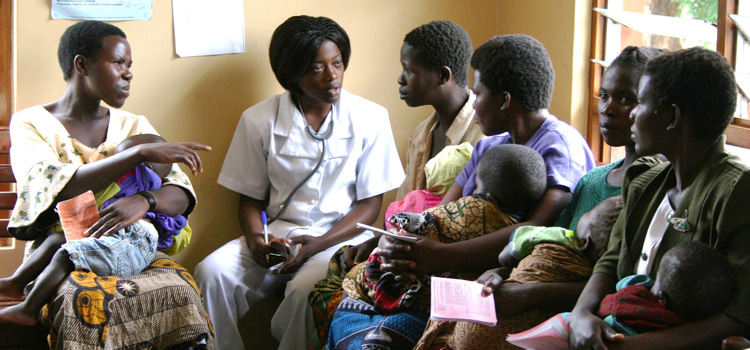
Can you imagine that, in 2024, most Nigerian women in marriage still aren’t calling the shots when it comes to their own bodies? The explosive findings from the newly released Nigeria Demographic and Health Survey (NDHS) reveal a reality more shocking than many of us might expect: only three out of every ten married Nigerian women reportedly have full say over crucial sexual and reproductive health decisions. For a country priding itself on progress, this is a wake-up call that hits home.
According to the NDHS 2024, just 29% of married women aged 15–49 say they can make informed choices about all three key aspects of reproductive health—sexual relations, contraceptive use, and decisions regarding their own healthcare. This isn’t just a random number buried somewhere in a report; it’s a direct measure used worldwide to track progress on Sustainable Development Goal (SDG) 5.6.1, which focuses on bodily autonomy and gender equality.
Behind the Numbers: Why So Few Nigerian Women Have Reproductive Autonomy
Nigeria is blessed with vibrant women—determined, resilient, and resourceful. Yet, when it comes to having the final say about their own reproductive health, far too many are still on the sidelines. Imagine a woman living in rural Jigawa, married off young, barely finished with primary school, and with very little control over choices that shape her own destiny. Sadly, this isn’t just a movie story; it’s daily reality for millions.
The NDHS didn’t just throw numbers at us. It paints a vivid picture: only 9% of women with no formal education are able to take charge of their reproductive health across all three dimensions. Meanwhile, among women who have advanced beyond secondary school, the number jumps to 58%. That’s a gap as wide as Third Mainland Bridge during rush hour!
The role of poverty is equally glaring. Just 9% of women in the lowest wealth bracket reportedly enjoy full autonomy, while the figure climbs to 58% among Nigeria’s wealthiest households. It’s clear—money and education aren’t just about buying handbags or paying school fees; they’re directly tied to a woman’s ability to make lifelong, life-saving choices.
Regional Divide: North-South Realities and the Striking Gaps
Let’s not sugar-coat it—the gap between regions feels like comparing two different countries. Down South, autonomy numbers are soaring: the South-South zone leads with 72.7%, followed closely by 60.7% in the South-West and 56.5% in the South-East. One can almost hear the proud Ibadan or Port Harcourt women expressing themselves without fear or shame.
But step into the North-West, and the picture turns sombre. Only 6.7% of women there allegedly have a say in their reproductive health. In the North-East, the situation isn’t much brighter—just 15.3%. By the time you zoom into Niger State, the figure tumbles to a jaw-dropping 5.8%. That means in a room of twenty married women, maybe just one can fully decide what happens to her own body. Who would believe it in 2024?
Age isn’t helping matters much. Among married girls and young women aged 15–19, only 8.6% report being able to make such decisions independently. Even in the 20–24 age group, the number lags at 17.4%. It’s easy to see how early marriage, tradition, and lack of power keep the youngest brides “on the bench.”
Family Planning: Choices, Myths, and Unmet Needs
When you look at the data on family planning, it offers another window into why these numbers matter for our collective future. The contraceptive prevalence rate (CPR) among married women stands at just 20%, compared to 50% for sexually active unmarried women, according to the NDHS 2024. Among married women, the most common methods remain implants (6%) and injectables (4%). For unmarried sexually active women, male condoms (26%) and withdrawal (9%) dominate.
This isn’t just about statistics; it’s about real women making do with what’s available—and, sometimes, with what’s “allowed” by partners, families, or society. Almost one in five married women (21%) and a staggering 36% of sexually active unmarried women face unmet needs for family planning services. That’s a clear signal that while contraceptives exist, access, affordability, and social barriers remain steep mountains.
Why Are Women Still Held Back? Examining the Roadblocks
Lewis Aituma, a family planning advocate and obstetrician, summed up the situation with striking clarity: “Far too many Nigerian women simply do not have the freedom—or the means—to act on their reproductive choices.” Quoting his observations, he said the underlying currents fueling these challenges are strong—age-old cultural beliefs, deep-seated myths about contraceptive safety, and the persistent norm that a woman needs her husband’s approval for anything related to family planning.
He stressed the urgent need for awareness, empowerment, and making services affordable and widely accessible. “At the end of the day,” Aituma noted, “na woman go carry the pregnancy, face the complications, or even risk her life during childbirth, so her right to choose must be protected.” According to him, the government and stakeholders must train health workers, enact and enforce relevant laws, and invest in female empowerment if they aim to tackle maternal deaths and slow population explosion.
Budget Cuts and the Threat to Family Planning Progress
Unfortunately, the fight is about to get tougher. A look at the federal government’s proposed 2025 budget reportedly shows a dramatic 97% slash in state funding for family planning—down to N66.39 million from N2.2 billion the year before. This comes at a time when several international donors, including the US Agency for International Development (USAID), have scaled back or withdrawn their financial support for Nigeria’s contraceptive supply chains.
What does this mean in practical terms? Experts warn it could scuttle hard-won gains—driving up rates of unplanned pregnancies, maternal deaths, and potentially collapsing family planning programmes across the country. The reality is stark: if urgent steps aren’t taken, we just might find ourselves two steps back after every step forward.
A Crossroads for Nigeria: Can We Move From Data to Change?
So where do we go from here? Data doesn’t exist for decoration—it’s a call to action. Countries like Ghana and Rwanda have set positive examples by closing gaps through education campaigns, local role models, and targeted public investments in women’s health. Nigeria can borrow a leaf: focus on girl-child education, fight poverty, address deep-rooted cultural practices, and ensure health services reach even the most rural villages.
After all, a Nigeria where women can confidently make reproductive choices—regardless of where they were born, the language they speak, or the size of their bank account—is a stronger, healthier, and more equal Nigeria. As the NDHS reminds us, real progress is about more than numbers on paper—it’s seen in the lived experiences of everyday women, from the busy markets of Onitsha to the farmlands of Zamfara.
Key Takeaways for Every Nigerian:
- Women’s autonomy in reproductive health remains a major challenge, especially in the North and among the poor or less educated.
- Education and household wealth are major levers for change—when a woman is empowered, families and communities thrive.
- Myths, traditions, and shrinking government support threaten recent progress in family planning.
- The whole society—government, traditional leaders, husbands, and youth—must come together to bridge these gaps.
What do you think are the biggest barriers facing women in your community? Is it culture, economics, education—or something else entirely? Let us know—add your voice below and be part of the change.
Do you have a personal account, tip, or viewpoint about women’s empowerment, health, or community change? We want to hear your story—and you can even get it featured or sell your story! Email us at story@nowahalazone.com.
For general support, reach us at support@nowahalazone.com.
Stay connected for more grassroots stories and updates by following us on Facebook, X (Twitter), and Instagram.