
No-waste cooking is more than a trend; it’s a way of life especially relevant across Nigeria and West Africa, where ingredients are both precious and subject to sudden price changes. Here, making the most of every item in your kitchen isn’t just about saving money—it’s respecting food and tradition. Fortunately, no-waste cooking isn’t restricted to extreme measures, such as turning banana peels into meals. For many Nigerian homes, it is simply about using up a sack of sweet potatoes before they sprout, finding creative uses for leftover cabbage, or combining the condiments lingering in the fridge into something special. At its heart, the spirit of no-waste is about flexibility—repurposing what’s already available, and adapting recipes to suit the Nigerian palate and pantry.
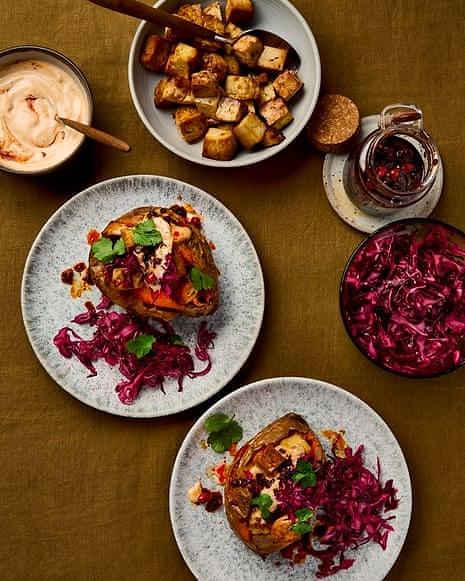
Jacket Sweet Potato with Smoked Tofu, Slaw and Crispy Chilli Mayo: A West African Adaptation
Adapting recipes to local ingredients is standard practice, not just in Nigeria but across Africa. For instance, if smoked tofu is hard to find, ordinary firm tofu does the job. Out of mirin? A teaspoon of sugar blended with a splash of vinegar provides sweetness and acidity. No red cabbage on hand? White cabbage, or the familiar “cabbage” sold in Nigerian markets, makes an easy swap. Chilli oil varies—feel free to use Nigerian pepper sauce or Cameroon pepper oil, but mind the heat. Any herb in the market can stand in for coriander: scent leaf (nchuanwu/efirin/basil), parsley, or uziza for a local twist. Substituting ingredients this way does change the flavour profile, but it’s the flexibility that truly embodies the no-waste tradition Nigerians pride themselves on.
Prep: 15 min
Cook: 50 min
Serves: 4
Ingredients:
4 medium sweet potatoes (about 1kg, locally called ‘sweet yam’ in some areas)
5 tbsp extra-virgin olive oil (or any quality vegetable oil)
1 tsp fine sea salt
450g smoked tofu, cut into 2cm cubes (or use locally produced firm tofu, also known as wara in Yoruba markets)
2 tbsp light soy sauce (dark soy will give richer colour, so adjust to taste)
2 tbsp mirin (or replace with a teaspoon sugar and a splash of citrus juice or vinegar)
400g red cabbage (around half a small one; white cabbage or even shredded carrot can substitute)
Juice of 3 limes (to get 5 tbsp; try local green lemon or use bottled lime if fresh isn’t available)
100g mayonnaise (vegan mayonnaise is an option if you need a plant-based meal)
1 tbsp chipotle en adobo (or a dollop of spicy ata rodo-based sauce for a fiery Nigerian accent)
4-6 tbsp peanuts in chilli oil (widely available, or crush and oil-roast ekwusi/groundnut with chilli flakes)
30g fresh coriander, leaves and tender stalks, chopped (try fresh scent leaf, parsley, or uziza as flavoursome local alternatives)
How to Make Nigerian-Inspired Jacket Sweet Potatoes:
Set your oven to 220°C (200°C fan-assisted) or 425°F/gas 7. Wash the sweet potatoes thoroughly, dry them, and place in a large bowl. Rub the potatoes with one tablespoon of olive oil and a half teaspoon of salt all over to coat evenly. Set them on a baking tray and roast for 25 minutes, allowing the skin to crisp while the inside softens. According to home chefs in Lagos, a sprinkle of Cameroon pepper here gives a local kick, if desired.
Meanwhile, marinate your tofu by tossing it in a bowl with two tablespoons of oil, the soy sauce, and the mirin (or the sugar-vinegar blend). Make sure every cube is coated. When the sweet potatoes have baked for 25 minutes, add the tofu cubes to the baking tray. Put everything back in the oven and roast for another 15 minutes. The tofu should emerge golden and crisp, while the sweet potatoes finish cooking to perfection.
While the tray bakes, slice the red cabbage finely, or use a sharp local knife to julienne your chosen substitute. Transfer it into the now-empty tofu bowl. Dress the cabbage with five tablespoons of lime juice, the remaining two tablespoons of olive oil, and a half teaspoon of salt. Toss well to soften the cabbage and infuse it with fresh zing. For a sweeter, tangier slaw, add sliced carrots or diced garden eggs—popular market finds in Nigeria.
In a small bowl, stir together the mayonnaise and chipotle en adobo. If you don’t have chipotle, try stirring in smoky ata rodo paste or suya spice blend for a distinctly Nigerian twist. “Authentic flavours come from adapting what you have,” shares Amaka Okoro, a food entrepreneur in Abuja.
When everything is ready, use a sharp knife to split open the roasted sweet potatoes. Fluff up the insides lightly. Spoon the warm, golden tofu mixture into each potato, followed by a generous dollop of the spicy mayonnaise, then top it all off with the zesty cabbage slaw. Scatter a hearty spoonful of peanut chilli crisp (or your locally made substitute) over each serving and finish with chopped coriander or local herb of choice.
This colorful plate is a testament to adaptability, and a brilliant example of nutritious, satisfying food drawing from both global inspiration and local convenience. Sweet potatoes are a Nigerian staple, abundant during harvest seasons, while cabbage features frequently in party salads and market-day soups. Tofu (wara), though originally from Asia, is widely available in many parts of Nigeria, especially among communities leaning towards plant-based diets for health reasons. Mayonnaise, increasingly popular in urban supermarkets, blends seamlessly with bold local spices, bringing this dish together.
Why is no-waste cooking a hot topic for West Africans? According to a 2022 report by the Food and Agriculture Organisation (FAO), up to 37% of food produced in sub-Saharan Africa is lost before it ever reaches the table. Rising inflation means every naira counts when shopping for food. Creative home cooks—from Nigeria to Ghana to Senegal—are rethinking how they store, prepare, and reinvent leftover or excess ingredients. “We grew up learning how to use every part of our harvest or leftovers. It is economic sense and cultural wisdom combined,” says culinary historian Olufemi Adewole.
Yet, no-waste cooking can face challenges—access to fresh produce in urban slums, erratic power supply limiting refrigeration, or social perceptions about leftover food. Many families, however, are seizing the opportunity to teach children and community members about food preservation, adaptability, and dignity in resourcefulness. Organizations like the Lagos Food Bank Initiative have noted a surge of interest in community food-sharing and meal reinvention, especially since the COVID-19 pandemic exposed the vulnerabilities in Africa’s food systems.
On the global scale, chefs across continents are celebrating recipes that thrive on substitutions and improvisation. Whether you’re following a vegan lifestyle, observing health restrictions, or simply using what’s in your market basket, there’s pride in serving a delicious, balanced meal free of waste. As the world watches climate change, food insecurity, and price volatility, kitchen creativity could offer both environmental and financial relief well beyond the walls of the home.
Tips for Nigerian Home Cooks:
- Don’t be afraid to swap out ingredients for local produce—garden egg slaw, wara tofu, and ata rodo sauces are all brilliant substitutes.
- Utilise local herbs like scent leaf or uziza for freshness and aroma.
- Share tips with neighbours; many signature West African dishes started as creative responses to using up what was on hand.
- Pass down knowledge to younger generations, preserving both culture and household resources.
Have you tried a Nigerian version of the jacket sweet potato, or do you have unique ways of turning kitchen odds and ends into feasts? What local ingredients have you substituted into recipes inspired by other cultures? We’d love to hear your food stories or tips for no-waste cooking!
-
For readers interested in more on food culture and innovation, events like the one hosted by Meera Sodha and The Guardian UK (details here) provide global inspiration for every home cook.