


Ghana’s political community is mourning following the reported passing of Nana Konadu Agyeman-Rawlings, a prominent leader and former First Lady. The news, which broke on Thursday, 23 October 2025, has sent shockwaves not only across Ghana but also throughout the wider West African region—including Nigeria, where her legacy as an advocate for women’s rights and pan-African progress is widely respected.
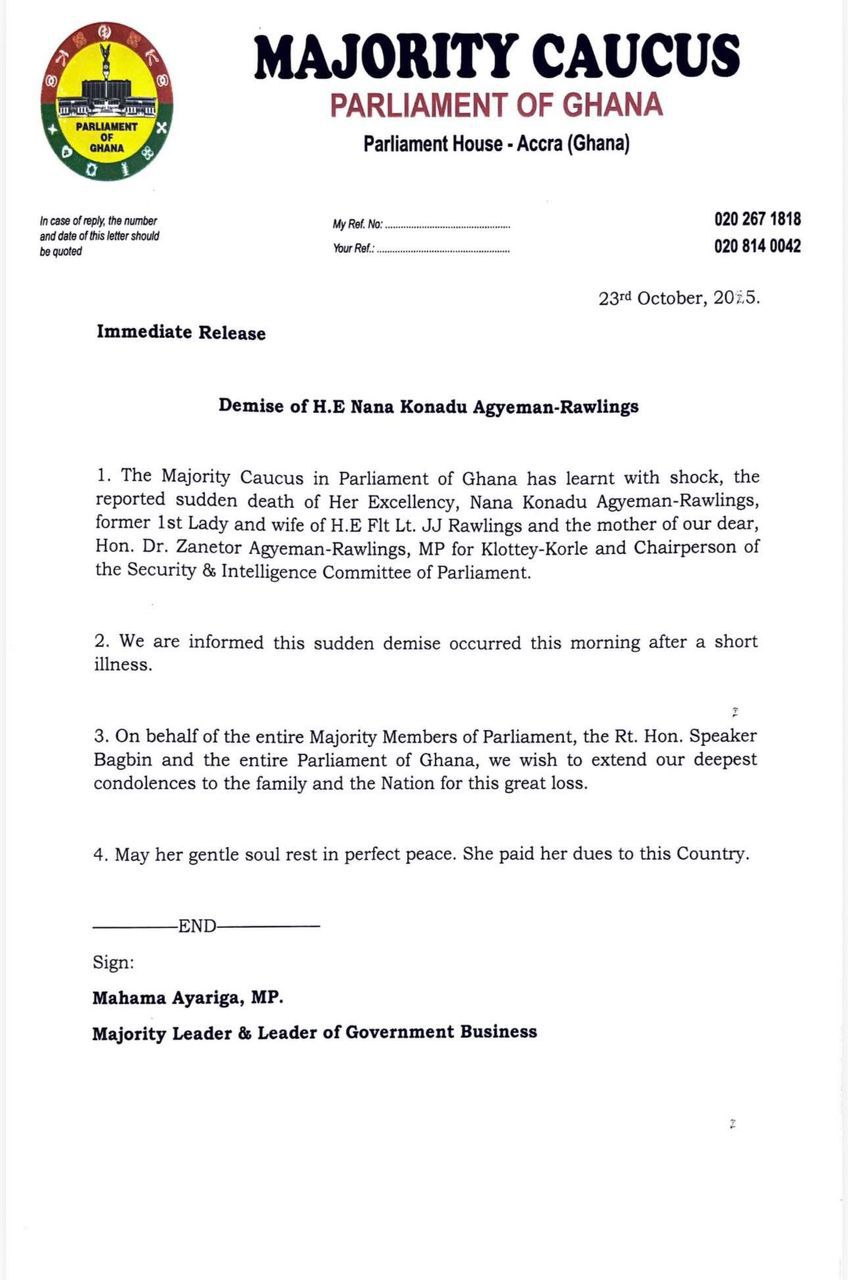
According to a statement issued and signed by Mahama Ayariga, the Majority Leader in Ghana’s Parliament, members of the Majority Caucus expressed their deep sorrow and described the loss as both sudden and heartbreaking. The caucus extended “heartfelt condolences” to Mrs. Rawlings’s family as well as to the many Ghanaians whose lives she touched through decades of activism and service.
The official statement said:
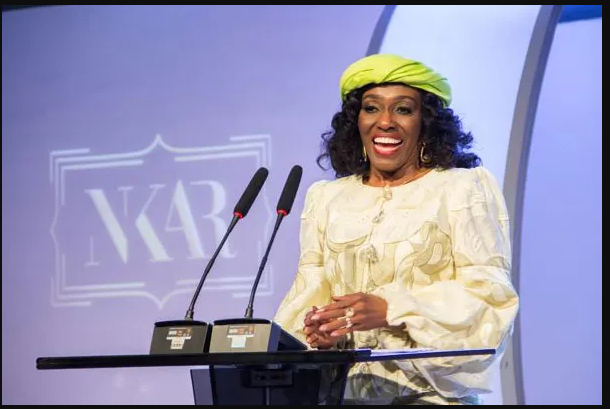
The Majority Caucus in the Parliament of Ghana has learnt with shock of the sudden death of Her Excellency Nana Konadu Agyeman-Rawlings, former First Lady, wife of His Excellency Flt Lt Jerry John Rawlings, and mother of our dear colleague, Hon Dr Zanetor Agyeman-Rawlings, MP for Klottey-Korle and Chairperson of the Security and Intelligence Committee of Parliament.
The message from the Majority Leader further stated:
We are informed that this sad event occurred this morning after a short illness. On behalf of all Majority Members of Parliament, the Rt Hon Speaker Alban Bagbin, and the entire Parliament of Ghana, we wish to extend our deepest condolences to the family and the nation for this great loss. May her gentle soul rest in perfect peace. She truly paid her dues to this country.
Majority Caucus mourns former first lady Nana Konadu Agyeman-Rawlings
Majority Caucus mourns former first lady Nana Konadu Agyeman-Rawlings
Nana Konadu Agyeman-Rawlings was born on 17 November 1948 in Cape Coast, a city steeped in history and political significance. Her journey into the public eye began long before her tenure as Ghana’s First Lady—her early years were marked by a deep commitment to education and empowering women. Those values would later define both her own legacy and the direction of Ghanaian women’s rights movements for decades to come.
As the wife of the late former President Jerry John Rawlings, Nana Konadu first took on the role of First Lady during his brief government in 1979, and then again from 1981 to 2001 during one of the most pivotal eras in Ghana’s contemporary history. Instead of limiting herself to ceremonial duties, she actively sought to transform Ghanaian society—becoming a dynamic force for social and political change. Her leadership set a new standard for the role of First Ladies in West Africa and beyond.
In 1982, she established the iconic 31st December Women’s Movement (DWM), which quickly grew into one of Ghana’s largest and most influential grassroots organizations. With membership reportedly exceeding two million women nationwide, the movement became a cornerstone for community development. According to independent reports and historians, DWM played a direct role in setting up more than 870 preschools, while also supporting village-based health, literacy, and economic empowerment initiatives. Advocates and policy analysts in Nigeria often point to the movement as a successful model for mobilizing women’s leadership and encouraging broad-based societal change across Africa. Her work reshaped not just national but regional conversations about gender equity, paving the way for more West African women to assume leadership roles in politics and business.
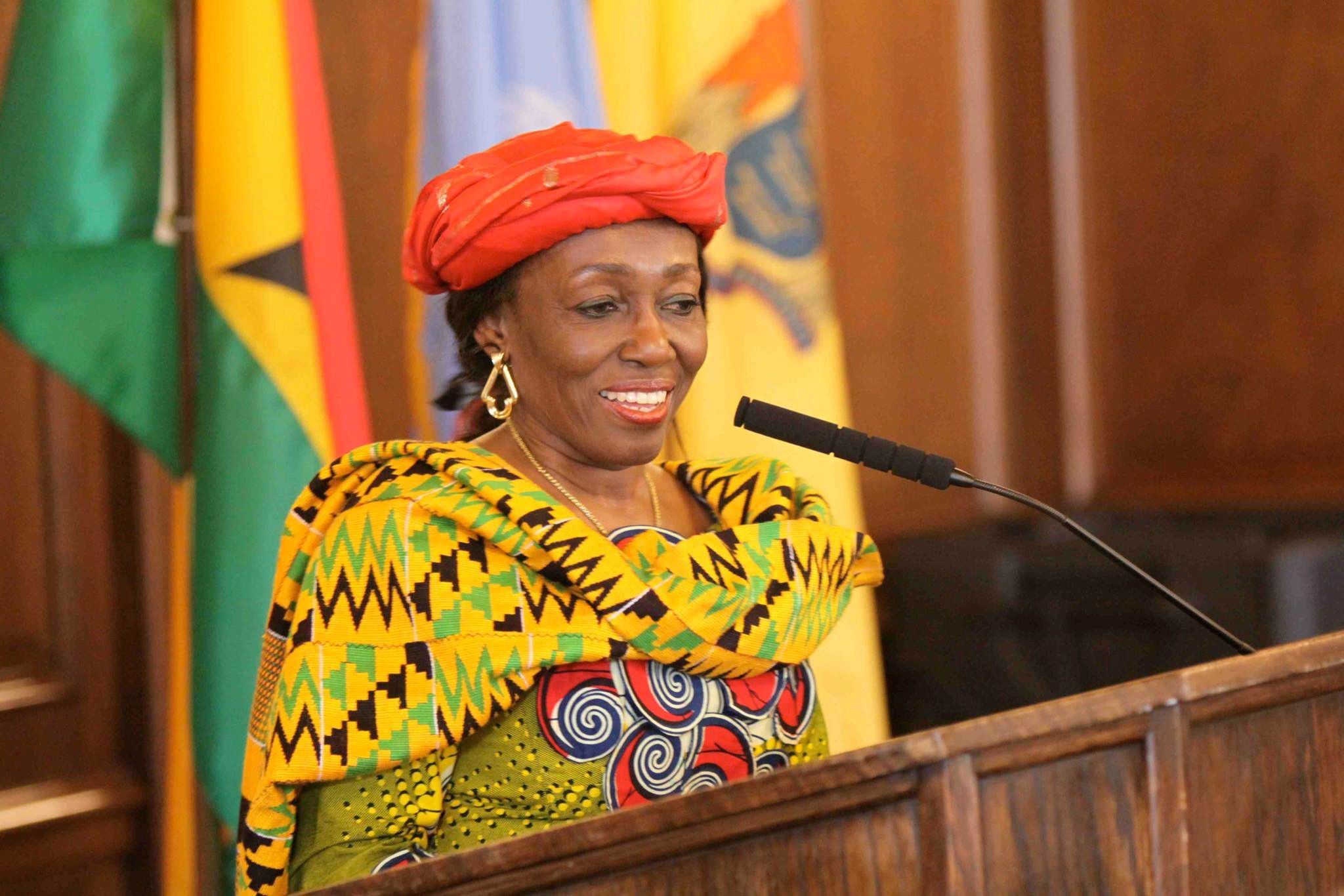
Her political journey would not stop at grassroots activism. In 2011, Nana Konadu made headlines once again, this time as she challenged sitting President John Atta Mills for the presidential nomination of the National Democratic Congress (NDC)—a bold move that was largely unprecedented for women in West African politics. Although she was not successful in clinching the party’s ticket, this historic bid further cemented her reputation as a courageous trailblazer. Not long after, she launched the National Democratic Party (NDP) and stood as Ghana’s first female presidential candidate in 2016. This move resonated across the entire continent, highlighting the gradual but significant progress toward gender parity in political leadership. Nigerian political commentator Olabisi Eke, in a 2016 op-ed, described her candidacy as “a defining moment for women’s visibility in West African democracy.”
Despite the passing of her husband, Jerry John Rawlings, in November 2020, Nana Konadu Agyeman-Rawlings remained an active participant in Ghanaian public life. She continued to inspire new generations, advocating for good governance, social progress, and women’s participation at all levels of decision-making. According to close family sources, she was surrounded by her four children—Zanetor, Yaa Asantewaa, Amina, and Kimathi Rawlings—along with a close-knit network of friends and supporters up until her final days.
Her legacy continues to inspire not only Ghanaians, but also millions across Nigeria and the rest of Africa. In Lagos, social commentators drew comparisons between her impact and Nigeria’s own leading advocates for gender equality, noting how her initiatives have influenced conversations about women’s education and participation in governance throughout the ECOWAS region. The presence of such prominent female leaders challenges entrenched gender barriers and paves the way for a more inclusive future.
Reflecting on the significance of her life, Abuja-based advocacy group Women Arise issued a statement, saying, “Nana Konadu Agyeman-Rawlings’s vision helped to ignite a fire for women’s leadership and civic engagement—from Ghana’s rural communities to the corridors of power in many African nations. Her example will continue to guide regional efforts toward building stronger, more equitable societies.”
As the continent continues to grapple with issues of representation, education, and economic advancement for women and youth, the story of Nana Konadu Agyeman-Rawlings stands as both a reminder and a call to action: African leaders—men and women alike—must redouble their efforts to unlock the full human potential of their countries by investing in education, social welfare, and inclusive policies.
What does Nana Konadu’s legacy mean to you as a Nigerian, Ghanaian, or African reader? How do you think her example will influence the next generation of leaders across West Africa? Drop your thoughts in the comments, and don’t forget to follow us for more in-depth coverage of African news, stories, and achievements.